

rki.news
An exclusive interview during MWC Doha 2026
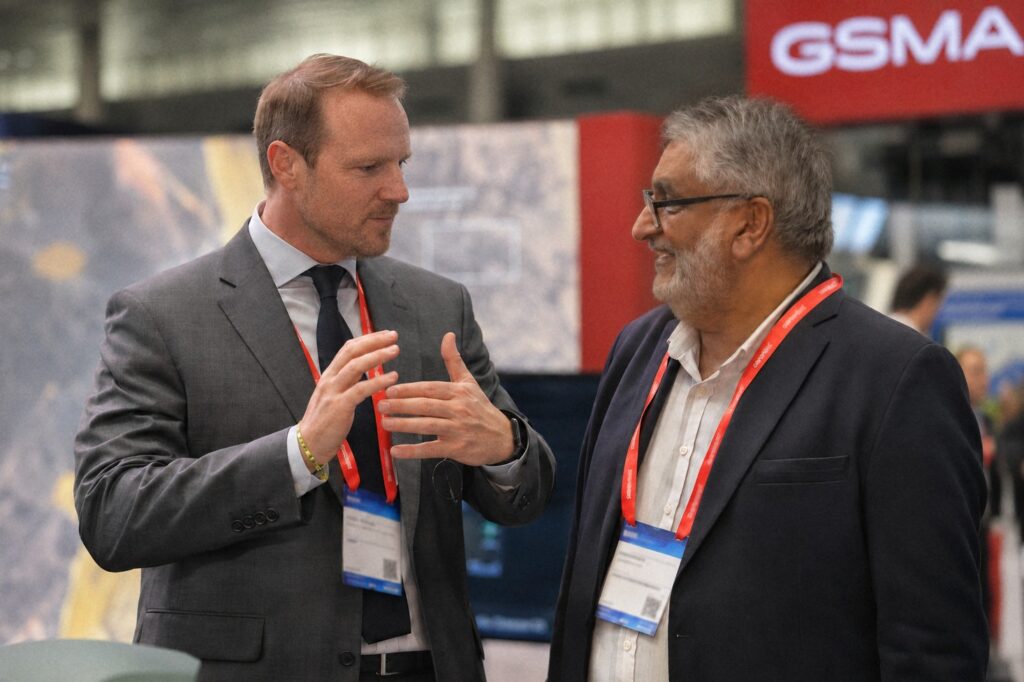
At Mobile World Congress (MWC) Doha 2026, Mr Barney Stinton spoke about the growing role of 5G technology in aviation, airport operations, passenger security and connectivity.
The discussion explored how advanced mobile networks can make air travel safer, more efficient and comfortable while creating new opportunities for Qatar.
Interview conducted by Haroon Rashid Qureshi, Editor in Chief, Rahbar Kisan International (RKI).
1. How can 5G connectivity transform air travel and airport services?
5G standalone networks offer many advanced features. It is not just about connectivity but also about passenger identification, drone tracking and providing quality on demand for important services.
5G adds another layer of reliability to airport connectivity. Many airports already have private 5G networks. Connecting these with public 5G networks can improve services and provide better connectivity.
An airport is like a small city. Airlines, passengers, aircraft operations and security systems all work together. Every passenger must be properly identified, and mobile technology can play an important role.
Through GSMA’s work with Camara, we have developed Open Gateway. It provides standard network interfaces that developers, airports and businesses can use to access mobile network capabilities.
This allows airlines to use standardised network APIs rather than different technical systems in every country. It also supports innovation and efficiency.
5G can help verify whether a mobile phone belongs to a particular person and whether its SIM card has recently been changed. These checks can help prevent identity fraud and make passenger journeys smoother.
2. How can new technology make air travel safer and more comfortable for passengers?
One important area is passenger identity and security.
Today, passengers may verify their identity at home, connect to a public mobile network at the airport and then enter their details again when boarding an aircraft or using in-flight connectivity.
These repeated steps can be frustrating. People want technology to work quickly and smoothly.
At GSMA, we are working with aviation stakeholders, regulators and mobile network operators to make identity verification possible at the beginning of the journey.
The idea is to verify a passenger’s identity once and allow that trust to continue throughout the journey.
This can improve security and reduce unnecessary steps. Passengers could eventually move through airport immigration and biometric corridors without repeatedly taking out their passports or phones.
We call this a hands-in-pockets experience.
There is also an important safety aspect. If an airport’s private network stops working, public 5G can provide a backup connection. Aviation depends on reliability and safety, so alternative connectivity is essential.
3. What benefits can 5G bring to airport operations and airline efficiency?
Airports operate as businesses and must manage their physical assets carefully. They need to know where aircraft and equipment are located and ensure efficient operations.
Connectivity can also help aircraft upload maintenance information quickly after landing so they can prepare for their next flight.
Aircraft delays are expensive. Even a few minutes can create significant costs for airlines.
For example, if an aircraft waits ten minutes for a reliable connection to upload maintenance information, that time is wasted.
Airports are also very large places, and connectivity around aircraft parking areas is not always perfect. Network capacity can become a challenge when hundreds of passengers connect at the same time.
We are conducting trials in Europe with airlines on a technology called quality on demand.
It allows an airline to request priority connectivity for important information, such as electronic flight logs. You can think of it as a turbo button for the network.
This helps important information reach its destination quickly and can reduce unnecessary delays.
4. When do you expect these new services to become available, particularly in the Gulf region?
We are working on a trial with a European airline and airport. We hope to begin this work in the coming weeks and then share the findings.
After that, we can present the results to mobile operators around the world and show them what the aviation industry needs.
One challenge is that quality on demand is an advanced network function, and not all mobile networks currently offer it.
Airlines operate across many countries and need consistent services and reliability wherever they fly.
Our aim is to encourage cooperation across the industry so passengers and airlines can benefit from these services internationally.
5. What role can mobile technology play in connecting aircraft, airports and airlines?
The future is about creating a seamless passenger journey and seamless connectivity.
Aircraft connectivity has traditionally relied on systems designed for specific purposes. They work, but the future requires greater flexibility.
I work with Boeing and Airbus, and their ambition is to develop aircraft that are open to different networks. In simple terms, aircraft should connect to networks much like mobile phones do.
They should not be limited to one satellite network provider. Instead, they should be able to use different networks without major changes to their equipment.
We are moving towards a future where terrestrial and satellite networks work together. Passengers will not need to know whether their connection comes from a terrestrial network or a satellite. The technology should work seamlessly.
Qatar Airways already uses Starlink, which provides excellent connectivity.
I believe the future of in-flight connectivity will be more open and flexible. This will also allow airlines to offer personalised services.
For example, imagine watching a film during a flight and stopping halfway through. On your return journey, the airline could welcome you back and ask whether you would like to continue watching from where you stopped.
It could also remember your favourite films and preferences.
This is the kind of personalised experience airlines want to provide, making passengers feel more connected to their airline.
6. What are your main objectives and expectations from MWC Doha this year?
This is our second year working with the Ministry of Communications and Information Technology (MCIT) and Doha.
Last year, we presented innovative demonstrations. This year, we have gone further with three aviation-related demonstrations.
My main objective is to meet enterprises and infrastructure providers and help them understand the capabilities of 5G networks.
Ooredoo in Qatar has also launched 5G+, an important step forward in enterprise-level network connectivity.
We are presenting three aviation-themed demonstrations at the GSMA pavilion. However, I also want visitors to think beyond aviation.
For example, our airport perimeter security demonstration could also benefit universities and other organisations with similar security requirements.
The idea is to show how these technologies can be applied across different sectors.
7. How can ordinary people understand and benefit from these advanced technologies when not everyone can attend international exhibitions like MWC Doha?
Part of my job is to bring these demonstrations to life and make advanced technology easier for people to understand.
It is important to take a theoretical concept and turn it into something people can actually see and experience.
At exhibitions, people often see information on screens or read technical documents. My role is to demonstrate what is possible and explain how these technologies work in the real world.
I would encourage visitors to come to the GSMA pavilion and see our demonstrations, including the drone technology.
We also want to hear directly from organisations such as Qatar Airways, Hamad International Airport and universities in Doha.
We need to understand their challenges and what is holding back innovation. If connectivity is part of the problem, we can work together to find a solution.
Our responsibility is not simply to talk about networks but to connect the mobile technology industry with the needs of businesses and the wider community.
8. What major opportunities do you see for your organisation through MWC Doha?
We already have a close working relationship with the Ministry of Communications and Information Technology, and I would like to take this further by showcasing and testing new innovations.
Qatar has all the right ingredients. It has one of the world’s leading airlines, excellent airport infrastructure, strong network capabilities and a clear ambition for technological development.
If we bring these strengths together, Qatar can become a showcase for mobile technology for the rest of the world.
Different countries, airports and airlines are developing new services. However, Qatar has an opportunity to bring these developments together and help shape the future of aviation.
I believe Qatar has a very exciting opportunity to play an important role in this journey.
______________
Editor’s Note
During our meeting, Mr Barney Stinton impressed us with his punctuality, professional knowledge and passion for his work. He answered all questions with great enthusiasm and also gave us a practical demonstration after the interview. His friendly, humble and down-to-earth personality made the meeting a very pleasant experience.
5G Set to Transform the Future of Air Travel: Barney Stinton