

rki.news
Session explored the role of policies and artificial intelligence in advancing digital accessibility for persons with disabilities, with outcomes contributing to a research report for the Global Disability Summit 2028
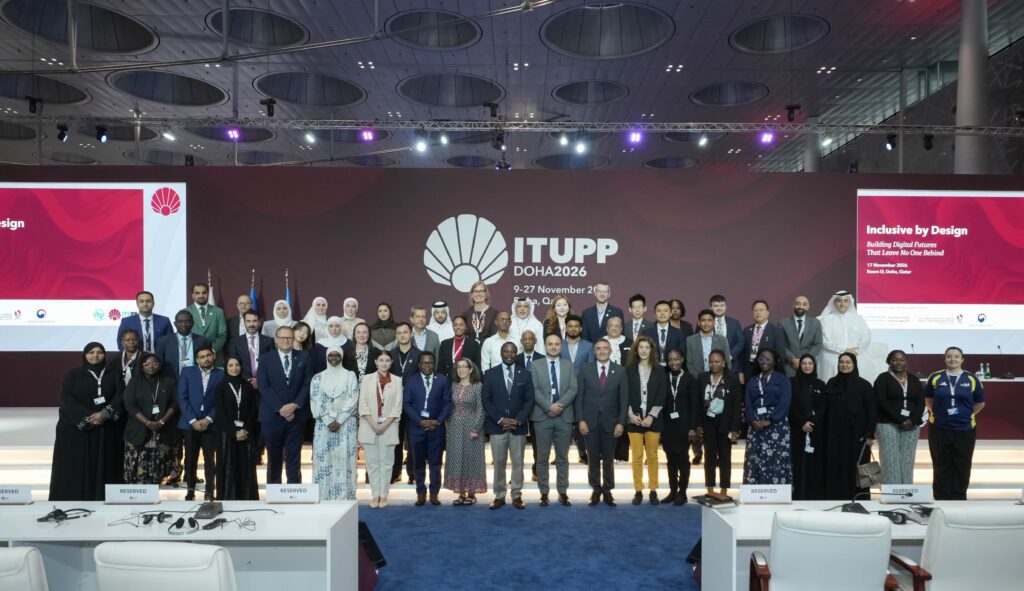
Doha, November 17, 2026: The Communications Regulatory Authority (CRA), in collaboration with the Ministry of Social Development and Family (MSDF) and with the participation of the Ministry of Science and ICT of the Republic of Korea, hosted a high-level dialogue titled “Inclusive by Design: Building Digital Futures That Leave No One Behind” on the sidelines of the International Telecommunication Union (ITU) Plenipotentiary Conference 2026 (PP-26). The session emphasized the importance of integrating the needs of persons with disabilities from the earliest stages of policymaking and the design of digital technologies and services, to facilitate accessibility and strengthen their participation in society and the digital economy. It also highlighted digital accessibility as a fundamental pillar of building an inclusive digital future that benefits everyone.
The session brought together representatives from governments, regulatory authorities, international organizations, the private sector, academic institutions, and organizations representing persons with disabilities, alongside young participants. The dialogue was co-moderated by Ms. Sylvia Poll, Head of the ITU Gender and Youth Office, and Mr. Abdulla Al-Jassmi, Senior Technology Advisor to the President’s Office at CRA. The session opened with remarks by Ms. Amna Mohammed Al-Mutawa, Director of Policy, Advisory Support and Capacity Development at Mada Assistive Technology Center (Mada Center), and Ms. Mina Seonmin Jun, Senior Policy Advisor at the Korea Information Society Development Institute (KISDI).
The session featured a distinguished group of international experts, including Engineer Kezia Mwale, Secretary-General-Elect of the African Telecommunications Union (ATU); Ms. Ellen Taylor, Policy Analyst at Innovation, Science and Economic Development Canada (ISED); Mr. Teddy Woodhouse, International Policy Manager at the United Kingdom’s Office of Communications (Ofcom); and Ms. Hadeel Sarairah, International Affairs Officer at the Telecommunications Regulatory Commission (TRC) of the Hashemite Kingdom of Jordan.
Discussions focused on the role of policies and regulatory frameworks in improving access to digital services and removing barriers faced by persons with disabilities, drawing on international experiences in integrating accessibility principles into digital transformation strategies. Participants also explored the role of assistive technologies, artificial intelligence (AI), and emerging technologies in advancing digital inclusion, emphasizing the importance of ensuring that these technologies are developed and deployed in ways that remove barriers rather than create new ones. The session further highlighted the need for data collection and measurable indicators to assess progress in digital accessibility, alongside international knowledge exchange to support the development of more inclusive solutions.
In this context, Engineer Hussain Abdulla Salatt, Public Relations and Communication Manager at CRA, said: “Advancing digital accessibility for all is essential to building a more inclusive digital future, enabling all members of society, including persons with disabilities, to benefit from the opportunities of digital transformation. CRA recognizes the importance of regulatory frameworks and technical standards that take into account the diverse needs of users, in line with the objectives of Qatar National Vision 2030. The success of digital transformation is measured not only by technological advancement, but also by the extent to which everyone can access and benefit from technology.”
The outcomes of the session are expected to contribute to the preparation of a research report on inclusive technology and artificial intelligence for the Global Disability Summit 2028, which will be hosted in Doha. The report will draw on the international experiences and expertise shared during the dialogue to identify existing challenges, research priorities, and opportunities for collaboration aimed at advancing digital accessibility and empowering persons with disabilities.
Sheikha Aisha bint Mubarak Al Thani, Director of the International Cooperation Department at the Ministry of Social Development and Family, stated: “Digital accessibility is essential to enhancing the independence of persons with disabilities in their daily lives, including their ability to access public services and pursue educational and employment opportunities. In this regard, the Ministry is committed to strengthening partnerships at both the national and international levels to facilitate the exchange of expertise and support the development of digital services that are accessible and can be used independently. As part of preparations for the Global Disability Summit 2028, we look forward to building on the discussions held during this session to identify opportunities for cooperation in leveraging assistive technologies and artificial intelligence to remove digital barriers and expand opportunities for participation in society.”
The ITU Plenipotentiary Conference 2026 (PP-26) is the ITU’s highest policymaking body and is being held at the Doha Exhibition and Convention Center (DECC) from 9 to 27 November 2026, under the theme “Together Towards a More Connected Digital Future.” The conference is organized by ITU and hosted by the State of Qatar, represented by CRA.