rki.news
Interview with Rehana Mughal, Director, Creative Economy, British Council
By Haroon Rashid Qureshi, Editor in Chief, Rahbar Kisan International (RKI)
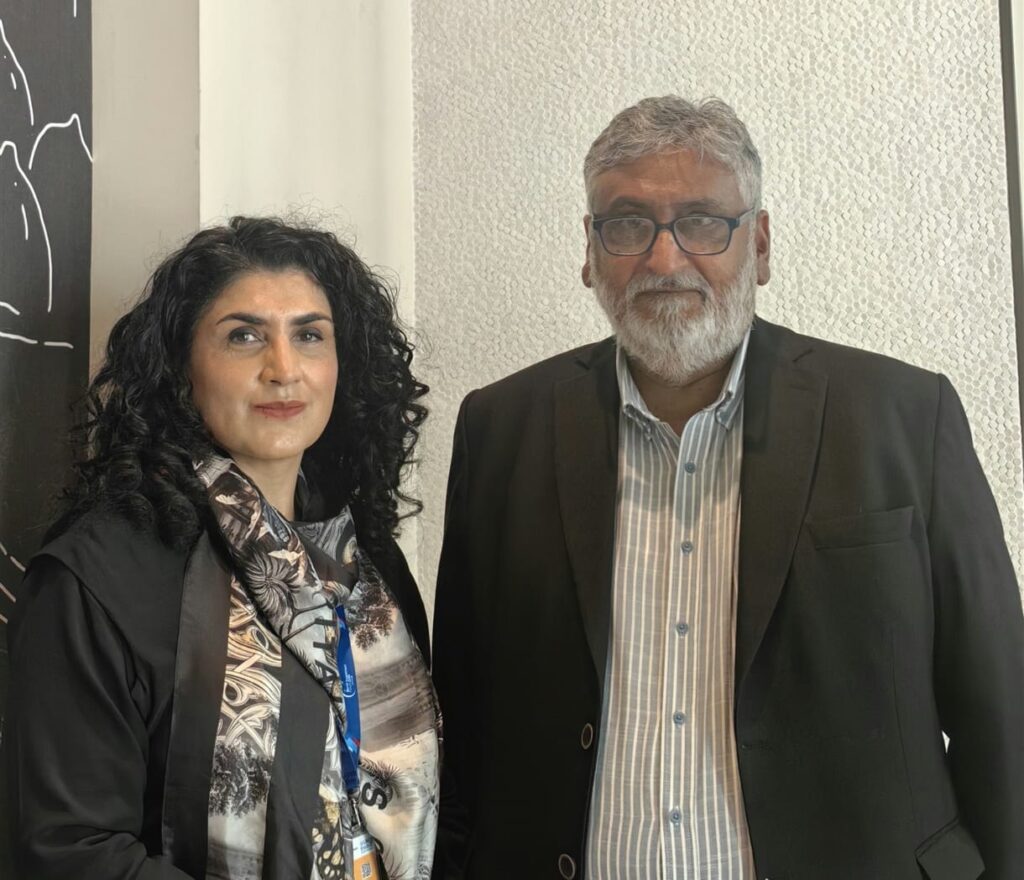
DOHA: During the 9th World Investment Forum 2026 in Doha, organised by UNCTAD and hosted by the State of Qatar, Haroon Rashid Qureshi interviewed Rehana Mughal, Director, Creative Economy, British Council. The discussion explored the creative economy, cultural relations, investment in young talent, international collaboration and the role of museums in connecting societies.
Interview
Haroon: Rehana, it is a pleasure to meet you at the World Investment Forum 2026. Could you introduce yourself and tell us about your work?
Rehana: It is a pleasure to meet you too. I’m here because of my interest in investment and my role as Director, Creative Economy, British Council.
I have worked in the creative and cultural sectors for around 27 years across different organisations. My current role focuses on developing the creative economy globally. I’m interested in systematic change, which requires understanding everything that contributes to the system. Investment is an essential component.
Haroon: What is the British Council’s role in culture and the arts?
Rehana: The British Council is the United Kingdom’s cultural relations organisation. Established in 1934, our mission is to build trust between nations and contribute to peace and prosperity. We share knowledge, learn from other countries and build bridges between communities and societies. Reciprocity is central to how we work.
We work in countries including Pakistan, India, Mexico, Bangladesh, Ukraine, Japan, South Korea and Kenya. Wherever we operate, our approach remains the same: shared learning and mutual benefit.
Haroon: Is the British Council a government organisation or an independent body?
Rehana: We are a charitable organisation registered in the United Kingdom and operate separately from the government.
We work in around 100 countries. Where we do not have a physical office, we reach wider audiences through channels such as British embassies, consulates and high commissions, delivering cultural and educational programmes.
Haroon: How does the British Council finance its activities?
Rehana: Our funding comes from several sources. English-language teaching helps people develop skills and access education and employment opportunities.
We also partner with international development agencies, donors, trusts, foundations and private-sector organisations. For example, we work with organisations such as the Mastercard Foundation to support skills and training in sub-Saharan Africa, including for young entrepreneurs and creative start-ups.
We receive funding through the UK’s Foreign, Commonwealth and Development Office, including Official Development Assistance, which helps us reach emerging and developing economies. We also work with the UK Department for Culture, Media and Sport on programmes such as the Cultural Protection Fund, which safeguards cultural heritage at risk from conflict and climate change.
Our resources are limited, so partnerships allow us to extend our impact and achieve more together.
Haroon: What are your main responsibilities as Director, Creative Economy, British Council?
Rehana: I’m responsible for the British Council’s global creative economy portfolio, spanning fashion, design, architecture, crafts, music, advertising, film, television and publishing. These industries provide artistic expression, generate income and support economic growth.
I work with a global team to create environments where creative businesses can thrive. Although we work across many countries, the challenges are often similar. Founders need access to markets, start-up investment, customers, mentoring and coaching, alongside policies that support businesses through different stages of development.
At the World Investment Forum, discussions have highlighted the need to direct investment towards emerging and growing economies. Investment can help young people turn their imagination and creative talents into original ideas and livelihoods.
Our role is to support the conditions that enable creative professionals and businesses to grow.
Haroon: How can the British Council help a young person with exceptional talent in singing, music or another creative field?
Rehana: We connect artists and creative professionals with networks and opportunities. One example is Musicians in Residence, a project I worked on when I was in Beijing.
Musicians from the UK travelled to China, met local musicians and experienced different musical traditions and instruments. Immersion in another culture can inspire new perspectives and encourage original work.
One participating musician created a new album after returning to the UK. The project also offered opportunities to perform for new audiences and build international networks, which are crucial for musicians seeking to share their work.
Another initiative, Connections Through Culture, is a small grant scheme enabling artists and creative organisations to meet counterparts in other countries, share their work and expand professional networks. These opportunities help artists gain new perspectives and introduce their talents to wider audiences.
Haroon: Have you worked with Asian countries, particularly South Asia? What have you observed about their creative industries?
Rehana: Yes, we have many projects in South Asia. In India, our Creative Convergence series brings experts and thought leaders together to inspire dialogue and practical ideas for growth in the creative industries.
During a visit to Bangladesh, I met filmmakers and content creators whose ideas and ambitions for film and television production impressed me. I also met craft makers and artisans producing beautiful, handmade garments and accessories.
One feature of the South Asian creative economy is its informality, which makes it challenging to measure. Improving our understanding requires more data and greater willingness to share business information.
India has an enormous creative sector, including a substantial informal economy. Alongside its major film industry and growing digital economy, there is significant untapped potential across South Asia. We are focusing on supporting investment in skills, leadership development, international experience and learning opportunities.
We also work with designers to encourage more climate-conscious approaches. For example, we brought together universities, designers, artisans, researchers and policymakers from Pakistan and the UK to integrate traditional indigenous practices with modern circular economy innovations.
We promote awareness of intellectual property rights so creators can protect their original ideas and benefit financially from their work. With appropriate legal and policy frameworks, creative professionals can establish ownership, sell their work and earn income from their creativity.
Haroon: People often admire those in powerful positions or from privileged backgrounds. However, those who struggle and overcome difficulties can also be inspiring. Do you think a person’s environment influences creativity and personality?
Rehana: I think adversity can often breed creativity. I come from humble beginnings myself. My mother never had an education, and that has perhaps influenced how fortunate I feel to have had access to education and to continue learning through my interactions with others. I have an inner drive to do work that makes a real difference and opens doors for others.
Many entrepreneurs start because they are frustrated by a problem and decide to find a solution. That frustration can motivate them to overcome barriers and build something valuable. Challenging circumstances can encourage people to imagine different possibilities and find new ways of doing things.
At the World Investment Forum, we have heard much discussion about artificial intelligence and new technologies. At the same time, there is a strong desire to preserve what makes us human.
Imagination, creativity and innovation are essential human qualities. When people from different cultures bring their ideas together, their collective imagination can lead to extraordinary possibilities.
Haroon: How important are culture and creativity in our daily lives, particularly as technology and artificial intelligence become more influential?
Rehana: Culture and creativity are essential to our sense of humanity.
During the COVID-19 pandemic, when people were confined to their homes, many turned to music, poetry, theatre, films and other cultural activities. These experiences helped people feel connected and offered hope despite uncertainty and restrictions on movement.
Every culture, city, town and village has its own stories and forms of creative expression. This shows how deeply creativity is connected to human life.
Technology offers many opportunities, but imagination and innovation remain fundamental to how we understand ourselves and connect with others. As technology evolves, we need to strengthen our capacity for human creativity.
Haroon: Having worked in different parts of the world, how do you view cultural development in the Gulf region, particularly Qatar?
Rehana: I lived in Abu Dhabi for six years before moving to China. I was responsible for work across the GCC and visited Doha during that time.
The changes I’ve seen in Qatar have been remarkable. The number and diversity of museums and cultural spaces are impressive. The region is investing in places where people can experience art, culture and heritage, and I feel that is a great investment.
Haroon: What role do museums play in bringing different cultures closer together?
Rehana: Museums connect cultures and inspire people of all generations.
When I lived in Beijing during the COVID-19 pandemic, Chinese authorities were among the first to encourage museums and cultural organisations to make their collections accessible online. This allowed people to experience culture even when they could not travel or visit museums.
Culture enables our minds to travel even when physical movement is restricted. Museum collections help us learn about objects, traditions and experiences from other societies.
I remember visiting museums as a child and being fascinated by the stories behind the objects on display. A piece of jewellery from Pakistan or a beautiful porcelain cup from Japan made me wonder who had made it, who had owned it and how it had been used. These connections helped me understand how different societies relate to one another.
I’ve always loved museums because they encourage curiosity, broaden our understanding and inspire people of all ages to reflect on their place in the world. Curiosity keeps us open to new ideas and experiences.
Haroon: Finally, what message would you like to share with our readers?
Rehana: I encourage everyone to spend at least 15 minutes a day doing something creative. Imagination is like a muscle that needs exercise, and creative expression is nourishing for the soul.
Experience something inspiring. Visit an art exhibition, create something yourself, draw from nature, spend time with artists or read poetry. Or simply make time to reflect on the beautiful planet we share.
Closing Remarks
The interview highlighted creativity as both a cultural resource and an economic opportunity. Rehana emphasised international collaboration, investment in young talent, intellectual property protection and access to cultural experiences.
Her message was simple: creativity needs encouragement and practice. By supporting creative people and connecting cultures, societies can create opportunities for understanding, innovation and economic growth.
About Rehana Mughal
Rehana lives in London. She studied art at the Slade School of Fine Art, UCL, holds a degree in museum studies and studied public policy at the London School of Economics (LSE). In her spare time, she chairs the Waldorf Learning Foundation and mentors for the Women of Colour Global Network.