


rki.news | Source: National Human Rights Committee (NHRC)
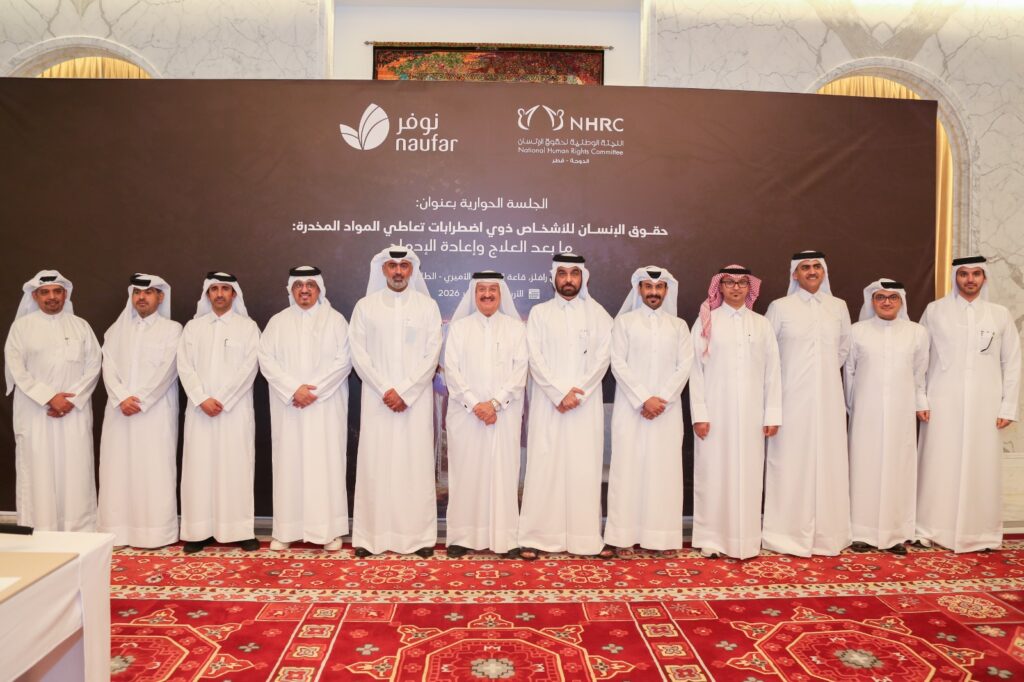
DOHA, Nov. 4, 2026 – The National Human Rights Committee (NHRC), in cooperation with Naufar Center, held a discussion session in Doha on Tuesday, Nov. 3, under the title “Human Rights of Persons with Substance Use Disorders: Post-Treatment and Social Reintegration.”
Participants said Qatar had taken several measures to address global threats related to drug trafficking and the use of narcotic and psychotropic substances. These efforts have contributed to the absence of identified risks to the country according to relevant international indicators.
The session brought together representatives of the Ministries of Interior, Labour, Public Health, Social Development and Family, and Justice, as well as the Civil Service and Government Development Bureau, Public Prosecution, Supreme Judiciary Council, Behavioural Healthcare Support Center, World Health Organization and other relevant institutions.
Dr. Mohammed Saif Al-Kuwari, Vice Chairman of the NHRC, said the issue involved social, economic and health dimensions and required a comprehensive approach based on international human rights principles.
He said the session followed up on recommendations of the Fourth National Forum, held with the Ministry of Interior and other partners on Jan. 20-21, 2026, under the title “Human Rights at the Heart of Combating Drugs: Challenges and Prospects for Sustainable Solutions.”
Dr. Al-Kuwari praised the prevention and control measures taken by the Ministry of Interior and other authorities, saying they had contributed to Qatar having no identified risks according to international indicators.
He acknowledged that people with substance use disorders exist in every society, including Qatar, although their numbers are not high according to national and international statistics. He stressed that people in recovery must not face discrimination, social stigma or prejudice and retain their full rights under national laws and international agreements.
He said recovery does not end when a person leaves a healthcare facility. Continued medical care, employment opportunities and family stability are essential, while discrimination and social exclusion can increase the risk of relapse.
He called for protecting the rights of people in recovery to employment, education and housing, as well as their privacy and medical confidentiality. He also stressed the importance of involving them in decisions and policies affecting their lives.
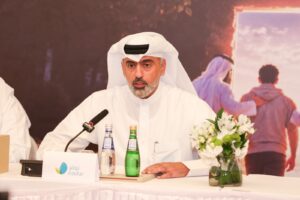
Dr. Khalifa Jiham Al-Kuwari, Director General of Naufar Center, said the partnership with the NHRC reflected a shared commitment to human dignity, the right to healthcare and helping individuals lead stable and productive lives.
He said respect for human rights was an essential part of quality treatment. Recovery extended beyond medical care to rebuilding self-confidence, strengthening family relationships, returning to education and employment, and participating in community life.
He highlighted the need to address social stigma, noting that fear of society’s judgment could prevent people from seeking help and increase the suffering of individuals and their families. He stressed that addiction should be recognised as a health disorder requiring treatment and care.
Dr. Khalifa said the agreement would support awareness programmes, exchange of expertise, staff training and greater understanding of the rights of people receiving treatment and rehabilitation. He expressed hope that the cooperation would lead to practical initiatives benefiting patients and families in line with Qatar National Vision 2030.
Sultan bin Hassan Al-Jamali, Secretary-General of the NHRC, said the session produced seven recommendations to support sustainable recovery and social reintegration.
The recommendations included developing legislation and public policies, removing barriers to social reintegration and establishing a permanent centre for recovery ambassadors to discuss their challenges and contribute to public awareness and drug prevention efforts.
They also called for addressing social stigma through joint community initiatives, strengthening coordination among relevant institutions and developing a shared framework for post-treatment support. Another recommendation proposed establishing a fund for people in recovery under the supervision of the General Secretariat of the Council of Ministers.
The recommendations further stressed continued healthcare, follow-up and behavioural support, stronger family involvement and social connections, and greater public awareness. They also called for common indicators to measure sustainable recovery and integration at individual, family, community and institutional levels while protecting personal and medical confidentiality.
Mohammed bin Ghanem Al-Mohannadi, Director of Legal Affairs at Naufar Center, welcomed the agreement with the NHRC, describing it as an important partnership.
Speaking on the sidelines of the session, he said discussions covered social stigma, treatment, rehabilitation, addiction and ways to help people return to society. He highlighted the valuable participation of government institutions and the exchange of information and expertise. He also noted that Naufar Center provides treatment and rehabilitation services.
NHRC and Naufar Center Sign Memorandum of Understanding
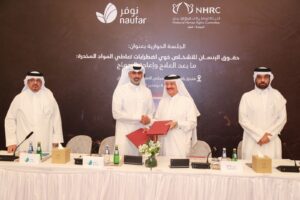
On the sidelines of the session, the NHRC and Naufar Center signed a memorandum of understanding to strengthen cooperation in human rights, healthcare and rehabilitation.
The agreement covers the exchange of information, legal frameworks, publications, guidance materials and reports, along with joint awareness programmes promoting the right to healthcare, human dignity, equality and non-discrimination.
It also provides for training, capacity building, exchange of expertise, educational programmes and research. Both institutions will develop awareness materials and guidance publications to protect the rights of people receiving healthcare and rehabilitation services.
The agreement further supports joint community initiatives to reduce stigma and discrimination, promote social reintegration and encourage the participation of people receiving rehabilitation services in society.