rki.news
Fashion Designer & Textile Artist | Bangladesh
Interview conducted by Haroon Rashid Qureshi, Editor in Chief, Rahbar Kisan International (RKI)
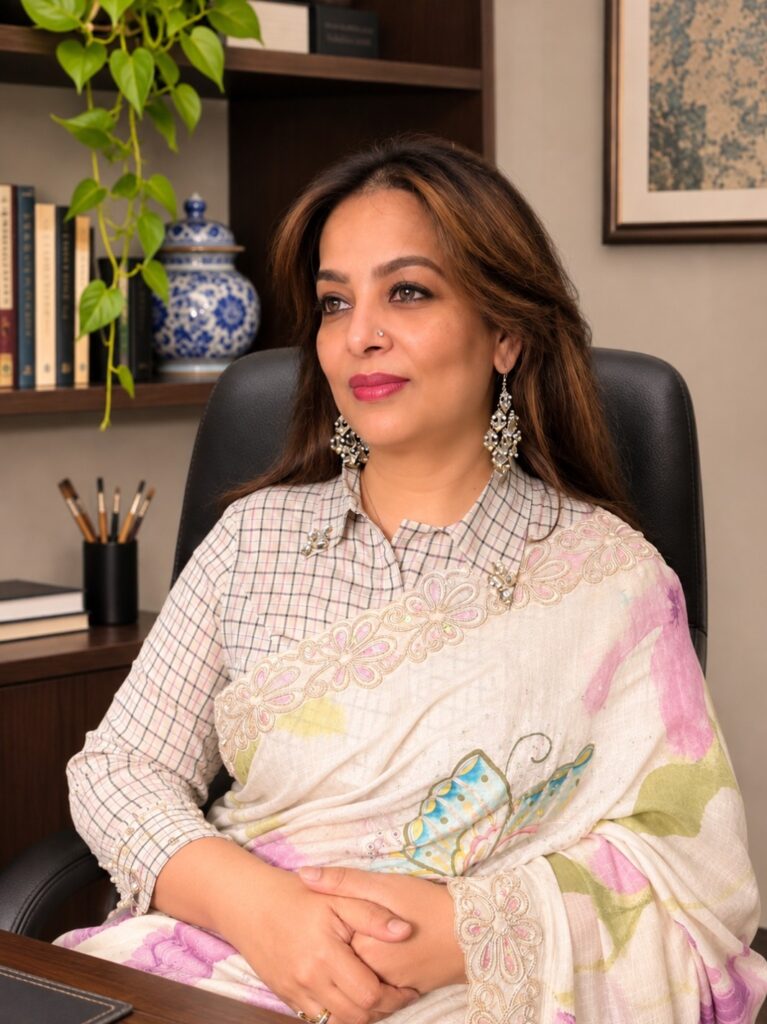
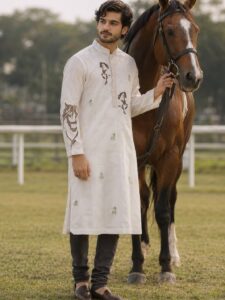
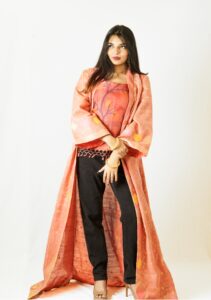
From childhood experiments with needle and thread to becoming an established fashion designer and textile artist, Waheeda Hussain’s journey reflects creativity, dedication and respect for traditional craftsmanship. Based in Dhaka, Bangladesh, she combines traditional textiles, hand embroidery and contemporary design.
Founder of Rubize in 2007 and now working under her own label, Waheeda Hussain, she has presented collections in Bangladesh and internationally, including Qatar. She is also passionate about supporting traditional handloom weavers and training skilled artisans.
In this interview with Rahbar Kisan International, she shares her personal journey, professional experiences, views on women in fashion, Bangladesh’s textile heritage and advice for young women.
Editor’s Note
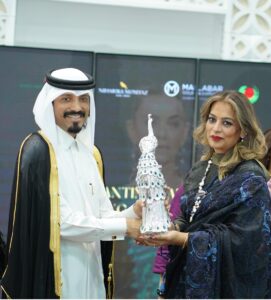
I had the pleasure of meeting Waheeda Hussain during her visit to Doha in 2023. My first impression was of a graceful and dedicated personality, deeply committed to her passion and profession. Despite her impressive achievements and standing in the fashion industry, she is remarkably humble and down to earth.
Her personality reflects elegance and simplicity, qualities also visible in her creative work. Her designs demonstrate a beautiful combination of artistic vision, traditional craftsmanship and contemporary style.
It is a great honour for me and Rahbar Kisan International to present this interview with a distinguished personality from Bangladesh’s fashion industry and share her inspiring journey with our readers.
1. Could you briefly introduce yourself and tell us about your family background and early life?
I am Waheeda Hussain, a fashion designer and textile artist based in Dhaka, Bangladesh. My creative interests extend beyond fashion to painting, traditional crafts and experimenting with different materials.
My father, Major General (Retd.) Abdus Salam, served in the Bangladesh Army. His postings took us across Bangladesh and abroad. Growing up, I had opportunities to visit factories, explore rural communities and observe traditional crafts and handloom weaving. These experiences developed my appreciation for textiles.
I later lived in London and Brazil and graduated in languages and translation from the Universidade de Brasília. My mother and maternal grandmother were passionate about handicrafts. Watching them sew and embroider inspired me from an early age.
I am married to businessman Zeid Hussain, who has always supported my creative pursuits. We have three children, and my family remains my greatest source of encouragement.
2. When did you first develop an interest in fashion designing, and what inspired you to choose this profession?
My love for creating things began long before I understood fashion designing. According to my mother, I was experimenting with needles and thread at around five years old.
I remember how my mother embroidered napkins to complement a dinner set or matched bath towels with bathroom tiles. She could transform ordinary things through creativity. This taught me that simple objects could become beautiful through design.
Interestingly, I never planned to become a fashion designer. While studying in Brazil, I became involved in theatre and designed costumes for a university production of Trial by Jury in 1993.
Later, friends began appreciating my designs and asking me to create outfits for them. These requests gradually developed into regular work. I started hiring people and training them in the techniques required for my designs.
There was no particular day when I decided to make fashion my career. My passion gradually became my profession. I often say that I never consciously chose fashion. In many ways, fashion found me.
3. How did your professional journey begin, and what have been the most important achievements in your career?
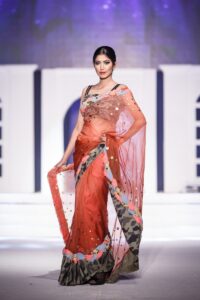
In 2005, encouraged by interest in my designs, I created fifty sarees and around 150 children’s outfits. Everything sold within hours! This gave me the confidence to establish my fashion house, Rubize, in January 2007.
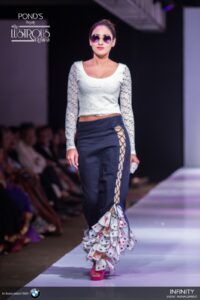
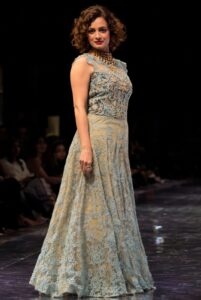
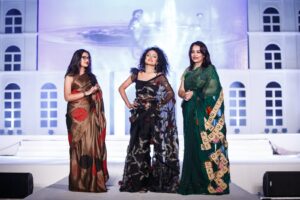
My collections have been showcased at fashion events in Bangladesh, including Dia Asiana, Kumarika Miss Natural, Pond’s Lustrous Runway and the Weavers Festival. Internationally, my designs were featured at Studio 8 in Dubai. I also served as a judge at a fashion event in Delhi in 2019.
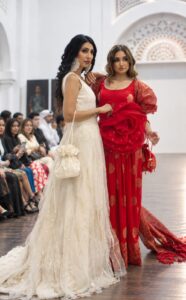
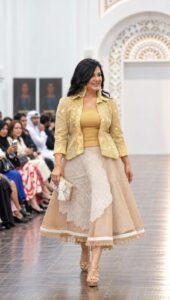
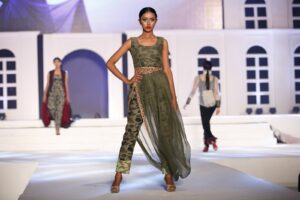
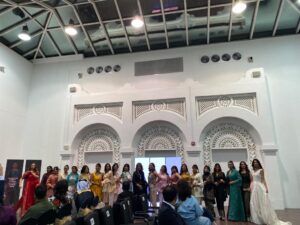
A memorable milestone was Enchanting Fabrics: Uniting Cultures in Doha in 2023, where I presented Sunrise to Starlight: The Bangladeshi Edit. It was my first collection created entirely with natural fabrics, bringing together Jamdani, muslin, handloom textiles and raw jute.
After transitioning from Rubize to my own label, Waheeda Hussain, I participated in my first exhibition organised by LUMIERE – The Royal Threads in Dhaka in October 2026.
Some of my most meaningful work happens away from the spotlight. I work with traditional handloom weavers, particularly those producing pure cotton fabrics whose craft is gradually losing ground. I also train skilled artisans, known as karigars, in embroidery and specialised techniques. Watching them develop their skills and create opportunities for themselves gives me great satisfaction.
4. How would you describe your personal style, and what makes your fashion designs special?
I enjoy elegance and simplicity, but I am equally attracted to unusual textures, creative combinations and intricate craftsmanship. For me, fabric is not simply something to cut and sew. It is a surface through which I can tell a story and express an idea.
I enjoy combining materials that are not traditionally associated with each other. For example, I have used raw jute alongside delicate muslin and Jamdani. I find the natural texture of jute extraordinarily beautiful.
I also draw inspiration from painting, sculpture, architecture, literature and everyday observations.
I have never been interested in creating something simply because it is fashionable at that moment. I would rather create something with individuality, character and a story of its own.
5. Bangladesh is a Muslim-majority country with strong cultural and social values. As a woman in the fashion industry, what has your experience been, and what challenges have you faced?
I have been fortunate to grow up in an environment where education, independence and creativity were encouraged. My family has always supported my professional ambitions. Personally, I have never felt that being a woman or living in a Muslim-majority country has restricted my creativity.
Bangladesh has a rich heritage of textiles, weaving and embroidery, much of which women have nurtured and preserved for generations.
However, women entrepreneurs do face challenges. In creative professions, women’s work is sometimes considered a hobby rather than a serious business.
My own challenges have been largely commercial rather than social. Being a good designer and being a good businessperson are two different things. Understanding the business side of fashion has been a continuous learning experience.
I do not believe fashion and cultural or religious values are necessarily opposed. Fashion can respect personal beliefs while allowing creative freedom and innovation. Modest fashion, traditional clothing and contemporary designs can all have their place.
Ultimately, talent, dedication and integrity should define a person’s opportunities, regardless of gender.
6. How many women are working in Bangladesh’s fashion industry, and what opportunities are available for them?
I would not want to give an exact figure without reliable and updated statistics. However, women play an enormous role in Bangladesh’s fashion and textile sectors, from garment manufacturing and traditional handicrafts to design and entrepreneurship.
Women are involved in embroidery, sewing, weaving and other textile crafts, often working from home or in small workshops.
Today, opportunities extend beyond clothing design to textile development, styling, photography, merchandising, branding and digital marketing. Social media and online commerce have also opened doors for women to establish independent businesses and reach wider markets.
Our handloom sector is particularly close to my heart. I would love to see more young people discover the creative and business opportunities in traditional weaving. Connecting inherited craftsmanship with modern design can create opportunities for a new generation of artisans.
7. What inspires you to create new fashion collections, and how do you see the future of the fashion industry in Bangladesh?
Almost anything can inspire me: a painting, music, poetry, architecture, a childhood memory or even an unusual texture.
Sometimes a collection begins with a fabric. At other times, it starts with an idea or emotion, and I explore different materials and techniques to bring it to life.
Bangladesh has a rich textile heritage. Jamdani, muslin, Tangail handloom cotton, Katan and many other weaving traditions offer endless creative possibilities.
I am particularly interested in traditional handloom cotton, which often receives less attention than celebrated textiles such as Jamdani. I work with a small group of weavers who continue to produce pure handloom cotton. Bringing greater recognition to their craftsmanship is something I feel strongly about.
I am optimistic about the future of Bangladesh’s fashion industry. We have remarkable creative talent, skilled artisans and a rich textile heritage. Greater international exposure, specialised training and opportunities for emerging designers can help the industry reach new heights.
A handmade garment represents someone’s time, skill, patience and often generations of inherited knowledge. By combining textile heritage, innovation, responsible production and contemporary design, Bangladeshi fashion has enormous potential at home and internationally.
8. What advice would you give to the young Muslim generation, especially young women, who wish to enter the fashion designing business?
I would encourage young women not to think they must choose between their cultural identity and professional ambitions. Their work can reflect their values, beliefs, heritage and individuality.
My advice is to develop your skills before worrying about recognition. Fashion may look glamorous, but behind every successful collection are hours of research, experimentation, mistakes and hard work.
Learn about fabrics, understand garment construction and study different techniques. Do not be afraid to begin on a small scale. Some meaningful creative journeys start with modest resources.
Social media can provide inspiration, but imitation should never replace creativity. Develop your own design language and learn to think independently.
Learn about costing, marketing, financial management and customer relationships.
Finally, be patient. You do not have to have your entire future figured out at eighteen. I certainly did not! I explored several professions before finding my place in fashion, and every experience taught me something valuable.
Recognition may come quickly for some and take years for others. What matters is continuing to learn, remaining curious and being willing to evolve. I am still learning myself, and I hope I never stop.