More than 6,000 participants from over 150 countries gather to advance dialogue, cooperation, and practical pathways toward global stability
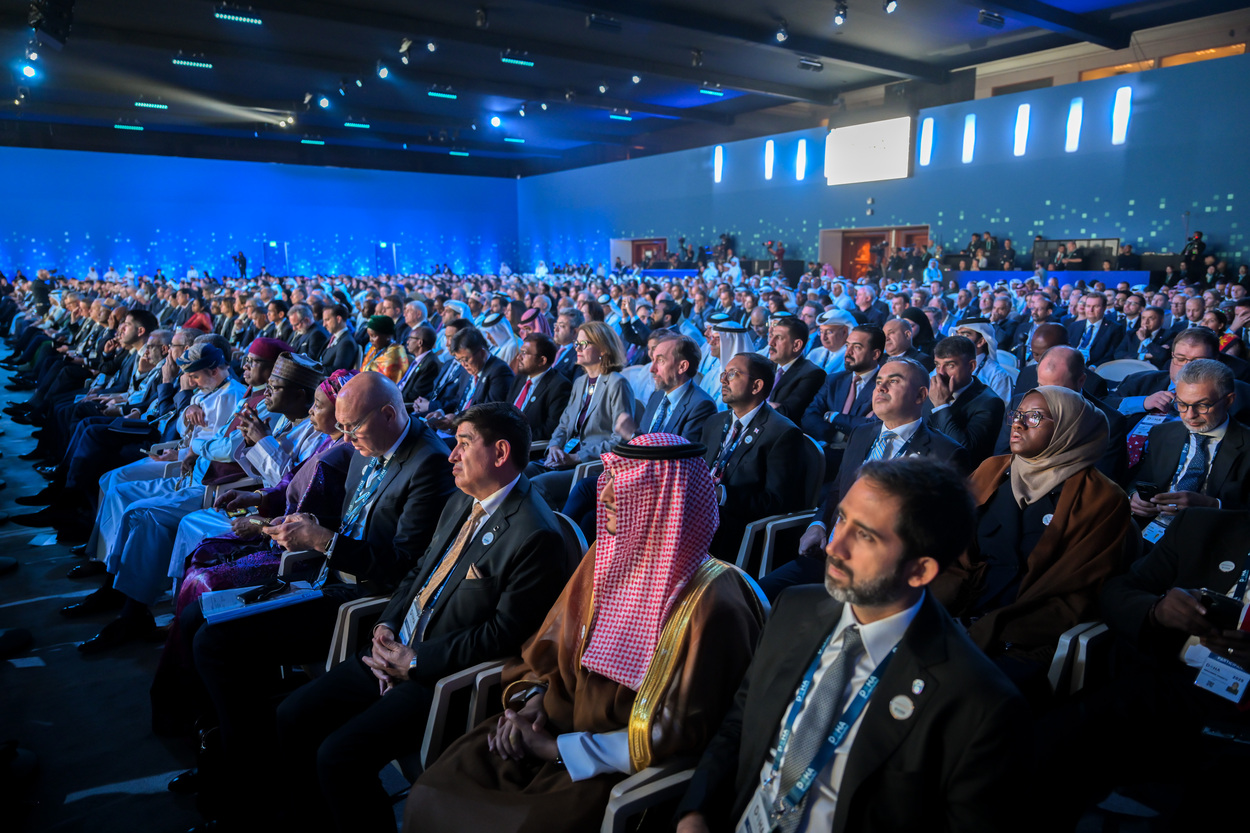
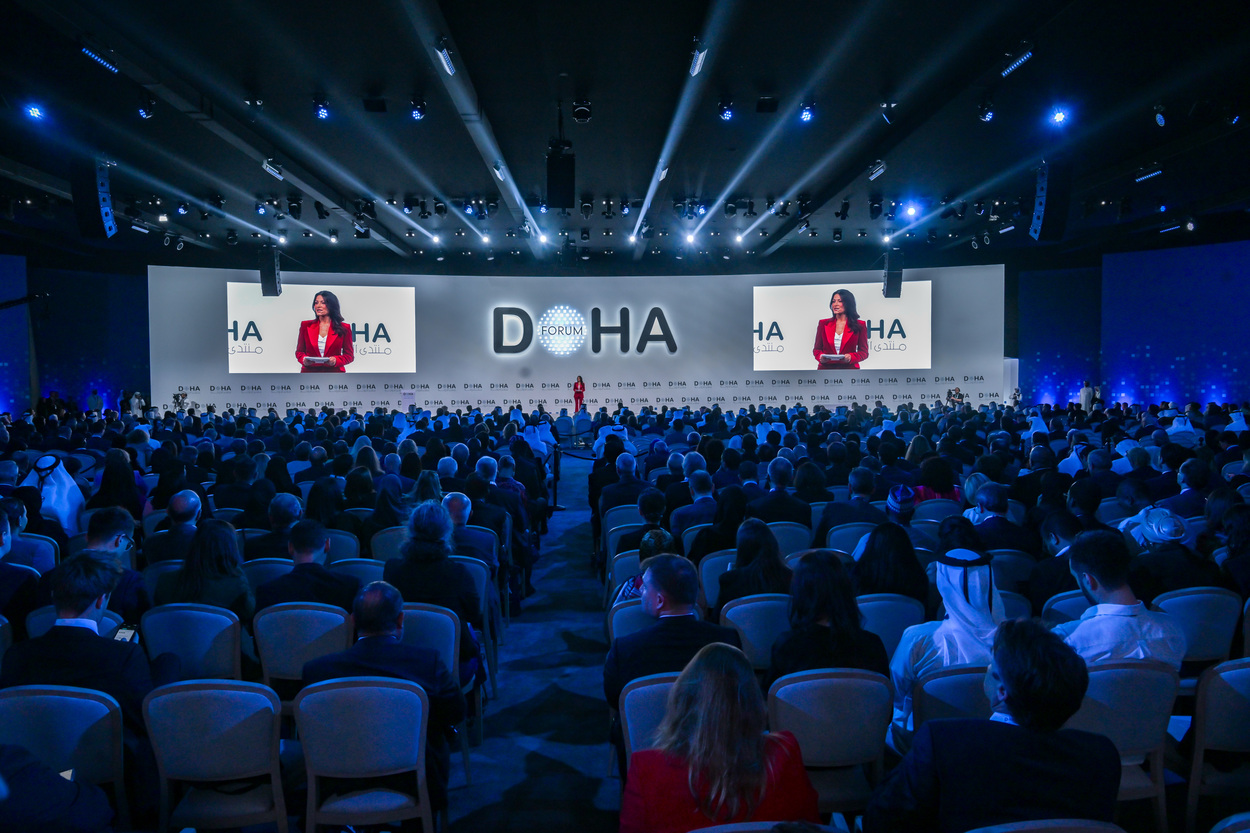
Doha, Qatar, 6 December: The 23rd edition of Doha Forum, held under the patronage of His Highness Sheikh Tamim bin Hamad Al Thani, Amir of the State of Qatar, opened today with a strong call for justice, accountability, and collective action amid an increasingly volatile global landscape. The Forum brings together more than 6,000 participants from over 150 countries, including global leaders, policymakers, and international experts.
Held under the theme “Justice in Action: Beyond Promises to Progress,” the 2025 edition addresses the world’s most pressing geopolitical, humanitarian, economic, and technological challenges. Participants include heads of state, ministers, policymakers, researchers, and thought leaders engaged in shaping concrete solutions to today’s global crises.
Day One underscored the urgent need to rebuild trust in global governance, strengthen mediation efforts, and deliver justice through coordinated international action.
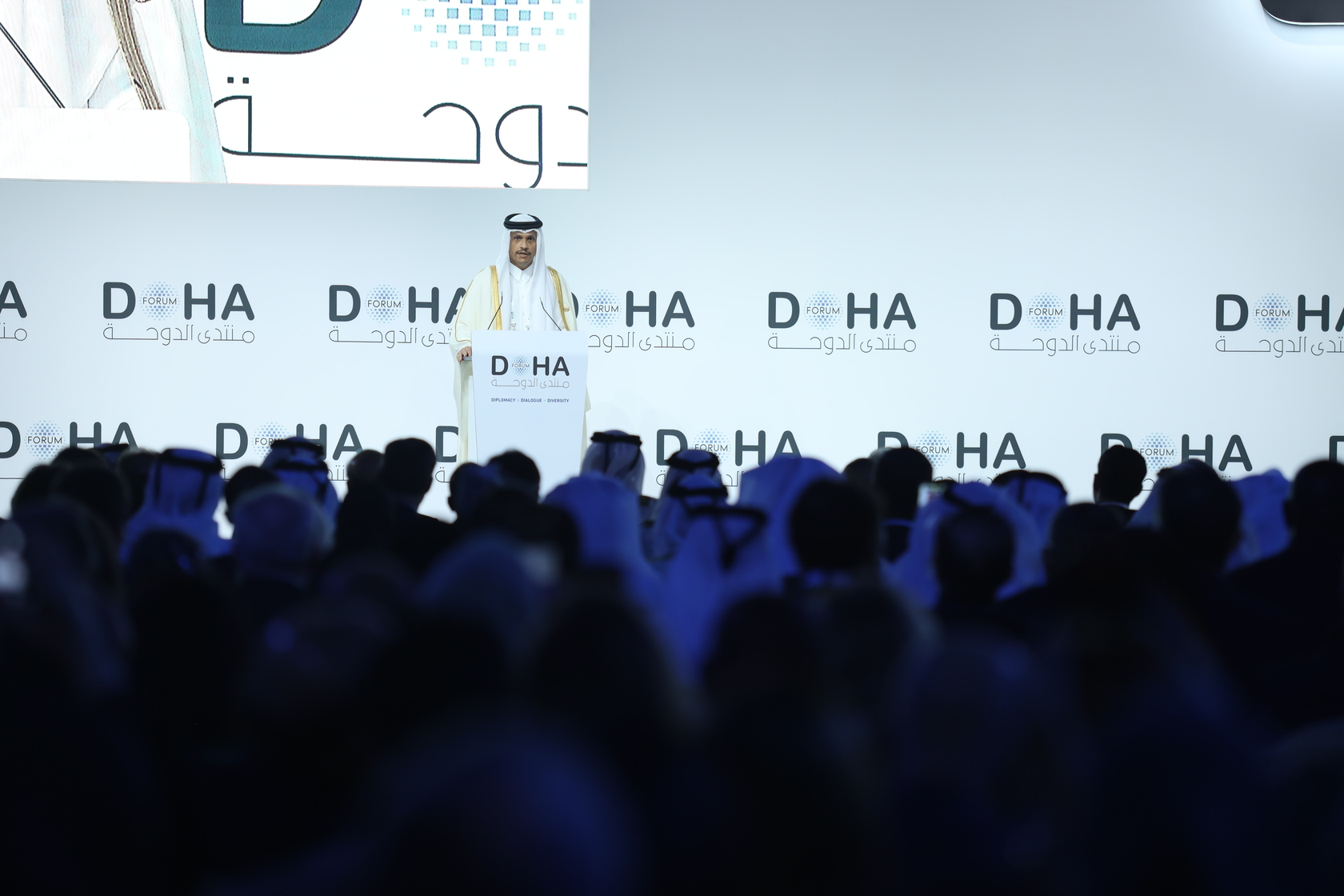
The opening ceremony featured remarks by His Excellency Sheikh Mohammed bin Abdulrahman Al-Thani, Prime Minister and Minister of Foreign Affairs of Qatar, who emphasized the urgency of advancing fair, accountable, and inclusive global governance at a time of escalating conflict, rising humanitarian needs, and intensifying geopolitical divisions. In his remarks, His Excellency said: “This year’s forum is held under the theme “Justice in Action: Beyond Promises to Progress.” It reflects a reality we all observe: the widening gap between rhetoric and action, and the frequent absence of justice in the application of international law – especially in a world where interests take precedence over principles and force often replaces law.”
He added, “The State of Qatar believes that justice is not simply a political objective, but a fundamental pillar for safeguarding international peace and strengthening stability. Guided by this belief, our policies ensure that words align with actions, principles align with practice, and our international responsibilities are upheld with steadfast commitment.”
“The world does not need more promises.” His Excellency concluded. “It needs justice practiced by all without double standards, responsibility shared by all without favoritism, and the courage to translate words into action.”
Gates Foundation Partnership.
A keynote speech was delivered by Bill Gates, Chair of the Gates Foundation and Founder of Microsoft, in which he announced: ‘Today, our foundation is announcing a new partnership with Qatar Fund for Development. Together, we’ll support economic empowerment and expanded access to health and education in Africa and Asia.
Qatar has shown that collaboration drives meaningful progress, from its commitments to global partnerships like Gavi and the Global Fund to its leadership in regional initiatives like the Lives and Livelihoods Fund and helping tackle polio in Afghanistan. And you’ve shown how investing early and staying committed makes all the difference when it comes to tackling complex issues. That approach is exactly what the world needs now.”
Doha Forum Award
The Doha Forum Award 2025 was presented to Alex Thier, and Saad Mohseni, Honoring their outstanding contributions to education, development, and governance in some of the world’s most challenging environments. Through Lapis, his initiatives have reached more than 100 million people across over 20 countries, including the Youm Jadeed program with Education Above All, which expands foundational learning for children affected by conflict and displacement.
Both Mr. Thier and Mr. Mohseni have played central roles in major global development efforts – from overseeing USD 12 billion in international programs to advancing renewable energy, women’s economic empowerment, and efforts to end extreme poverty. Their work reflects a deep commitment to strengthening institutions, supporting vulnerable communities, and leveraging dialogue and development to build more resilient societies.
By selecting both individuals for this award, Doha Forum recognizes leaders whose contributions have meaningfully advanced justice, inclusion, and global cooperation.
Opening Panel: Mediation in a Time of Fragmentation
The Forum’s first high-level panel, “Mediation in a Time of Fragmentation,” brought together: H.E. Sheikh Mohammed bin Abdulrahman bin Jassim Al Thani; H.E. Kaja Kallas; H.E. José Manuel Albares; and H.E. Hakan Fidan.
Moderated by CNN’s Christiane Amanpour, the discussion explored the erosion of trust in multilateral systems and the need for adaptable, principled approaches to mediation. Speakers emphasized opportunities to rebuild cooperation, reinforce humanitarian norms, and prevent further regional and global escalation.
H.E. Sheikh Mohammed bin Abdulrahman bin Jassim Al Thani: Prime Minister and Minister of Foreign Affairs, State of Qatar commented on Qatar’s strategic role in maintaining open channels of communication with non-state actors: “In our region conflicts are between state actors and non-state actors, and if we do not keep open channels with non-state actors then none of these conflicts can be resolved. On Hamas, all the outcomes seen through 2023, 24 and 25 reaching to the peace deal only happened because of this open communication. Our role is to ensure that dialogue is ongoing and that it results in a positive outcome that ends the conflict and the humanitarian suffering.”
H.E. Hakan Fidan: Minister of Foreign Affairs, Republic of Türkiye, remarked “I think the only viable way to go and finish this war is to engage faithfully and forcefully in peace talks.”
Newsmakers
Doha Forum’s Newsmaker interviews returned with a line up of insightful one-to-ones with global leaders including HE Ahmed Al Sharaa, President of the Arab Republic of Syria, who remarked to CNN’s Christian Amanpour, “We went from being a country that exported crises to a country where we have actual hope of delivering stability. The world has started working with Syria immediately to benefit from Syria’s status and serious influence over stability in the region.”
The president spoke about holding democratic elections within 5 years, and stressed his commitment to an inclusive government, stating “Today, we cannot say that the revolution in Syria was a Sunni revolution. All the components of Syrian society were part of the revolution.”
Sitting down with CNBC Anchor Dan Murphy, HE Saad Sherida Al Kaabi Minister of State for Energy Affairs; President and CEO, Qatar Energy, commented on the US administration’s attitude towards the energy sector: “I think as an oil and gas producer what has been announced by [President] Trump and the administration in supporting the oil and gas industry and having a more honest view on it and not demonising the industry is good.”
He added, “I think it’s good to diversify from oil but we should not diversify for the sake of diversifying. We need to make sure that we have a productive economy that diversifies correctly to produce more sustainable things.”
Day One brought together leaders and representatives from the Middle East, Africa, Europe, Asia, and the Americas, offering a uniquely global set of regional perspectives.
In The Gaza Reckoning: Reassessing Global Responsibilities and Pathways to Peace
Panelists examined political, humanitarian, and diplomatic entry points for long-term stability.
H.E. José Manuel Albares, Minister of Foreign Affairs, European Union, and Cooperation, Kingdom of Spain, stressed that “It is unacceptable that we have a ceasefire that is permanently being violated,” adding “We can’t think of the future of the Middle East, without thinking of the future of Gaza.”
HE Dr. Badr Abdelatty: Egyptian Minister of Foreign Affairs called for an international force to be deployed in Gaza as soon as possible, stating, “We need to prioritize peace keeping, rather than peace enforcing.”
In “The Road to Ceasefire: A Durable Peace in Ukraine” experts explored avenues toward de-escalation, future security arrangements, and the diplomatic architecture needed for a sustainable resolution.Dmytro Lubinets: Ukrainian Parliamentary Commissioner for Human Rights, Ukrainian Parliament Commissioner for Human Rights called for “the world to wake up and to understand that only through joining common efforts […] we can stop this war, and we can create a real, effective mechanism for reacting.”
Wojciech Zajaczkowski, Undersecretary of State, Republic of Poland, implored partners in the international community saying, “Please, don’t simply discuss the situation in Ukraine. Please give us some of your concrete suggestions, your concrete steps, even small steps, for the receiving of real, just and final peace in Ukraine.”
Yemen at a Crossroads
Speakers in this session assessed prospects for reviving a viable political process amid evolving regional dynamics.
H.E. Dr. Shaya Mohsin Mohamed Zindani – Ministry of Foreign Affairs and Expatriates, Republic of Yemen, stressed that “the issue in Yemen is that we deal with the consequences not the causes. The roots of the problem in Yemen run deep. All the crises that Yemen passes through are cycles of conflict that are constantly renewing. Every solution put forward carries within it the seeds of the next conflict.”
He commented on the struggles of moving negotiations forward, saying “There is a team [from the Yemeni government] ready to negotiate, but who should they negotiate with?”
H.E. Hans Grundberg, UN Special Envoy for Yemen, Office of the Special Envoy of the Secretary General for Yemen commented, “A conflict like the one in Yemen has gone from a national issue to a regional issue and now has global consequences. As the conflict remains unresolved, the stakeholders multiply.”
Iran and the Changing Regional Security Environment
This session reviewed the aftermath of the June 2025 Iran–Israel confrontation and its implications for regional realignment.
H.E. Dr. Mohammad Javad Zarif: Former Minister of Foreign Affairs, Islamic Republic of Iran, opined that Iran had “supported the Arab cause more than the Arabs did, and we get to be blamed,” adding “Two nuclear powers attacked Iran without any excuse, without any justification.”
H.E. Jasem Mohamed Al Budaiwi: Secretary-General, Gulf Cooperation Council stated that the Israeli strike on Qatar “is somehow a wake up call for all GCC countries. What Israel is doing in the region is extremely ridiculous. It is not just a regional crisis it is an international crisis.”
In a session on U.S.–China Relations: Navigating the Risks and Opportunities of a Changing Global Order, experts discussed how shifting power dynamics are reshaping trade, diplomacy, and global security. Dr. Saeed Khatibzadeh: Deputy Foreign Minister, Islamic Republic of Iran; President, Institute for Political and International Studies (IPIS) remarked, “the relationship between the United States and China is going to remain a defining factor in international politics and the equilibrium between these two powers is going also to define other factors in international politics.”
Mohammed Baharoon: Director General, Dubai Public Policy Research Center, pointed out that “since COVID we started to realize there is far more to security than just our core security, from health security all the way to energy security to environmental security. China is very relevant to everyone in the region and relevance now is more important than military power.”
Gulf–EU Relations in the Age of Strategic Isolation
Panelists highlighted opportunities for renewed cooperation on security, economic ties, and regional dialogue.
Dr. Majed Al Ansari, Advisor to the Prime Minister and Official Spokesperson for the Ministry of Foreign Affairs, State of Qatar, emphasized the strength of GCC-Europe relations: “The Gulf is a stable security and energy partner to Europe and vice versa when it comes to investment and working together on the issues of the region. The issues of our region end up being the issues of Europe, whether related to migration patterns, conflict, exposure to terrorism and the coalition against terrorism.”
In Humanity’s Next Chapter: Innovation and Impact from the Global South, panelists discussed how creativity, technology, and philanthropy are reshaping development across emerging regions.
H.E. Sheikha Al Mayassa bint Hamad bin Khalifa Al Thani: Chairperson of Qatar Museums, said: “Qatar is part of the global south so it’s very obvious for us to be focusing on the south and empowering talent and creativity from our region. Many of our future projects are incubated there and inviting and allowing people from the community, artists, psychologists, psychotherapists, to contribute in designing our future projects so empowering the creatives have become very powerful tools.”
Bill Gates, Chair of the Gates Foundation and Founder of Microsoft, said: “The goal of the Gates Foundation, which was created in the year 2000, is to help children achieve their potential. Our foundation is focused on helping the countries that are in a poverty trap, the way you help those countries is you improve their health and their education, and basically, then the great thing happens, which is they become self sufficient.’’
As Day One concluded, participants reiterated the need for collective action, principled leadership, and inclusive global cooperation to confront today’s interconnected challenges. Day Two will continue these discussions with a focus on economic development and trade, conflict mediation and peacebuilding, global governance, digital and AI governance, media integrity, humanitarian response, and the global energy transition.
For the full program and session details, visit https://dohaforum.org
At 'Your World in Words,' we share stories from all over the world to make friends, spread good news, and help everyone understand each other better.
© 2026
Rahbar International
Leave a Reply