
Rki.news
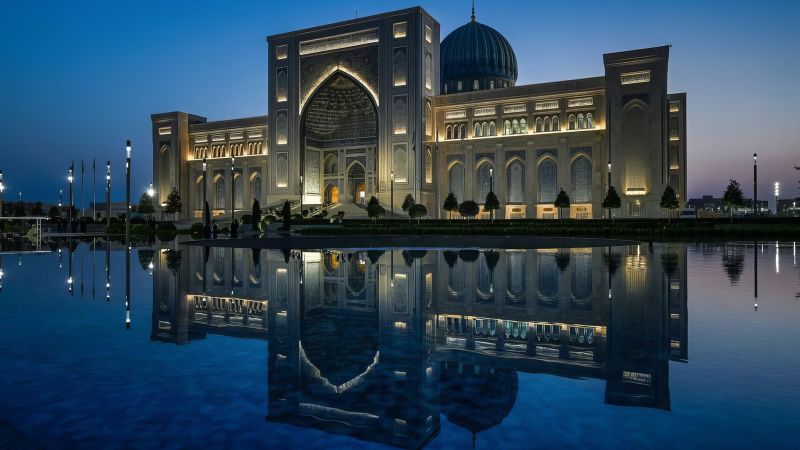
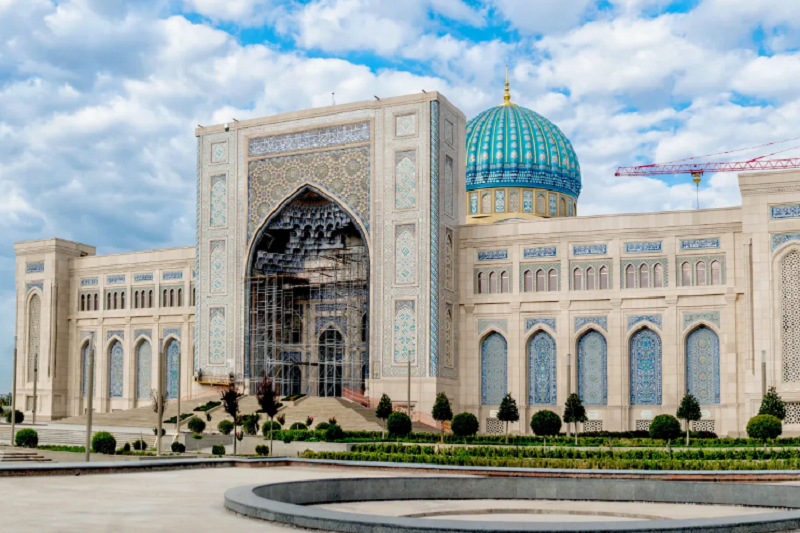
The Center for Islamic Civilization in Uzbekistan has emerged as a landmark cultural and intellectual initiative that has gained wide recognition from the international community. The project reflects the strategic vision of Shavkat Mirziyoyev, President of Uzbekistan, who has consistently promoted dialogue, enlightenment and mutual respect on global platforms.
Exactly one year ago, on January 29, 2025, President Mirziyoyev visited the Center of Islamic Civilization and provided key recommendations regarding the integration of scientific and innovative research into its exhibitions. He emphasized incorporating the work of more than two thousand domestic and international scholars so that the Center would become a global hub for research, education and intercultural dialogue.
Over the past year, construction of the Center has been fully completed, marking a historic milestone. Specialists, scholars and designers from more than 40 countries contributed to developing its exhibitions and research programs, making it a major international megaproject dedicated to preserving and promoting the intellectual heritage of Islamic civilization.
In September 2025, President Mirziyoyev announced from the podium of the United Nations that the construction of the Center had been completed and that it would soon open its doors to the world. Since then, its exhibitions have continued to expand, highlighting the rich legacy of Islamic civilization, the contributions of great scholars and the development of science, culture and education across centuries.
The establishment of the Center comes at a time when the world faces profound civilizational challenges, including geopolitical tensions, cultural divisions and the misuse of religion in conflicts. Uzbekistan’s initiative seeks to provide a platform for dialogue by highlighting the humanistic and scientific foundations of Islamic civilization.
President Mirziyoyev first presented this vision in 2017 during his address to the United Nations General Assembly, where he called for restoring the true place of Islamic civilization in world history. He stressed that Islam’s foundations lie in enlightenment, science and humanistic values, and that extremism and ignorance can be countered through knowledge and education.
The initiative has received strong international recognition. During a visit to the Center while it was under construction, António Guterres, Secretary-General of the United Nations, praised President Mirziyoyev’s leadership and his commitment to promoting dialogue and global cooperation.
Designed as a comprehensive civilizational complex, the Center includes a next-generation museum, advanced research facilities, a modern library and extensive national and international archives dedicated to the history of Central Asian civilization. Digital technologies and global academic partnerships have also been integrated to expand research and educational opportunities.
International leaders have also highlighted the Center’s significance. Kassym-Jomart Tokayev, President of Kazakhstan, described the Center as a unique scientific, tourist and ethnocultural project that could become a shared platform for research on Islamic civilization.
Similarly, Ilham Aliyev, President of Azerbaijan, said the Center demonstrates Uzbekistan’s commitment to preserving cultural and spiritual values and presents Islam as a religion of creativity, tolerance and humanism.
A key dimension of the project is the repatriation of cultural heritage. Through cooperation with international museums, collectors and auction houses, nearly two thousand rare artifacts have been returned to Uzbekistan, including manuscripts linked to scholars such as Ibn Sina and Al-Biruni, along with Timurid miniatures and other masterpieces of Islamic art.
Visiting leaders have also praised the exhibitions. Santiago Peña, President of Paraguay, highlighted the region’s historical contributions to global knowledge, including developments in algebra and medicine. Alexander Stubb, President of Finland, noted that thousands of years of history are presented in a modern and compelling way that allows visitors to truly experience the past.
Today, the Center for Islamic Civilization is emerging as a global intellectual hub, comparable to historic centers of knowledge such as Bayt al-Hikma in Baghdad and the Ulugh Beg Madrasa in Samarkand.
Combining historical knowledge with modern digital technologies, the Center represents a new model for cultural institutions in the 21st century. Manuscripts are being digitized for global access, while the museum functions as a dynamic research and educational platform that promotes international dialogue.
Through this ambitious initiative, Uzbekistan has positioned itself as an important contributor to global cultural cooperation. The Center for Islamic Civilization stands today as a powerful symbol of knowledge, heritage and dialogue among civilizations.

At 'Your World in Words,' we share stories from all over the world to make friends, spread good news, and help everyone understand each other better.
© 2026
Rahbar International
Leave a Reply