
rki.news
Human history shows that every great civilizational advancement rests upon strong intellectual and spiritual foundations. In this context, a remarkable initiative emerging from Central Asia has attracted global attention. The Center of Islamic Civilization in Tashkent, Uzbekistan, is not only an architectural landmark but also a visionary project aimed at connecting the past, present and future of the region through knowledge, culture and dialogue.
The Center is expected to open in March 2026 and has already drawn the interest of leading international institutions and publications, which view it as one of the most significant cultural initiatives of modern Uzbekistan.
The idea for the project was first introduced in 2017 when President Shavkat Mirziyoyev addressed the 72nd session of the United Nations General Assembly. During his speech, he called on the global community to rediscover the true humanistic essence of Islam, emphasizing that its foundations lie in enlightenment, peace and intellectual development. He noted that extremism and misunderstanding can best be addressed through education, culture and knowledge.
The project comes at a time when the world faces rising Islamophobia, ideological extremism and cultural divisions. Uzbekistan’s initiative offers a constructive response by promoting scientific inquiry, historical awareness and intercultural dialogue.
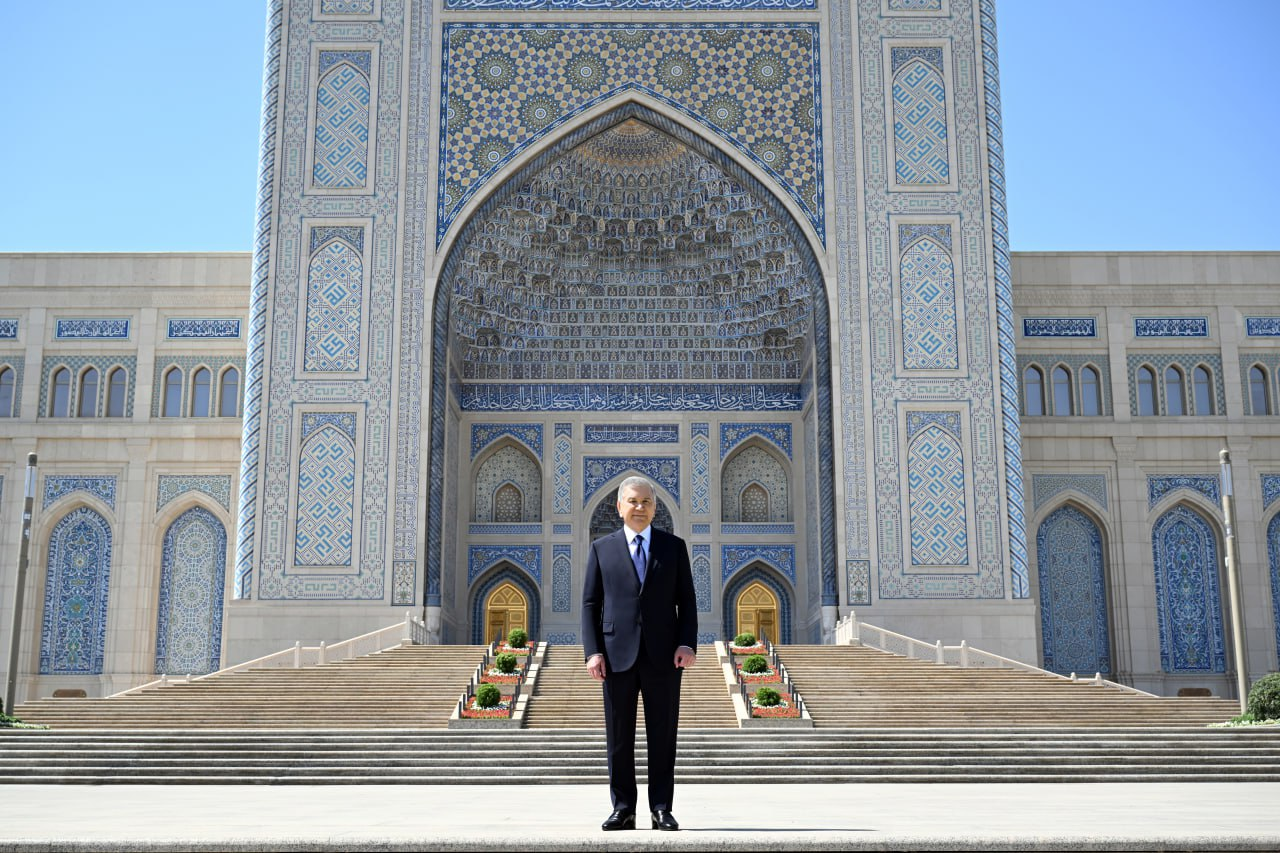
Located on nearly ten hectares in central Tashkent, the complex features a striking 65-meter azure dome and four golden gates symbolizing the unity of Uzbekistan’s regions. Its architecture blends the artistic traditions of the Timurid era with modern technological solutions, reflecting a harmonious balance between heritage and innovation.
The Center represents a unique integration of religion and science. Inspired in part by the historic Ulugh Beg Madrasa, the complex includes a calligraphic inscription of the first revealed Quranic word “Iqra” (“Read”), symbolizing the pursuit of knowledge as a fundamental spiritual duty.
One of the most valuable exhibits is the historic Uthman Quran, a seventh-century manuscript recognized by UNESCO in its “Memory of the World” Register. The relic highlights the deep spiritual and intellectual traditions of Islamic civilization.
Unlike traditional museums, the Center’s exhibition concept follows the principle “Civilization – Personalities – Discoveries.” It presents history as a dynamic intellectual process and traces the region’s development through the pre-Islamic era, the First and Second Renaissances of Central Asia, and the modern stage of New Uzbekistan, forming the foundation of what scholars call the Third Renaissance.
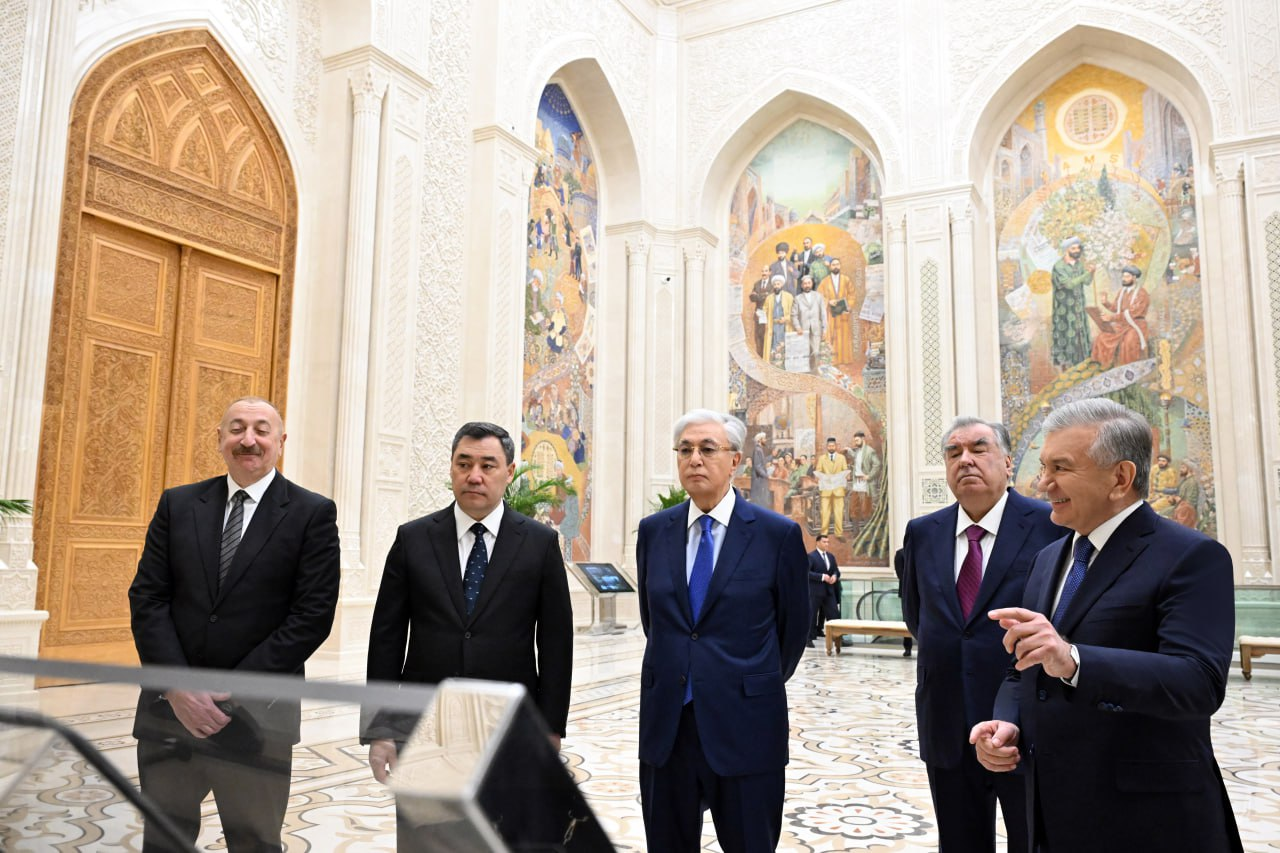
A key feature is the “Wall of Civilizations,” which illustrates humanity’s intellectual progress and highlights the contributions of renowned scholars such as Al-Khwarizmi, Al-Farghani, Ibn Sina, Al-Biruni and Ulugh Beg, demonstrating how their discoveries influenced modern scientific development.
Modern technologies play a central role in the exhibitions. Virtual reality, augmented reality, holograms and artificial intelligence are used to recreate ancient manuscripts, observatories and scientific experiments, transforming the museum into an immersive educational environment.
The Center also includes a special educational facility known as the “1001 Inventions Laboratory,” designed to encourage children to develop an early interest in engineering, science and innovation.
Another key mission of the Center is the restoration and repatriation of cultural heritage. Under the initiative of President Mirziyoyev, a special commission led by Center Director Firdavs Abdukhalikov has worked to locate rare manuscripts and artifacts abroad. Through cooperation with international museums and collectors, more than a thousand historical items have already been returned to Uzbekistan.
The World Society for the Study, Preservation and Promotion of the Cultural Heritage of Uzbekistan has also contributed by transferring numerous artworks and manuscripts from historical regions such as Transoxiana and Khorasan to the Center’s collection.
Beyond exhibitions, the complex functions as a major research and educational institution. It houses a library with over 200,000 volumes, restoration laboratories, digital archives and a calligraphy school. Offices of international organizations including ICESCO, IRCICA and the Oxford Centre for Islamic Studies are also located within the complex, strengthening its role as a global hub for academic cooperation.
More than 1,500 specialists from over 40 countries have participated in the project, which international experts describe as a unique civilizational complex integrating a modern museum, advanced research infrastructure and global cultural collaboration.
The Center’s growing international recognition was highlighted when the International Committee of the Prix Versailles included it among the “World’s Most Beautiful Museums of 2026.” The project has also been featured in prominent publications such as Smithsonian Magazine, National Geographic and BBC.
These achievements enhance the Center’s cultural, scientific and tourism significance, positioning it among the world’s major museum initiatives.
Significantly, the Center’s opening coincides with the holy month of Ramadan. The foundation stone was laid during Ramadan in 2018, symbolizing spiritual renewal. Eight years later, the Center of Islamic Civilization stands ready to open its doors as a symbol of knowledge, heritage and the intellectual revival of New Uzbekistan.

At 'Your World in Words,' we share stories from all over the world to make friends, spread good news, and help everyone understand each other better.
© 2026
Rahbar International
Leave a Reply