
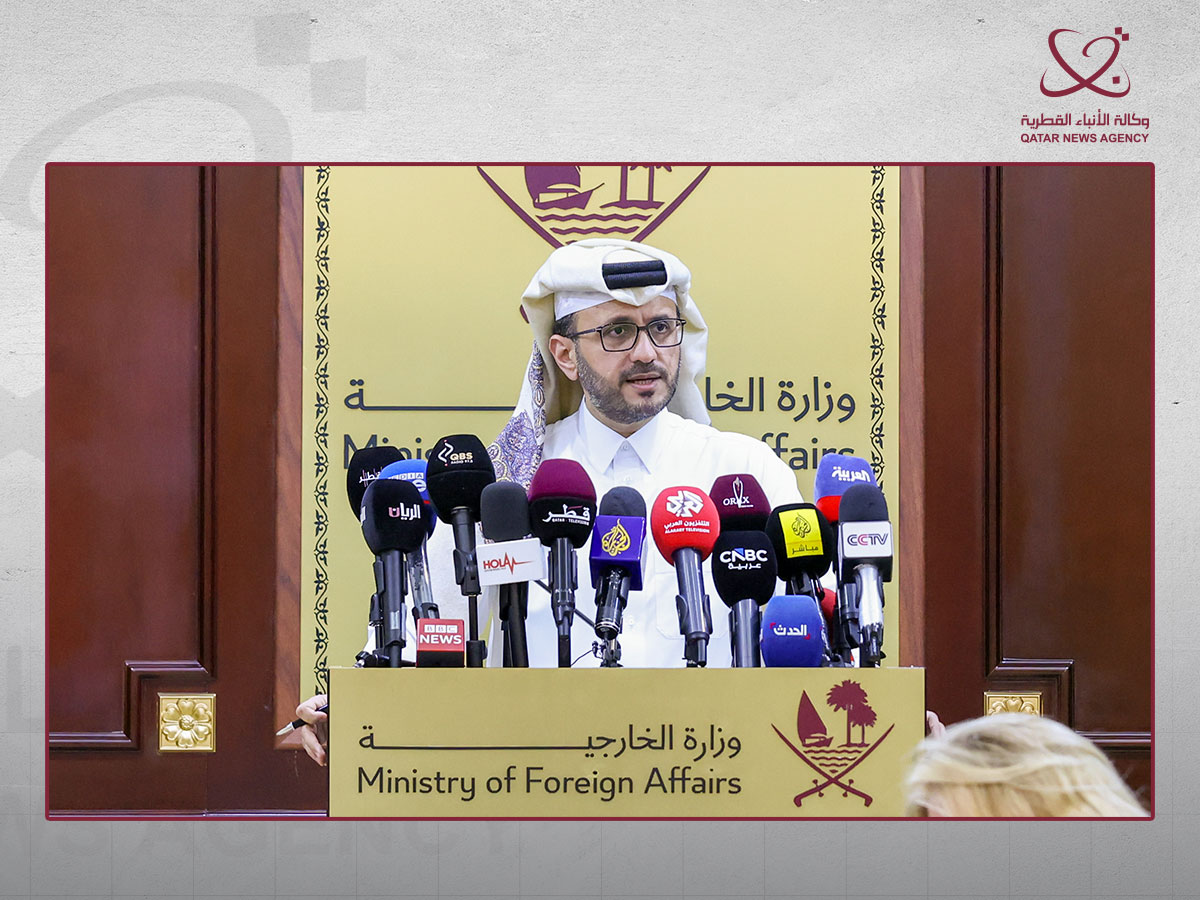
During the Ministry’s weekly media briefing Tuesday, Al Ansari said that the State of Qatar is currently focused on defending its sovereignty and territory and responding to the attacks it is facing.
He added that the State of Qatar is not currently engaged in mediation efforts, while continuing its full support for diplomatic efforts aimed at de-escalation and ending the war.
The Advisor to the Prime Minister and Official Spokesperson for the Ministry of Foreign Affairs noted that the Qatari Armed Forces have successfully intercepted more than 90 percent of attempted attacks against the country, contributing to maintaining security and normal life, pointing out that the State of Qatar reserves the right to respond to these attacks.
He warned that the continued escalation, which has not been addressed since 2023, carries increasing risks and could push the conflict to more dangerous levels, especially with the crossing of many red lines, particularly regarding the targeting of infrastructure and vital facilities.
Al Ansari stressed that targeting civilian facilities, including power and water plants, poses a serious threat to civilians and undermines infrastructure, emphasizing the need to adhere to international law and avoid targeting civilians or vital facilities.
He reiterated that the State of Qatar stands against any escalation that risks regional security and stability.
Regarding regional relations, he noted that the State of Qatar continues coordination with various regional and international partners, including the Islamic Republic of Pakistan, affirming Qatar’s support for efforts aimed at achieving sustainable de-escalation, with ongoing communications with all concerned parties.
He explained that Doha has not severed diplomatic relations with Iran, but has expressed its rejection of the attacks it faced and warned of their negative impact on bilateral relations, while stressing the importance of maintaining neighborly relations in the region.
On Lebanon, the Advisor to the Prime Minister and Official Spokesperson for the Ministry of Foreign Affairs reaffirmed Qatar’s firm position supporting respect for the sovereignty of the Lebanese Republic and rejecting Israeli attacks, including assassinations, targeting of civilians, and incursions into Lebanese territory, noting that such practices constitute a clear violation of international law.
Regarding Qatar’s legal actions, Al Ansari indicated that the State of Qatar has taken diplomatic measures through relevant channels and sent letters to the UN Security Council and the UN Secretary-General to document the violations it has faced, affirming the continuation of legal efforts in this regard.
He stressed that the security of the Strait of Hormuz is both a regional and global issue due to its link to energy security and global supply chains, calling for regional consensus on a security framework that ensures safe navigation and regional stability.
He warned of the risks of targeting vital facilities, including energy and nuclear installations, due to their serious consequences, such as radioactive contamination and power outages, stressing that such threats affect regional and global security.
He noted that communications among Gulf and Arab leaders have continued since the beginning of the crisis, with rapid and effective coordination reflected in joint statements and meetings, underscoring their commitment to protecting regional security and the interests of their peoples.
Regarding international support, Al Ansari expressed Qatar’s appreciation and thanks to all sisterly and friendly countries that contributed to defending the State of Qatar through various defense partnerships, including the strategic partnership with the United States of America, as well as Turkish forces present in Qatar, the joint squadron with the United Kingdom, defense partnerships with various European countries, and defense coordination with the Gulf Cooperation Council countries, affirming that these partnerships have played a major role in protecting Qatari facilities.
He pointed out that threats to the Strait of Hormuz and the energy industry in the Gulf pose a challenge to global energy security due to their impact on markets and supply chains, exports, and imports, affirming Qatar’s commitment as a reliable partner in this field.
The Advisor to the Prime Minister and Official Spokesperson for the Ministry of Foreign Affairs stated that it is still too early to discuss economic losses amid the ongoing crisis, stressing that the current priority is to protect the state’s sovereignty and security, with a comprehensive assessment of the repercussions to follow after the end of the war. (QNA)

At 'Your World in Words,' we share stories from all over the world to make friends, spread good news, and help everyone understand each other better.
© 2026
Rahbar International
Leave a Reply