
rki.news
Altaf Hamid Rao.
MIRPUR ( AJK): April 21: As a result of Pakistan’s Quiet but Effective Mediation in U.S.–Iran, the prospects for revivival of the India–Pakistan Composite Dialogue through President Trump’s Potential Role as a Facilitator have emerged.
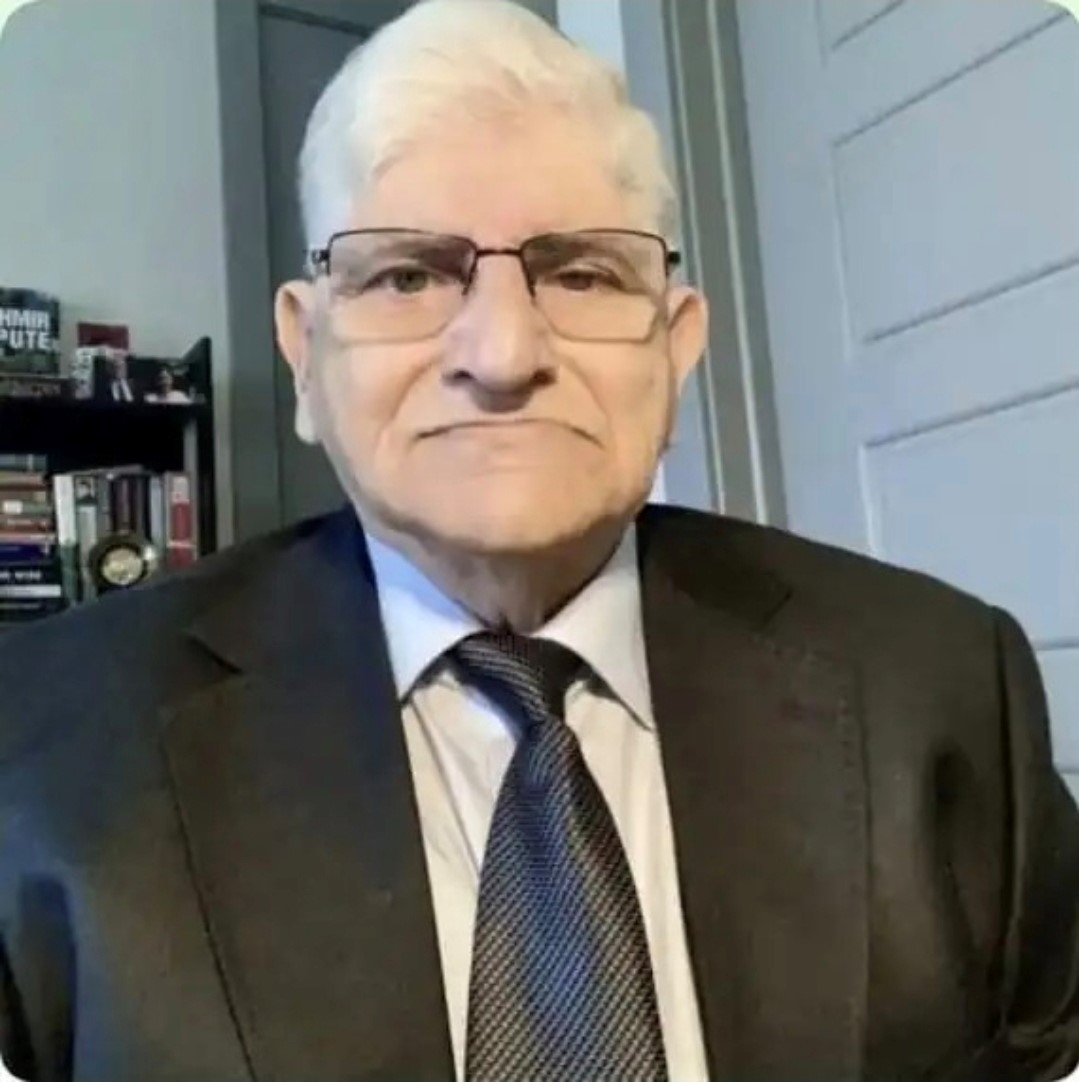
These views were expressed by Raja Muzaffar, Chairman of US-based Kashmir Peace Committee, Dallas Peace & Justice Center, a US-based Kashmiri think-tank.
Talking to this Correspondent from the United States on Tuesday, Raja Muzaffar, also acting Chairman Jammu Kashmir Liberation Front (Yasin Malik), obsrrved that the regional political landscape today was marked by a striking duality: on the surface, heightened tensions, hardened rhetoric, and diplomatic stagnation; beneath the surface, discreet diplomacy, back channel communication, and renewed attempts at mediation.
It is often these silent efforts that shape the direction of future events.
Commending Pakistan’s emerging role in de escalating U.S.–Iran tensions, the veteran Kashmir freedom struggle leader said that recent escalation between Iran and the United States brought the region dangerously close to a major conflict. At this critical juncture, Pakistan sought to position itself as a balanced and credible mediator, he suggested.
Muzaffar further stated that Islamabad leveraged its ties with Washington, Tehran, Türkiye, and Egypt to help reduce tensions.
Diplomatic engagements led by Field Marshal Asim Munir created an opening that resulted in President Donald Trump announcing a five day pause in planned strikes on Iranian infrastructure.
“This pause not only reduced the immediate risk of confrontation but also reopened space for dialogue on sensitive issues such as the Strait of Hormuz” he said.
“Gulf states increasingly view Pakistan as a potential “stabilizing regional force.”
Prime Minister Shehbaz Sharif’s deepening diplomatic engagement with Qatar further reinforces this perception”, he observed.
Refering to India’s continual traditional hostile to Pakistan’s peace loving approach to address the differences especially the core issue if Kashmir through a Composite Dialogue under the spirit of international norms and commitments, the Kashmiri think tank’ Supremo said “while India’s current leadership appears reluctant to acknowledge Pakistan’s diplomatic relevance, influential voices within India continue to emphasize the necessity of dialogue”, he observed.
Referring to India–Pakistan Relations and the reported Return of Quiet Diplomacy, the acting Chairman of JKLF (Y) said “following Operation Sindoor in May 2025, official communication between India and Pakistan nearly collapsed. However, Track 2 and Track 1.5 diplomacy quietly stepped in to fill the vacuum.
“Reports indicate that at least four significant back channel interactions have taken place:
* Two Track 1.5 sessions involving individuals linked to the security establishment in an informal capacity
* Two Track 2 dialogues involving former diplomats and policy experts
These meetings—held in London, Muscat, Thailand, and Doha—were facilitated by international think tanks.
Such discreet engagements demonstrate that despite public silence, dialogue continues behind the scenes.
These channels can play a decisive role in preventing any false flag incident or sudden escalation from spiraling into open conflict”, Muzaffar revealed without naming highly placed reliable sources.
While referring to the past collapsed stories in the backdrop of the India Pakistan ties, Raja Muzaffar said that in 1964, a historical lesson of securing opportunities was missed.
“History offers a powerful reminder that even in the most difficult circumstances, dialogue can open new pathways.
In 1964, Prime Minister Jawaharlal Nehru released Sheikh Mohammad Abdullah and his colleagues—
Mirza Afzal Beg, Maulana Masoodi, Sufi Mohammad Akbar, and Pir Maqbool Gilani—after more than a decade of imprisonment.
This was not a symbolic gesture; it was part of a serious political initiative.
Sheikh Abdullah’s visit to Islamabad, where he received a warm and dignified welcome, generated renewed hope for resolving the Kashmir issue.
His discussions with President Ayub Khan were progressing positively, and Nehru’s planned visit to Islamabad was expected to advance the process further.
But before the details of the negotiations could be finalized, Nehru suffered a fatal heart attack.
His sudden death halted the entire diplomatic effort and extinguished a rare opportunity that might have laid the foundation for a lasting settlement.
The region soon drifted toward the 1965 war.
The lesson is unmistakable:
Missing moments of dialogue is, in effect, inviting conflict”, he observed.
Suggesting thr Way Forward Today, Raja Muzaffar said “in the current environment, several confidence building measures could meaningfully shift the trajectory:
* Release of Yasin Malik and other political detainees
* Humanitarian gestures on both sides
* Reduction of tensions along the Line of Control
* Moderation in media narratives
* Institutionalizing back channel communication
Such steps could restore trust between India and Pakistan and potentially open the door to a broader U.S.–India–Pakistan trilateral conversation.
Reviving the Composite Dialogue Framework, which allowed all contentious issues to be discussed simultaneously, remains a practical and necessary approach.
Concluding his detailed interview to this scribe Raja Muzaffar said “the region may appear tense and uncertain, but ongoing quiet diplomacy, shifting regional dynamics, and the lessons of history all point to one truth:
the path to peace still exists.
Peace does not emerge from noise—
it is built through silent channels, courageous decisions, and timely action.
The real question is not whether dialogue is possibl – but whether we can afford to lose another moment like 1964”, he opined..

At 'Your World in Words,' we share stories from all over the world to make friends, spread good news, and help everyone understand each other better.
© 2026
Rahbar International
Leave a Reply