

rki.news
Written by:
Dr. Heman Kumar Lakhani
MBBS, MD (Russia)
Asthma remains a major global health challenge, affecting more than 260 million people worldwide and causing nearly 450,000 deaths each year. Despite the availability of effective treatments, asthma control remains poor in many regions, particularly in low- and middle-income countries, where gaps in healthcare access, diagnosis, and long-term management persist.
World Asthma Day, observed annually on the first Tuesday of May, is an initiative led by the Global Initiative for Asthma. It aims to raise awareness about asthma, highlight ongoing challenges, and promote better prevention and management strategies worldwide. The day serves as a reminder that asthma is not only a medical condition but also a public health concern requiring coordinated action.
Asthma is a chronic inflammatory disease of the airways, characterized by variable airflow obstruction and bronchial hyperresponsiveness. Patients commonly experience wheezing, shortness of breath, chest tightness, and cough, often worsening at night or in the early morning. These symptoms can fluctuate, frequently leading to delayed or missed diagnosis, especially in primary care settings where diagnostic tools may be limited.
The burden of asthma extends beyond symptoms, significantly affecting quality of life, school attendance, and workplace productivity. Recurrent attacks often result in emergency visits and hospitalizations, creating a financial burden for both patients and healthcare systems.
Asthma develops due to a combination of genetic predisposition and environmental exposures. Key risk factors include family history of allergic disease, air pollution, tobacco smoke, occupational irritants, and indoor biomass fuel exposure. Urbanization, obesity, and early childhood respiratory infections further contribute to the increasing global prevalence. Common triggers include dust mites, pollen, animal dander, respiratory infections, cold air, exercise, and exposure to smoke or chemical irritants. Identifying and avoiding triggers is essential for effective disease control.
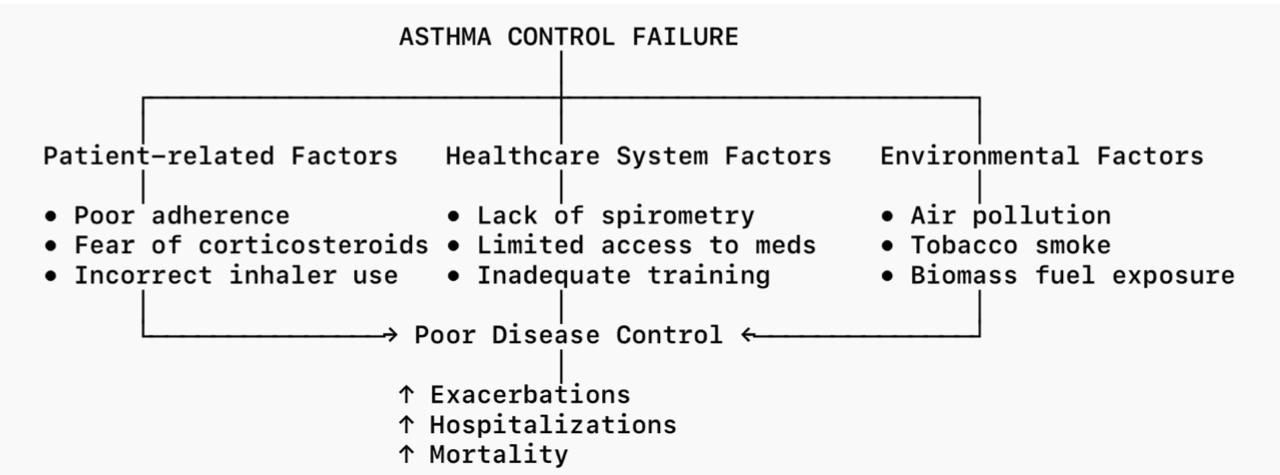
Despite clear treatment guidelines, asthma control remains suboptimal in practice. A major issue is incorrect inhaler technique, which leads to poor drug delivery and reduced treatment effectiveness. Another important factor is poor adherence to medication, often due to lack of education, misconceptions about asthma, or fear of long-term inhaled corticosteroid use.
In many regions, patients rely excessively on short-acting reliever inhalers while underusing preventive inhaled corticosteroids, which are essential for controlling airway inflammation. Limited access to affordable medications further worsens outcomes, especially in resource-constrained settings.
Recent advances in asthma management include combination inhalers used as both maintenance and reliever therapy, which reduce the risk of severe exacerbations. Biologic therapies targeting specific inflammatory pathways offer hope for patients with severe asthma, although their high cost limits accessibility. Digital tools, such as smart inhalers, may also improve adherence, but their use remains limited in many parts of the world.
Improving asthma care requires strengthening primary healthcare systems, ensuring the availability of essential medications, and training healthcare workers in proper diagnosis and inhaler technique. Patient education is equally important to enhance adherence and awareness of long-term disease control. Environmental measures, such as reducing air pollution, controlling tobacco exposure, and improving indoor air quality, are also crucial in preventing exacerbations and reducing disease burden.
World Asthma Day highlights that most asthma-related deaths are preventable. With timely diagnosis, appropriate treatment, and equitable access to care, asthma can be effectively controlled in the majority of patients. Bridging current gaps in healthcare delivery is essential to improving outcomes and reducing the global burden of this disease.

At 'Your World in Words,' we share stories from all over the world to make friends, spread good news, and help everyone understand each other better.
© 2026
Rahbar International
Leave a Reply