
rki.news
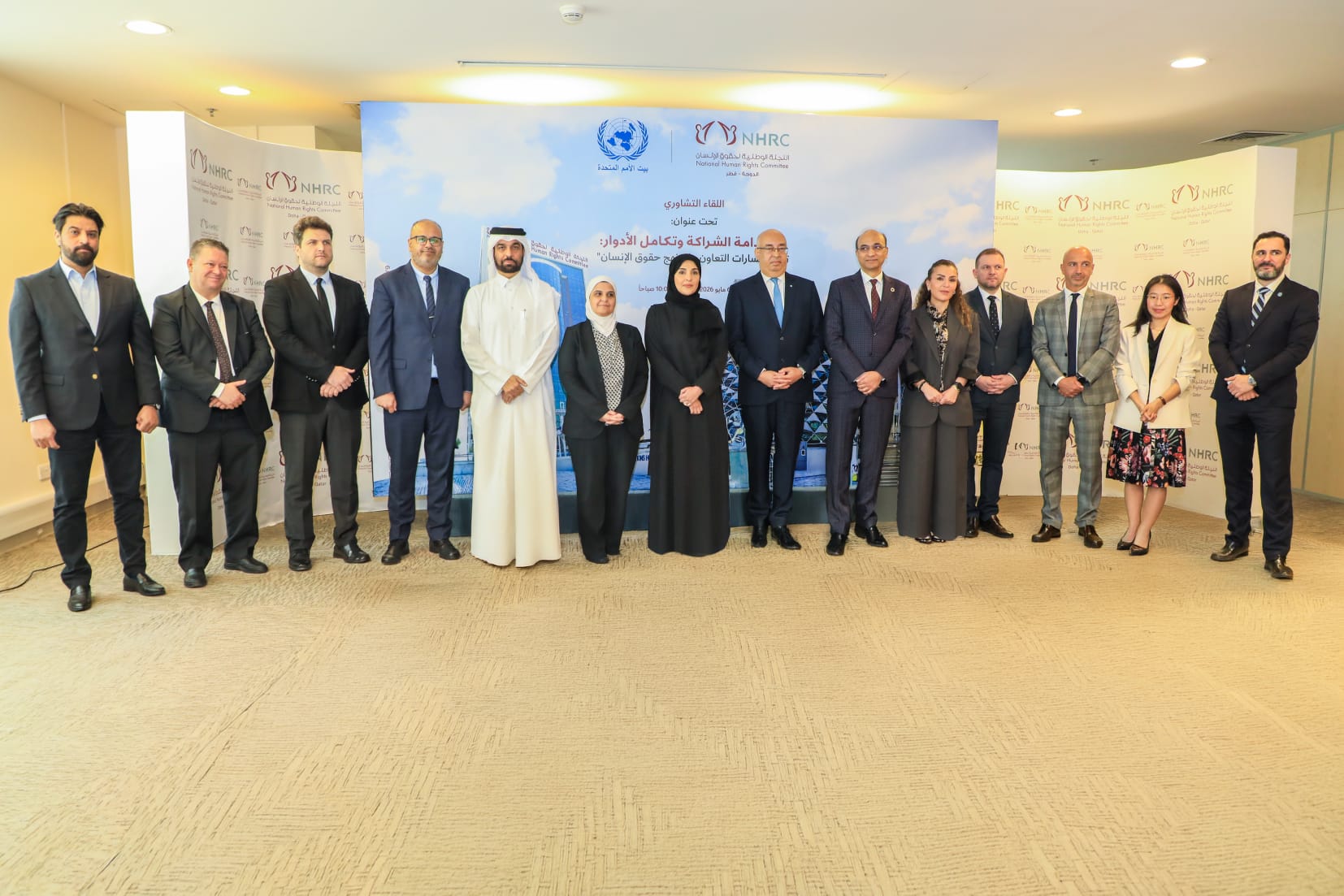
Doha, May 9, 2026 — National Human Rights Committee convened a high-level consultative meeting with United Nations agencies and offices in Doha under the theme “Sustaining Partnerships and Integrating Roles: Advancing Cooperation Through a Human Rights Approach.” The meeting focused on strengthening institutional cooperation, supporting the committee’s strategic vision, and expanding coordination on human rights and sustainable development goals.
The meeting brought together representatives from several UN entities, including the United Nations Training and Documentation Centre for South-West Asia and the Arab Region, the United Nations Office of Counter-Terrorism, UNICEF, the United Nations Development Programme, the United Nations Office on Drugs and Crime, the International Labour Organization, and the Office of the Special Representative of the UN Secretary-General for Children and Armed Conflict.
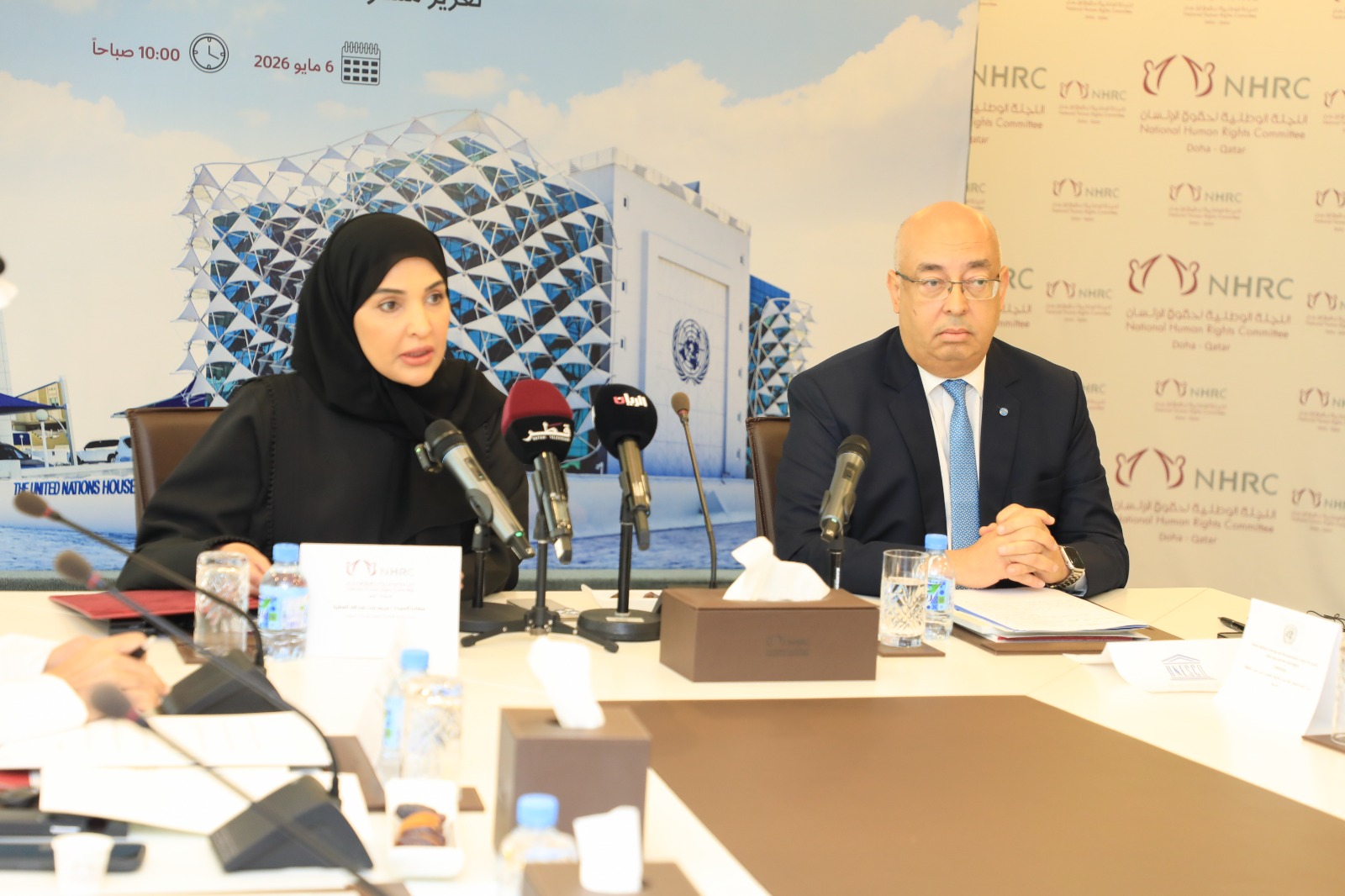
Her Excellency Maryam bint Abdullah Al Attiyah, Chairperson of the National Human Rights Committee, said the meeting reflects the growing institutional harmony and longstanding cooperation between the committee and United Nations bodies and mechanisms. She noted that this collaboration has resulted in numerous international conferences, forums, seminars, and initiatives aimed at addressing global human rights challenges and contributing to solutions aligned with international standards.
Al Attiyah expressed appreciation for the continued coordination with UN institutions, stressing the committee’s commitment to institutionalizing partnerships and expanding cooperation to strengthen the effective enjoyment of human rights and advance the goals of the 2030 Sustainable Development Agenda.
She highlighted that the committee’s Strategic Plan 2024–2030 was designed in line with the Paris Principles and the committee’s broad legal mandate, emphasizing stronger partnerships with national, regional, and international stakeholders, particularly UN agencies and specialized bodies.
“The promotion and protection of human rights require integrated roles, comprehensive coordination, and meaningful participation from all stakeholders,” Al Attiyah said. “This vision is reflected in our strategic objectives and in our engagement with civil society, youth, and future generations, in line with the principle of leaving no one behind.”
She added that the committee is working on innovative projects to reinforce a comprehensive human rights-based approach grounded in universality, inclusiveness, and the interdependence of human rights.
Al Attiyah also praised Qatar for its leading humanitarian efforts and support for UN initiatives across human rights and development sectors, noting that the consultations seek to further expand this cooperative approach.
Speaking on behalf of UN agencies and offices in Doha, Salah Khaled, Representative of UNESCO to the Gulf States and Yemen, said the work of the United Nations is founded on the principle that human rights are not optional but a fundamental obligation rooted in the UN Charter and international law.
He stressed that human rights must remain central to all UN efforts related to peace, security, development, and humanitarian action. Khaled emphasized the universality and indivisibility of human rights and underscored the responsibility of member states in protecting these rights, with the UN serving as a supportive partner that promotes accountability and the rule of law.
Khaled praised the National Human Rights Committee’s ambitious Strategic Plan 2024–2030, describing it as a shared framework capable of aligning national efforts with UN expertise to achieve tangible results.
“In Doha, we have a unique opportunity to move from coordination to an effective partnership,” he said. “While the United Nations provides international expertise and standards, the National Human Rights Committee contributes deep understanding of the national context and direct engagement with society. Together, this partnership can transform principles into measurable impact.”
The consultative meeting also featured a panel discussion titled “Institutional Partnership and Prospects for Joint Cooperation in Light of the National Human Rights Committee Strategic Plan,” focusing on sustainable coordination mechanisms between the committee and the UN system.
In addition, Mr. Saeed bin Jarallah Al-Somikh Al-Marri delivered a presentation on the committee’s Strategic Plan 2024–2030.
Discussions explored ways to transform strategic objectives into practical programs and measurable outcomes aimed at strengthening joint efforts to protect human dignity, promote the full realization of human rights, and support sustainable development goals.
At 'Your World in Words,' we share stories from all over the world to make friends, spread good news, and help everyone understand each other better.
© 2026
Rahbar International
Leave a Reply