
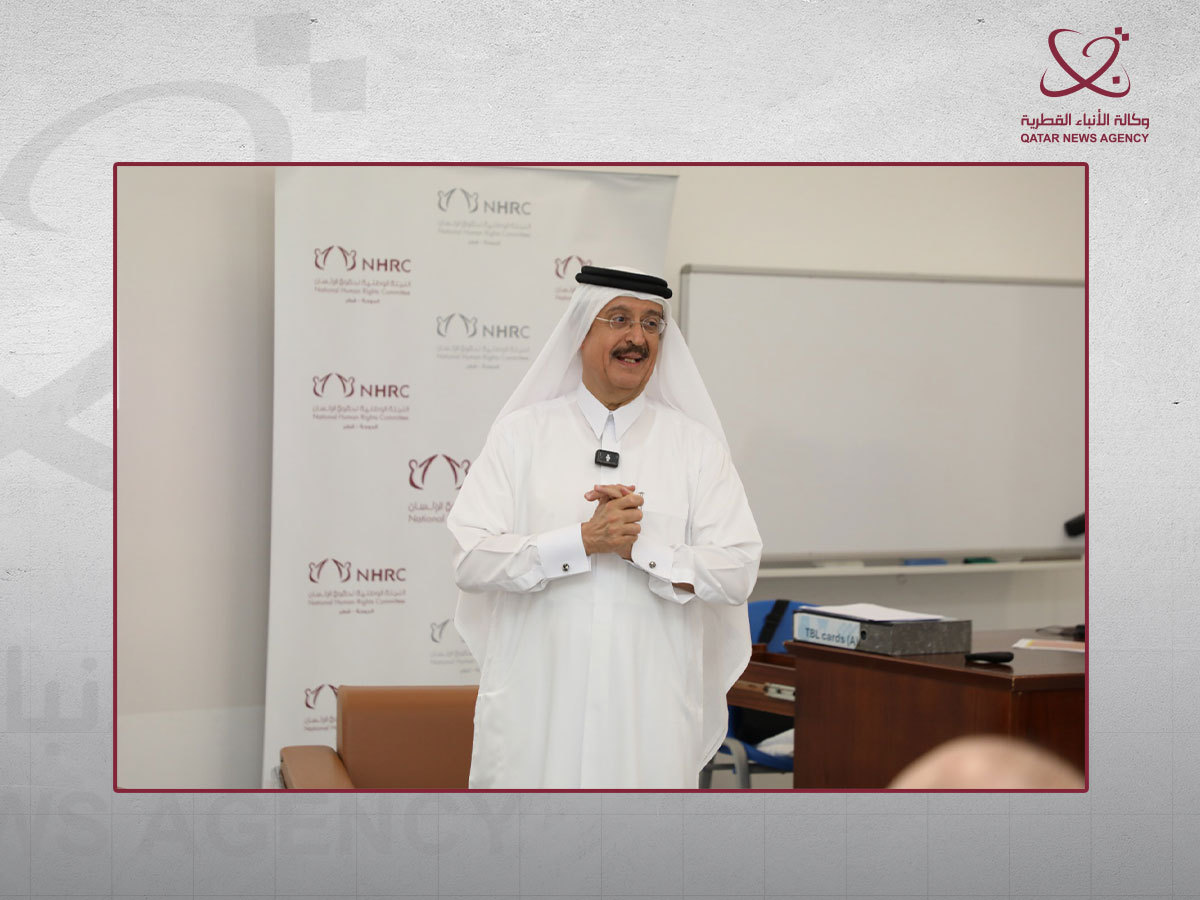
Doha: Qatar University (QU), in partnership with the National Human Rights Committee (NHRC), held a lecture focusing on the critical role of healthcare professionals in supporting and protecting human rights. The session was part of the Dean Lecture Series held under the theme “From Medicine to Serving Society.”
Dean of the College of Medicine at Qatar University, Prof. Abdulkarim Said Al Makadma, emphasized the importance of strengthening cooperation between academic institutions and national organizations in promoting human rights awareness. He highlighted the significant contribution of the NHRC in spreading a culture of human rights and enhancing public understanding of dignity, equality, and social responsibility.
He also underlined the importance of empowering healthcare professionals by improving their professional competence, ethical awareness, and commitment to societal responsibility, ensuring that medical practice reflects both scientific excellence and humanitarian values.
NHRC Deputy Chairman Dr. Muhammad Saif Al Kuwari stated that the right to health is a fundamental human right recognized in international human rights law, including the Universal Declaration of Human Rights and the International Covenant on Economic, Social and Cultural Rights.
He explained that healthcare professionals—including physicians, nurses, and allied health workers—hold a pivotal position in advancing human rights through their daily practice, advocacy roles, and participation in the development of healthcare systems and policies.
Dr. Al Kuwari further noted that rapid technological progress, particularly in artificial intelligence and digital transformation, is reshaping healthcare delivery worldwide. However, these developments also raise serious ethical and regulatory concerns, especially in relation to patient data privacy, cybersecurity, and the governance of cloud-based systems.
He stressed the importance of safeguarding informed consent in increasingly complex AI-driven healthcare environments, where decision-making processes rely on large-scale data systems and evolving technologies.
He concluded by calling for stronger investment in capacity building, institutional strengthening, and the development of healthcare systems grounded in human rights principles, including transparency, accountability, non-discrimination, and equal access to healthcare services for all.

At 'Your World in Words,' we share stories from all over the world to make friends, spread good news, and help everyone understand each other better.
© 2026
Rahbar International
Leave a Reply