
rki.news
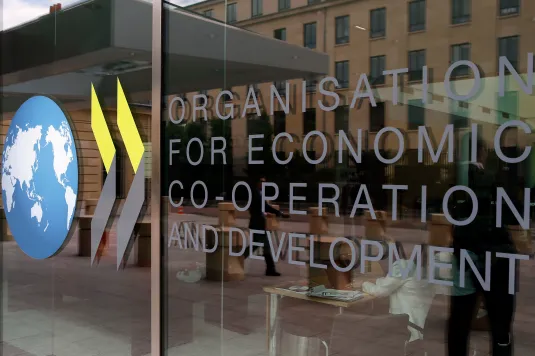
Global economic growth is projected to slow from 3.4 percent in 2025 to 2.8 percent in 2026 before recovering to 3.1 percent in 2027, according to the OECD Economic Outlook.
The OECD said the global economy entered 2026 stronger than expected, but rising Middle East tensions have become the main factor shaping the outlook.
It noted that the duration and scale of the conflict remain uncertain, while its economic effects may persist after resolution.
The report outlines two scenarios: a short-term disruption with limited impact, and a prolonged disruption with deeper consequences for global growth and stability.
Under a baseline scenario in which prospects for a peace deal between the United States and Iran improve and energy prices ease from mid-2026, growth is expected to follow the projected path.
However, the OECD warned that extended disruption could reduce global growth to 2.1 percent in 2026 and 1.8 percent in 2027, increasing recession risks in several economies.
It also projected higher inflation under prolonged tensions, driven by rising commodity prices and weaker global demand.
The OECD cautioned that policy responses must remain balanced to avoid worsening energy pressures and inflation risks.
It further stressed strengthening supply chains, diversifying energy sources, and improving energy efficiency to reduce vulnerability to global shocks.

At 'Your World in Words,' we share stories from all over the world to make friends, spread good news, and help everyone understand each other better.
© 2026
Rahbar International
Leave a Reply