
How Pakistan Brought Iran and the United States to the Table
rki.news | Special Feature
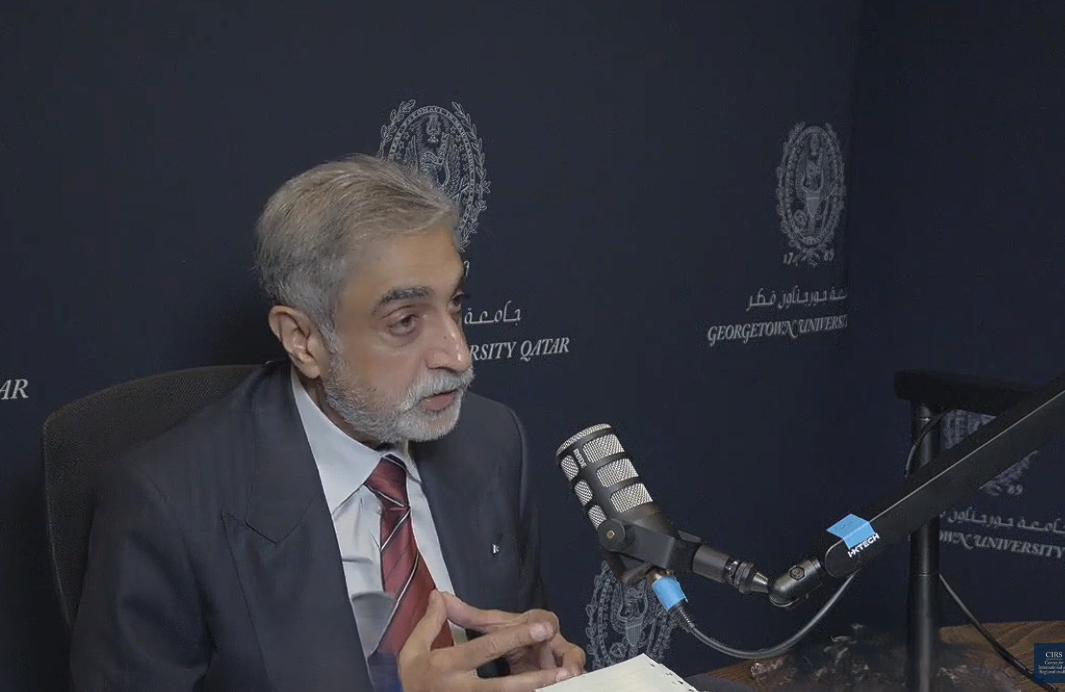
In a rare and candid conversation hosted by Georgetown University in Qatar’s Center for International and Regional Studies (CIRS), Maryam Daud, Administrative Assistant at CIRS, spoke with His Excellency Ambassador Muhammad Aamer, Pakistan’s Ambassador to Qatar, about Pakistan’s emerging role in facilitating one of the most sensitive diplomatic engagements in recent years — bringing Iran and the United States to indirect and then direct dialogue during a period of heightened regional tension.
Recorded on June 14 as part of the CIRS Long View series and published on June 21, the interview explores the diplomatic groundwork that led to what has been described as the “Islamabad Process,” a rare moment in which Washington and Tehran were brought to the same negotiating space for the first time since 1979. The conversation offers rare insight into backchannel diplomacy, regional trust-building, and Pakistan’s evolving role as a mediator in global affairs.
A Role Built on History, Geography, and Trust
Ambassador Muhammad Aamer began by emphasizing that Pakistan’s diplomatic role should not be viewed as an accidental development shaped only by recent crises. Instead, he described it as the result of decades of accumulated trust, strategic positioning, and consistent engagement with multiple global actors.
He pointed to Pakistan’s geographic location at the crossroads of South Asia, the Middle East, and Central Asia, as well as its cultural, religious, and economic linkages across these regions. These factors, he argued, have consistently placed Pakistan in a position where it engages simultaneously with competing regional and global interests.
Pakistan’s identity as a nuclear-armed state, its participation in international organizations such as the United Nations, ECO, and various multilateral platforms, and its longstanding security and diplomatic partnerships all contribute to its credibility.
“This is not something that emerged from a single event,” he explained. “It is a result of history, geography, and consistent diplomatic engagement.”
Rebuilding Trust with Iran After Tensions
One of the most closely watched aspects of Pakistan’s diplomatic positioning has been its relationship with Iran. Only a short time ago, both countries experienced tensions that included cross-border exchanges and political strain.
Ambassador Aamer acknowledged these difficult moments but emphasized that the outcome of those tensions was not continued hostility but renewed engagement.
He noted that Pakistan and Iran share more than 900 kilometers of border, along with deep cultural, religious, and historical ties. These realities, he said, make long-term estrangement neither practical nor desirable.
“What matters is not that differences occurred,” he said, “but that we chose to sit together, resolve them, and move forward.”
According to him, the process of rebuilding trust between Islamabad and Tehran became a crucial foundation for Pakistan’s later role as a mediator in broader regional tensions. Without that restored confidence, he suggested, Pakistan could not have been seen as a credible facilitator by either side.
Pakistan–United States Relations: Continuity Through Change
Turning to Pakistan’s relationship with the United States, the ambassador stressed continuity rather than disruption.
He acknowledged that Pakistan–U.S. relations have experienced cycles of cooperation and tension over several decades. However, he emphasized that communication channels have never been fully closed.
From security cooperation dating back to the 1950s to ongoing diplomatic, economic, and cultural engagement, the relationship has remained active even during difficult periods.
“We always kept the channels open,” he said. “Even when relations were not at their best, engagement never stopped.”
This continuity, he explained, allowed Pakistan to remain a relevant interlocutor for Washington when regional tensions escalated. It also contributed to Pakistan’s ability to engage both sides of the Iran–U.S. divide without being perceived as entirely aligned with one camp.
Deep Regional Linkages and Global Engagement
Ambassador Aamer also highlighted Pakistan’s broader diplomatic network, which extends beyond immediate neighbors.
He noted Pakistan’s strong relationship with China, its extensive engagement with European Union countries, and its deep cultural and economic ties with Gulf Cooperation Council (GCC) states.
A key element of this relationship, he explained, is the presence of nearly 10 million Pakistanis living and working across Gulf countries. Their contributions to infrastructure, development, and economic growth in the region have created an enduring people-to-people connection.
“These are not just diplomatic ties,” he said. “These are lived relationships between societies.”
He argued that such interconnectedness strengthens Pakistan’s credibility as a mediator because it is already embedded in the region’s social and economic fabric.
Stepping Into a Mediation Role
When asked how Pakistan transitioned from a diplomatic partner to an active mediator, Ambassador Aamer described it as both a responsibility and an opportunity shaped by circumstances.
He praised the diplomatic efforts of countries such as Qatar and Oman, which have long been recognized for their mediation roles in regional conflicts. However, he noted that as tensions escalated and certain diplomatic channels slowed, Pakistan stepped forward to help sustain dialogue.
Pakistan’s guiding principle, he emphasized, is not alignment with one party against another but the promotion of dialogue under all circumstances.
“We believe diplomacy must always remain alive,” he said. “Even in the most difficult situations, dialogue is better than division.”
He stressed that Pakistan does not see mediation as an exercise in influence but as a responsibility toward regional stability.
Diplomacy as Balance: Navigating Complex Relationships
The ambassador acknowledged that Pakistan’s relationships with Saudi Arabia, Iran, the United States, and China often appear complex to outside observers.
However, he described this complexity as a natural feature of diplomacy rather than a contradiction.
“Diplomacy is about balance,” he said. “It is about maintaining trust with multiple partners even when they do not agree with each other.”
He referenced Pakistan’s historical role in facilitating early diplomatic engagement between the United States and China in the 1970s as an example of its long-standing bridge-building function.
In his view, Pakistan’s relationships are not defined by exclusivity but by inclusivity and engagement.
“Friendly nations should not become points of division,” he added. “They should become bridges for dialogue.”
Behind the Islamabad Process
A significant portion of the interview focused on the negotiations that brought Iranian and American delegations together in Islamabad.
Ambassador Aamer emphasized that what the world saw — the formal meetings and high-level discussions — represented only the visible surface of a much deeper and longer diplomatic effort.
He explained that extensive backchannel diplomacy, consultations, and coordination preceded the formal talks by many months. Similarly, additional efforts continued after the meetings concluded to ensure communication channels remained active.
“The 21 hours of negotiation were important,” he said, “but they were only a fraction of the process.”
He estimated that hundreds, if not thousands, of hours were spent in preparation, coordination, and follow-up.
The objective, he explained, was never to stage a diplomatic event for visibility but to establish a sustainable process for engagement.
He also acknowledged the contributions of multiple countries, including Qatar, Saudi Arabia, China, Egypt, and Turkey, describing the outcome as a collective diplomatic achievement rather than a unilateral success.
From Negotiation to Process: The Islamabad Framework
When asked about perceptions that the talks had “failed,” Ambassador Aamer rejected the characterization entirely.
He argued that such assessments often stem from unrealistic expectations that deeply rooted conflicts can be resolved in a single meeting.
“In diplomacy, especially when history is involved, nothing ends in one sitting,” he said.
Instead, he described the outcome as the beginning of a structured diplomatic engagement — the Islamabad Process — which aims to maintain communication and reduce the risk of escalation over time.
According to him, the real success was not in achieving immediate agreement but in ensuring that dialogue between Iran and the United States resumed after decades of silence.
“The negotiations never failed,” he said. “The process is alive.”
He emphasized that diplomacy is not measured by immediate outcomes but by sustained engagement.
Equality in Diplomacy
A central theme of the interview was Pakistan’s commitment to sovereign equality in international relations.
Ambassador Aamer explained that the Islamabad Process was designed to bring both parties to the table as equals, without coercion or conditional frameworks.
He contrasted this approach with other diplomatic models that rely on pressure or punitive measures, arguing that such approaches often undermine trust.
Pakistan’s approach, he said, is grounded in the principles of the United Nations Charter, which emphasizes equality among nations regardless of power or size.
He added that Pakistan also benefited from continuous consultation with international partners, including Gulf states, China, the European Union, the United Kingdom, and the United Nations.
“This was never a unilateral effort,” he said. “It was a collective diplomatic process.”
The Rise of Regional Diplomacy
The conversation also addressed broader shifts in global diplomacy, particularly the growing role of regional and middle powers.
Ambassador Aamer observed that regional actors are increasingly taking on responsibility for managing conflicts within their immediate environments, especially when global institutions face constraints or delays.
However, he was careful to emphasize that this does not represent a decline in multilateralism.
Instead, he described it as a complementary development in which regional and global systems operate together.
Pakistan, he noted, remains firmly committed to the United Nations system and has consistently supported resolutions promoting dialogue and peaceful conflict resolution.
He quoted a former UN Secretary-General who once said that the United Nations exists not to bring humanity to heaven, but to prevent it from falling into chaos.
Why Pakistan Is Involved
Addressing Pakistan’s motivation for involvement, Ambassador Aamer highlighted both strategic and human dimensions.
Economically, Pakistan depends on energy imports from the Gulf and benefits significantly from remittances sent by millions of overseas Pakistanis working in the region.
However, he stressed that Pakistan’s involvement goes beyond economics.
It is rooted in shared culture, geography, religion, and long-standing political relationships.
“We are not just stakeholders in economic terms,” he said. “We are stakeholders in peace itself.”
He added that instability in the region directly affects Pakistan’s internal security, economy, and diaspora communities, making regional stability a national priority.
Looking Ahead: The Future of the Process
In concluding remarks, Ambassador Aamer cautioned against expectations of immediate breakthroughs.
He described diplomacy as a slow, deliberate, and often fragile process that requires patience and continued engagement.
The Islamabad Process, he explained, should be viewed as a starting point rather than a conclusion.
It has created space for dialogue where none existed before, but its success will depend on continued political will from all parties involved.
“The work now begins,” he said, “not in Islamabad, but wherever dialogue continues.”
He ended with a reflection on the fundamental principle underlying the entire effort:
“When nations talk to each other, the space for conflict becomes smaller. That is the true value of diplomacy.”

At 'Your World in Words,' we share stories from all over the world to make friends, spread good news, and help everyone understand each other better.
© 2026
Rahbar International
Leave a Reply