

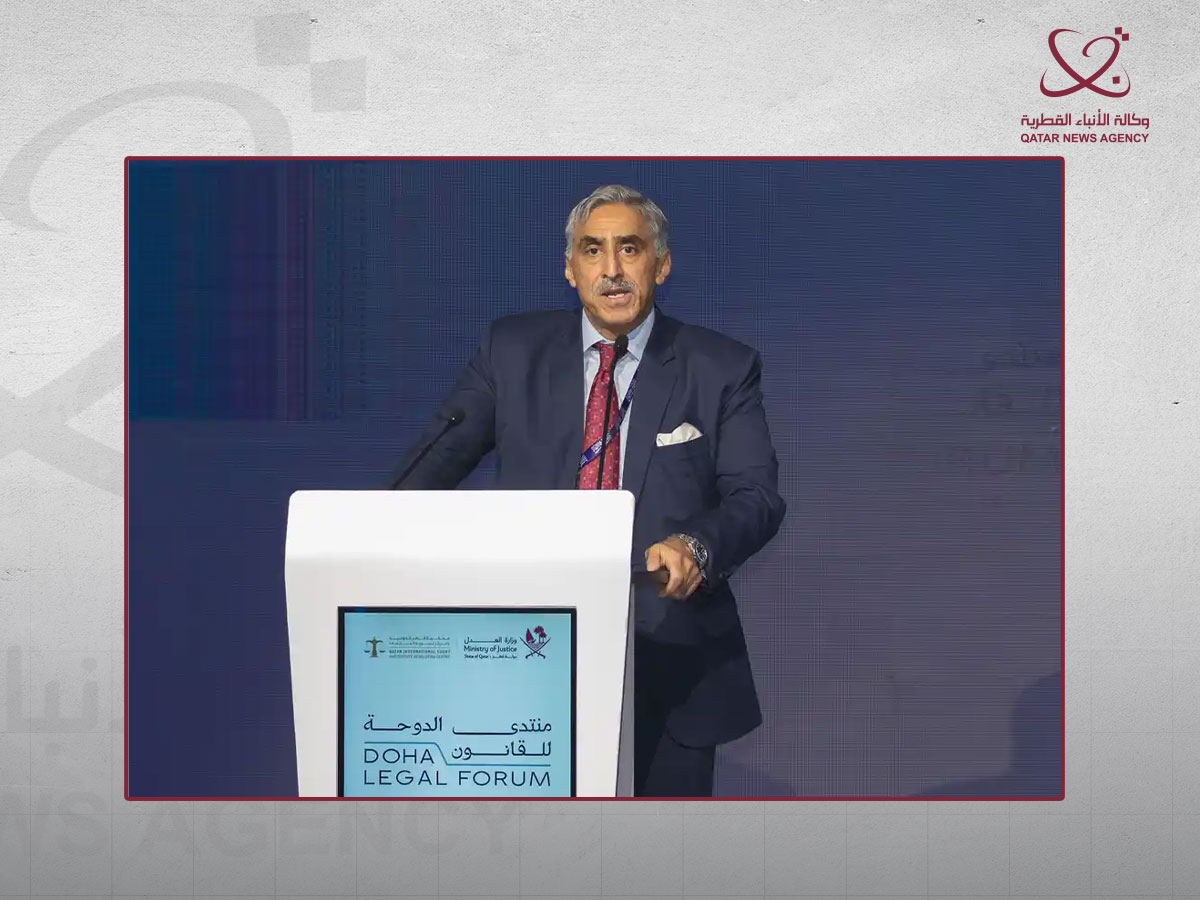
Doha, January 26 (QNA) – A keynote panel discussion within the Doha Legal Forum’s deliberations, organized by the Ministry of Justice in collaboration with the Qatar International Court and Dispute Resolution Centre, debated the future of energy sources in light of global trends, with a particular emphasis on legal, investment, and regulatory challenges.
Experts laid out an overall vision regarding the legal and regulatory challenges of future energy sources, stressing the significance of legislations in supporting innovation, investment, and environmental protection, and affirming that this matter has become pivotal on the regional and global stages.
Head of Atkin Chambers and former Chairman of the Bar of England and Wales, Chantal-Aimee Doerries, said the global pivot toward renewable energy is witnessing unprecedented dynamics. She noted that innovation in sustainable technology broadens wide apertures but could ignite legal disputes about the non-accomplishment of project objectives. She highlighted an upsurge in renewable energy production that surpassed coal for the first time, alongside record investments in solar and wind energy, and stressed the need for robust legal frameworks to manage future disputes and address transparency and social responsibility.
Prof. Khawar Qureshi of McNair International said Qatar has achieved a dynamic shift in energy legislations since 2008, citing Qatar National Vision 2030 in fostering the gas industry as a prime source of clean energy and supporting the global transition. He noted legislations focus on public-private partnerships, fair competition, investment, and climate protection.
Dr. Nihad Abdul Karim Al Husban, judge at the Jordanian Court of Cassation, highlighted Jordan’s transition to competitive partnership and efforts to raise clean energy to 31% under Jordan National Vision 2030.

At 'Your World in Words,' we share stories from all over the world to make friends, spread good news, and help everyone understand each other better.
© 2026
Rahbar International
Leave a Reply