
rki.news
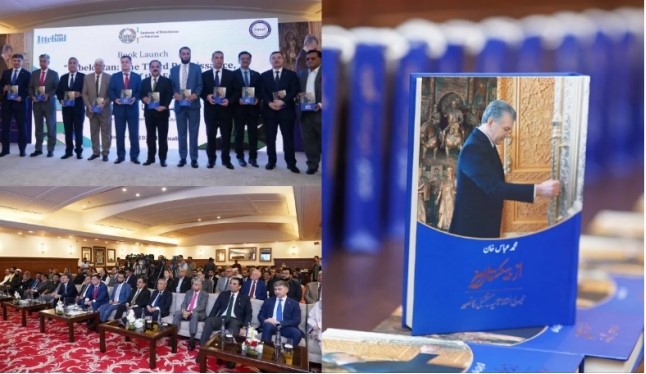
A special presentation of the Urdu-language book “Uzbekistan: Third Renaissance – Concept of the Future” was held in Islamabad, shedding light on Uzbekistan’s modern development model and its ambitious vision for national renewal. Authored by senior Pakistani journalist Muhammad Abbas Khan, the book provides a detailed narrative of Uzbekistan’s reform agenda under President Shavkat Mirziyoyev and explores its broader significance for the region.
The publication offers readers a comprehensive analysis of the intellectual foundations and historical roots of Uzbekistan’s “Third Renaissance.” It highlights how the concept draws inspiration from the nation’s rich scholarly heritage while integrating principles of modern governance, scientific progress, and inclusive development. The author emphasizes that these ideas reflect a blend of spiritual tradition, enlightened leadership, and a forward-looking approach, positioning Uzbekistan as an emerging example of transformation in the Muslim world. He further notes that the reform path of the “New Uzbekistan” may serve as an inspiring model for Pakistan and other Asian countries seeking balanced and people-centred development.
The ceremony in Islamabad was attended by government officials, diplomats, scholars, analysts, and members of the media. Federal Minister for Information and Broadcasting Attaullah Tarar participated as guest of honour. The event opened with the national anthems of Uzbekistan and Pakistan, followed by a documentary video summarizing nine years of reforms and leadership under President Mirziyoyev.
Welcoming the guests, Ambassador of Uzbekistan to Pakistan, Alisher Tukhtaev, highlighted the depth and scale of Uzbekistan’s transformation. He noted that the country has undertaken major social, economic, political, and educational reforms over the past nine years. As a result, Uzbekistan’s GDP has doubled to USD 115 billion, exports have increased to USD 26 billion, and foreign investments now exceed USD 130 billion. Thousands of new enterprises have been established, reflecting the country’s growing economic dynamism and openness to global cooperation.
Ambassador Tukhtaev also emphasized the strong and steadily growing partnership between Uzbekistan and Pakistan. He noted that relations have been elevated to a strategic level with the establishment of the High-Level Strategic Cooperation Council. Direct air connections between Tashkent, Islamabad, and Lahore, along with rapidly expanding cooperation in education, culture, and connectivity, continue to deepen bilateral ties. In this context, he underlined the significance of the Trans-Afghan Railway Project, calling it a vital initiative for strengthening peace, stability, and economic integration between Central and South Asia.
The Ambassador expressed sincere gratitude to the author and to Daily Ittehad publishing house for their efforts in bringing this significant work to Pakistani readers. He said the book would contribute to enhancing mutual understanding and consolidating the friendship between the peoples of both nations.
Addressing the audience, Tahir Farooq, head of the publishing house, described the book as a meaningful documentation of Uzbekistan’s evolving identity. He noted that the publication is not a translation or compilation but an original work based on five years of observation, research, and engagement by Muhammad Abbas Khan. Its value, he added, lies in presenting an informed and firsthand perspective of Uzbekistan’s transformation.
In his address, Minister Attaullah Tarar spoke about the deep historical bonds between Uzbekistan and Pakistan, recalling the shared heritage of the Timurid dynasty and the region’s centuries-old role in the Silk Road. He praised Uzbekistan’s efforts to revive regional connectivity and expressed Pakistan’s readiness to help promote the book and the broader Third Renaissance initiative among the Pakistani public.
Concluding the ceremony, author Muhammad Abbas Khan shared his motivations behind the project, describing Uzbekistan’s reforms as a “period of awakening” driven by openness, human dignity, education, and scientific revival. He expressed hope that the book would deepen cultural understanding and further strengthen Pakistan–Uzbekistan relations.
The publication is expected to serve as an important resource for Pakistani readers, offering detailed insights into Uzbekistan’s new development path and fostering stronger cultural and intellectual ties between the two countries.

At 'Your World in Words,' we share stories from all over the world to make friends, spread good news, and help everyone understand each other better.
© 2026
Rahbar International
Leave a Reply