
rki.news
Altaf Hamid Rao.
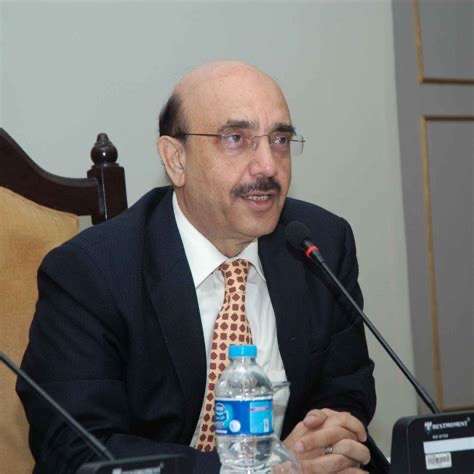
MIRPUR ( AJK): February 5: Former President of Azad Jammu Kashmir Sardar Masood Khan, also ex Ambassador of Pakistan to the United States, China, and the United Nations, has stated that Pakistan remains incomplete without Kashmir, asserting that the people of Jammu and Kashmir possess an inalienable right to self-determination grounded in history, international law, and decades of sacrifice.
Speaking at a Kashmir Solidarity event in the federal metropolis on Thursday, Ambassador Khan paid tribute to Qazi Hussain Ahmed for institutionalizing Kashmir Solidarity Day in the early 1990s and thanked the organizers for sustaining global awareness of the Kashmiri cause. He emphasized that solidarity with Kashmiris must be continuous, as Kashmir is not a peripheral issue but an integral part of Pakistan’s national identity and historical destiny.
Ambassador Khan underlined that Pakistan’s legal claim to Jammu and Kashmir rests firmly on the Indian Independence Act of 1947 and multiple UN Security Council resolutions, which mandate that the people of the territory decide their future through a UN-supervised plebiscite. He recalled that Kashmir met both criteria for accession to Pakistan—geographical contiguity and demographic composition—while also reflecting the clear aspirations of its Muslim majority population.
Highlighting historical injustices, Ambassador Khan recalled the Jammu massacre of 1947, in which over 237,000 Muslims were killed and hundreds of thousands displaced through orchestrated violence involving RSS cadres, Dogra forces, and allied militias. He noted that this demographic engineering drastically altered the population balance in Jammu and laid the foundation for prolonged occupation and repression.
He stressed that even in the absence of international legal instruments, Kashmiris possess an inherent right to freedom, having resisted tyranny for nearly 200 years—from Dogra rule to modern Indian governance. He cited landmark sacrifices, including the martyrdom of 22 Kashmiris on July 13, 1931, as evidence of a long-standing struggle for dignity, liberty, and self-rule.
Turning to developments after August 5, 2019, Ambassador Khan described the situation in Indian Illegally Occupied Jammu and Kashmir as “horrendous” marked by intensified militarization, political disenfranchisement, and systematic repression. He noted that nearly one million security personnel have been deployed across the territory, a posture consistent with occupation rather than integration. Elections held under Indian supervision, he added, have produced powerless leadership, with real authority concentrated in New Delhi.
Ambassador Khan also drew attention to demographic manipulation, economic coercion, and collective punishment, citing UN human rights reports documenting mass arrests, torture, property demolitions, and suppression of civil society following recent incidents. He emphasized that these actions constitute grave violations of international humanitarian law and the Geneva Conventions.
Referring to the post– Marq-e-Haq environment, Ambassador Khan observed that Kashmiri morale has strengthened as Pakistan’s diplomatic standing has improved globally. He noted that President Donald Trump explicitly referenced Kashmir when announcing a ceasefire, acknowledging its potential to trigger a catastrophic conflict with global consequences. He stressed, however, that sustained international engagement is still required to elevate Kashmir to the level of urgent global action.
Outlining the way forward, Ambassador Khan urged Pakistanis—especially youth—to reject skepticism and reaffirm national resolve on Kashmir. He argued that strengthening Pakistan economically and militarily is essential to sustaining a long-term struggle for justice, adding that parity, confidence, and resilience are indispensable in confronting India’s hegemonic ambitions.
He cautioned that international institutions often lack the political will to deliver justice due to systemic bias and double standards, noting that oppressed peoples in Kashmir and Palestine have repeatedly faced institutional paralysis. He advised patience and perseverance, pointing to the internal fragility of the Indian Union and the growing disenfranchisement of its Muslim population as long-term structural realities.
Ambassador Khan concluded by calling for a shift from mere statism to principled nationalism, stressing that Pakistan’s responsibilities extend beyond borders to include Kashmiris and persecuted minorities in the region. He demanded the release of Kashmiri political prisoners, including Yasin Malik, Shabbir Shah, Asiya Andrabi, and others, and urged the international community and human rights defenders to intensify advocacy for their freedom.
“The blood and sacrifices of Kashmiris are intertwined with Pakistan’s security and identity,” Ambassador Khan said. “Their struggle is our struggle, and justice for Kashmir remains a defining test of international conscience.”

At 'Your World in Words,' we share stories from all over the world to make friends, spread good news, and help everyone understand each other better.
© 2026
Rahbar International
Leave a Reply