
rki.news
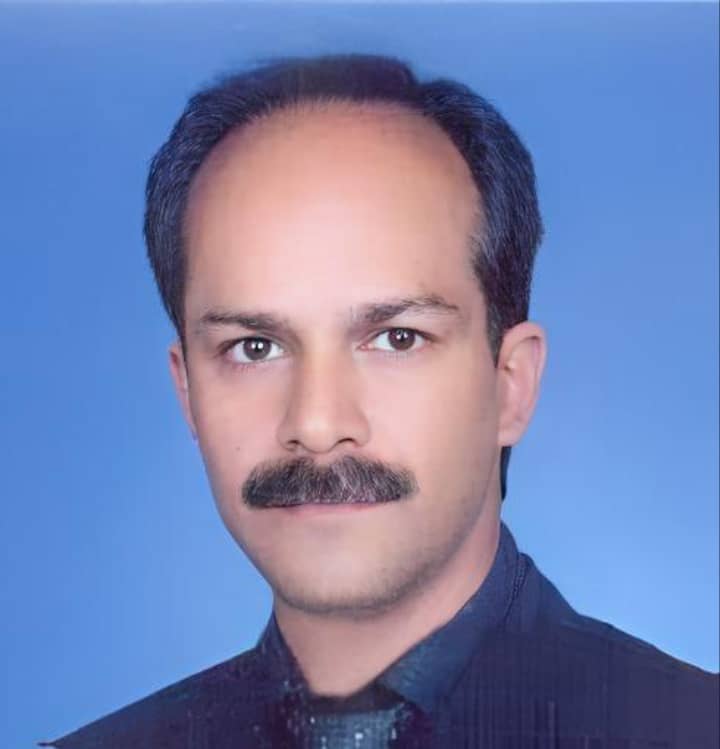
By: Syed Zeeshan Gillani
The shifting geopolitical landscape and the emerging balance of power in global politics have today positioned Pakistan’s capital, Islamabad, in a role that seemed nearly impossible just a few months ago. Recent sensational reports from Israeli media and claims by international news agencies have sent ripples from Washington to Tehran: preparations for high-level talks between the United States and Iran in Islamabad. This news is not merely a newspaper headline; it is an acknowledgment of Pakistan’s ‘silent yet tireless’ diplomacy that has brought a breath of fresh air to the scorched deserts of the Middle East.
At a time when the world stands on the brink of war, Pakistan’s emergence as a bridge is a monumental success for its foreign policy. For decades, Pakistan’s foreign policy has struggled to maintain a difficult balance. On one hand is its brotherly Islamic neighbor, Iran, with whom it shares deep cultural and historical roots. On the other is the global superpower, the United States, with whom relations have seen ups and downs but have always remained strategically significant.
The recent statement by Deputy Prime Minister and Foreign Minister Ishaq Dar in the Senate—that Pakistan is fully prepared to facilitate dialogue between Washington and Tehran—is a true reflection of this new realpolitik, where Pakistan is no longer just protecting its own interests but has emerged as a global stakeholder in resolving international crises.
According to Israeli media, the figures set to gather on Islamabad’s soil this weekend are major players in global politics. The presence of U.S. Vice President JD Vance, along with Donald Trump’s close associates Jared Kushner and Steve Witkoff, indicates that the U.S. is taking an ‘unconventional’ path to de-escalate tensions with Iran this time. Conversely, the arrival of Iranian Parliament Speaker Mohammad Bagher Ghalibaf and other high-ranking officials in Islamabad demonstrates the confidence Tehran places in Pakistan’s neutrality.
If these meetings reach fruition, history will record Islamabad alongside cities like Geneva or Vienna as a ‘hub of global negotiations.’ A vital aspect of this diplomatic success is that Pakistan is not acting alone but has formed a “Trinity of Peace” alongside key regional players like Turkiye and Egypt. Diplomatic sources confirm that officials from Pakistan, Turkiye, and Egypt are in constant contact to ensure no obstacles hinder the transmission of messages between the U.S. and Iran. This back-channel diplomacy becomes even more critical when overt negotiations are difficult. Pakistan leading this tripartite alliance is a testament to its diplomatic prowess, proving that its position in the Muslim world remains pivotal.
No country’s foreign policy can succeed unless its internal leadership is on the same page. Under the leadership of Prime Minister Shehbaz Sharif and Chief of Army Staff (COAS) General Asim Munir, Pakistan has launched a diplomatic offensive aimed at ending global isolation and establishing a positive international identity. The Army Chief’s visits to various Arab nations and Western capitals, combined with the Prime Minister’s effective representation at international forums, have provided the foundation upon which these peace talks now stand. This harmony has signaled to the world that Pakistan possesses the capability to fulfill the promises it makes.
The impact of Pakistan’s positive diplomacy will not be merely political but also economic. If the Islamabad talks succeed and the clouds of war disperse over the Middle East, the biggest beneficiary will be the regional economy. This would lead to stability in oil prices, the security of trade routes, and potential progress on stalled projects like the Iran-Pakistan Gas Pipeline. This is an opportunity for Pakistan to rebrand itself from a security state to an ‘economic hub,’ where global investors see peace as a guarantee for investment.
Certainly, this journey is not easy. Iran’s initial denial of these talks and the questions arising in Western media show that many hurdles remain. Countries like Israel, which may not see close ties between Iran and the U.S. as being in their interest, might attempt to sabotage these efforts. However, the beauty of diplomacy is that it is about turning the impossible into reality. Pakistan is positioning itself as an honest broker, advocating solely for humanity and peace without becoming a party to the conflict.
History reserves a place for nations that display the courage to make bold decisions in times of crisis. Today, Pakistan stands at precisely such a crossroads. As the motorcades of global leaders traverse the streets of Islamabad, it will be more than a mere display of state protocol; it will be a declaration of the resurgence of Pakistan’s prestige—a standing reclaimed through years of persistent and untiring effort. Islamabad’s proactive diplomacy has demonstrated that Pakistan’s nuclear status is not merely a deterrent for defense, but the very bedrock of its diplomatic influence.
Pakistan is no longer viewed as part of the problem, but as a primary catalyst for the solution. Should these negotiations lay the groundwork for lasting regional peace, the credit will undoubtedly belong to Pakistan’s civil and military leadership, who have kindled the flame of reconciliation amid animosity and peace amid the shadows of war. Let us hope that the tranquil atmosphere of Islamabad succeeds in shattering the decades-long stalemate between Washington and Tehran, allowing Pakistan to once again shine on the global stage as a true ‘harbinger of peace.’

At 'Your World in Words,' we share stories from all over the world to make friends, spread good news, and help everyone understand each other better.
© 2026
Rahbar International
Leave a Reply