
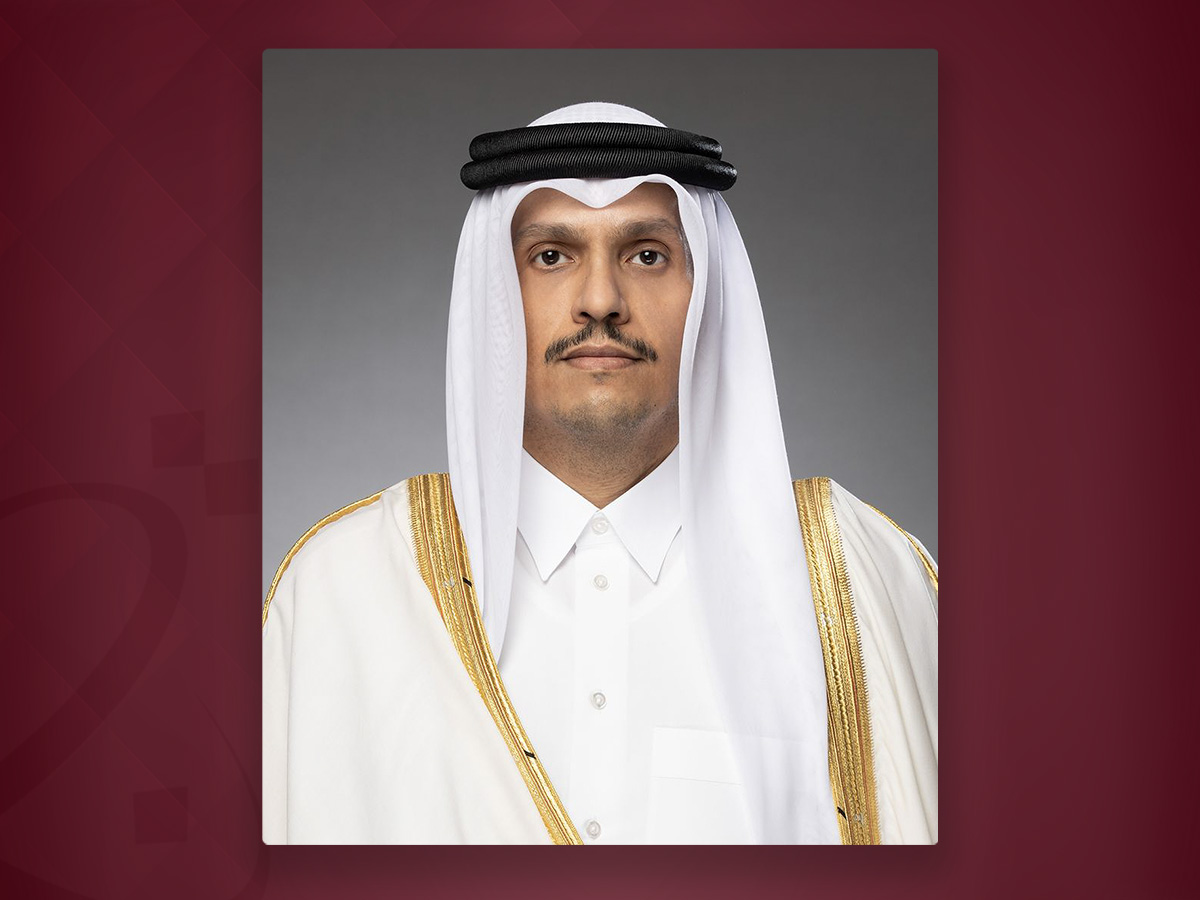
Doha, March 10 (QNA) – HE Prime Minister and Minister of Foreign Affairs Sheikh Mohammed bin Abdulrahman bin Jassim Al-Thani has strongly condemned Iranian attacks on the State of Qatar and other Gulf countries, stressing that the justifications provided by Tehran are “totally rejected.”
In an interview with Sky News, His Excellency praised the professionalism of the Qatari armed forces and security services in protecting the country, its citizens, residents and visitors during the current crisis.
HE Sheikh Mohammed said the situation has been difficult for the country but highlighted the effective response of defense and security personnel in confronting threats. He noted that Qatar had always sought to build a constructive relationship with Iran based on good neighborliness and good faith.
“We never expected this to come from our neighbor,” he said, adding that the explanations presented by Tehran to justify the attacks on Qatar and other Gulf states are unacceptable.
His Excellency described the attacks as a “betrayal,” explaining that they appeared to have been pre-planned and occurred immediately after the outbreak of war. He stressed that Gulf countries had repeatedly stated before the conflict that they would not participate in attacks or wars against neighboring states and preferred a peaceful regional environment.
He also noted that Qatar had worked to support diplomatic efforts between Iran and the United States to reach solutions through dialogue.
However, he said the decision to attack Gulf countries represented a major miscalculation that has severely damaged trust and cooperation.
The Prime Minister explained that the strikes targeted not only military facilities but also civilian infrastructure, including energy installations, industrial complexes and even drinking water systems. He described these attacks as reckless and said they pose serious risks to civilian life and essential services.
Despite the attacks, His Excellency affirmed that Qatar possesses the capability and trained personnel necessary to defend the country and protect its population. He stressed that the authorities are working to minimize the impact of the attacks and ensure that vital services continue to function.
HE Sheikh Mohammed emphasized that Qatar will never accept attacks on civilian or energy infrastructure, whether in its own territory or elsewhere. He said this position has been consistent in other international crises, including Russia and Ukraine as well as the situation in Gaza.
He revealed that on the second day of the war one of the main Iranian attacks targeted a gas facility, creating significant risks and forcing Qatar to declare force majeure and temporarily halt operations.
Commenting on statements by the Iranian President promising to stop attacks on neighboring states, HE Sheikh Mohammed said that many countries, including Qatar, had hoped the attacks would cease. However, he noted that an attack occurred only minutes after the statement was made.
He added that later the same day massive attacks targeted the United Arab Emirates and Bahrain while Gulf Cooperation Council countries were discussing a joint position calling for de-escalation.
According to His Excellency, Bahrain was struck directly during those developments, and around thirty minutes later Doha itself was targeted.
The Prime Minister stressed that regional countries do not want to become part of the war and continue to seek an immediate cessation of hostilities. He reiterated that diplomatic solutions remain the preferred path.
At the same time, he affirmed that Qatar reserves the full right to defend itself and will take every measure necessary to deter threats. He stressed that while Qatar does not want to be dragged into the conflict, defending the country remains a fundamental principle.
Discussing the wider regional situation, HE Sheikh Mohammed described it as extremely serious and warned that the crisis affects not only regional stability but also global security and the world economy.
He highlighted the importance of the Gulf region as a major global transit hub, noting that around 350 to 360 million passengers travel annually through airports in Doha, Abu Dhabi and Dubai. The crisis, he said, has disrupted aviation and global logistics.
His Excellency also underlined the global significance of Qatar’s energy production. Qatar supplies around 20 percent of global energy, and the halt in operations during the first day of attacks had a noticeable impact on international prices.
On the second day, he said, strikes targeted industrial complexes, forcing the shutdown of factories and manufacturing plants, including fertilizer production facilities.
He noted that Qatar is the world’s second-largest producer of urea, representing about 10 percent of the global market, which has implications for agriculture and food security in countries that rely on these supplies.
In addition, Qatar produces around 35 percent of the world’s helium, a critical component used in medical equipment and other advanced technologies.
HE Sheikh Mohammed stressed that the situation in the Gulf has serious implications for both regional and global security. He called on Iran to stop attacks on Gulf countries and other states that are not parties to the conflict.

At 'Your World in Words,' we share stories from all over the world to make friends, spread good news, and help everyone understand each other better.
© 2026
Rahbar International
Leave a Reply