rki.news | Source: Embassy of the Republic of Türkiye, Doha
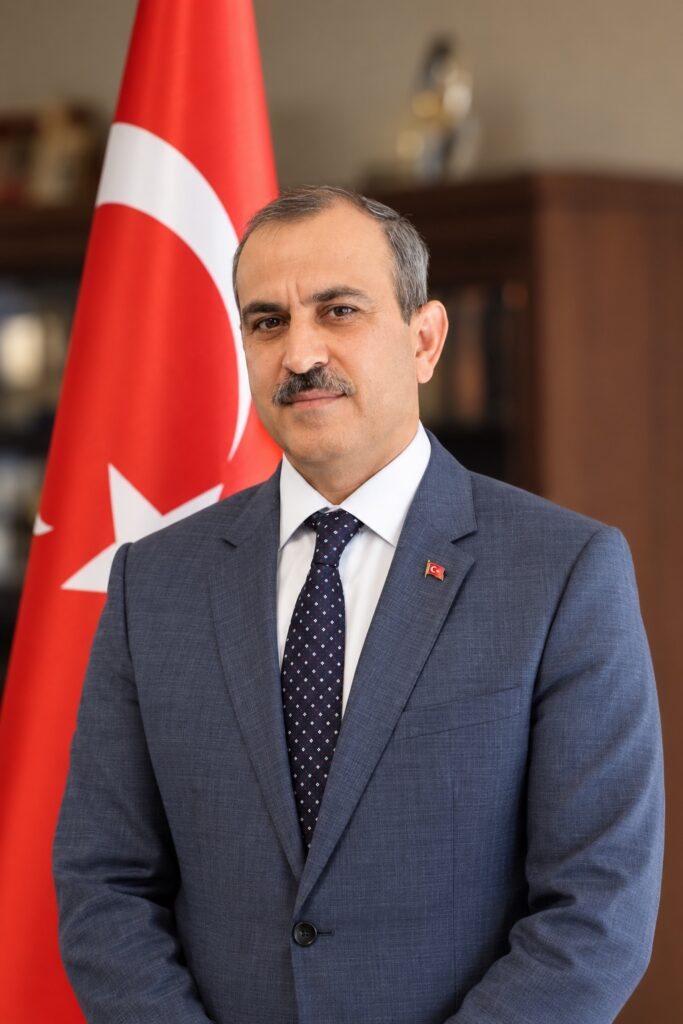
DOHA, Sept. 23: HE Yakup Caymazoğlu, Ambassador of the Republic of Türkiye to the State of Qatar, said the addresses delivered by HE President Recep Tayyip Erdoğan and HH Sheikh Tamim bin Hamad Al Thani, Amir of the State of Qatar, at the 81st Session of the United Nations General Assembly demonstrated the strong convergence of views between the two countries on critical issues facing the region and the world.
Recalling President Erdoğan’s observation that the past year, marked by more than 60 conflicts, has been one of the bloodiest of the last three decades, and HH the Amir’s assessment that the current crisis is the cumulative result of years of postponement, temporary solutions and unrealistic policies, Ambassador Caymazoğlu said both leaders share the conviction that lasting solutions can only come through justice, dialogue, diplomacy and respect for international law.
A Common Voice for Gaza and Palestine
The Ambassador emphasised that Gaza and the Palestinian cause stood at the heart of both addresses. He drew attention to President Erdoğan’s description of Gaza as not only the world’s largest children’s cemetery, but also the region with the highest rate of child amputees in the world, while HH the Amir described what has happened in Gaza as “genocide in every sense of the word” and “a stain of shame on the conscience of humanity as a whole.”
Ambassador Caymazoğlu noted that both leaders called for greater international responsibility to protect the Palestinian people, consolidate the ceasefire and achieve lasting peace. Both also reaffirmed the Palestinian people’s right to an independent state with East Jerusalem as its capital, with President Erdoğan underlining that it must be based on the 1967 borders.
Strengthening the International System
Ambassador Caymazoğlu noted that both leaders placed the crises confronting the region within the broader challenge facing the international system.
President Erdoğan warned of the growing inability of the United Nations to respond effectively to conflicts and humanitarian crises. He reiterated his call for reform of the Security Council under the principle that “the world is bigger than five,” while also drawing attention to the pressures faced by UNRWA.
HH the Amir, while likewise stressing the importance of international law and its equal application, reaffirmed Qatar’s commitment to the United Nations. He highlighted the expansion of the United Nations House in Doha as a continuation of Qatar’s longstanding partnership with the Organization and an enhancement of its capacity to serve peace, development and human rights.
“These are complementary messages,” Ambassador Caymazoğlu said. “The shortcomings of the international system call not for less multilateralism, but for a stronger, fairer and more effective international order capable of upholding its own principles.”
A Shared Vision for Regional Security
Referring to the current crisis in the Gulf, Ambassador Caymazoğlu drew attention to a significant convergence between the two leaders on the future of regional security.
HH the Amir identified the absence of a regional system of collective security as being at the heart of the dangerous situation facing the region. He called for a framework based on respect for the sovereignty, security and territorial integrity of states, the peaceful settlement of disputes and non-interference in their internal affairs.
Ambassador Caymazoğlu noted that this vision closely corresponds with President Erdoğan’s emphasis on regional ownership and collective security, including through the recently concluded Joint Defence Agreement between Türkiye, Saudi Arabia and Pakistan, which seeks to contribute to regional peace, prosperity and stability.
“The countries of our region must assume greater responsibility for their common security through cooperation based on sovereignty, mutual respect and international law,” the Ambassador said.
The same convergence was evident on the Strait of Hormuz. President Erdoğan stressed that freedom of navigation through the Strait must be preserved. HH the Amir expressed his conviction that the Gulf crisis can be resolved through diplomatic means by reopening the Strait to maritime navigation and returning to negotiations to avert war. He also warned against turning the lifelines of the global economy into instruments of pressure and bargaining.
Diplomacy and Mediation as a Strategic Choice
Ambassador Caymazoğlu highlighted another point of convergence between Türkiye and Qatar: their commitment to diplomacy and mediation as central instruments of foreign policy.
He recalled Qatar’s mediation efforts in Gaza to stem the bloodshed, alleviate civilian suffering and secure the release of prisoners and detainees until a ceasefire was achieved, as well as its continuing efforts to consolidate the ceasefire and move towards lasting peace. He noted that Qatar’s commitment to dialogue and peaceful settlement extends to other regional crises, including its support for inclusive dialogue and sustainable peace in Sudan and for a comprehensive political settlement in Yemen under United Nations auspices.
Ambassador Caymazoğlu noted that Türkiye has similarly placed active diplomacy, dialogue and mediation at the centre of its approach to regional and international crises. He recalled President Erdoğan’s emphasis on Türkiye’s continued engagement with both Russia and Ukraine in pursuit of a just and lasting peace that safeguards Ukraine’s sovereignty and territorial integrity.
Türkiye’s diplomatic efforts in the Black Sea, including the Black Sea Grain Initiative brokered together with the United Nations, have also demonstrated how dialogue between parties to a conflict can produce concrete results for regional stability and global food security.
“For both Türkiye and Qatar, mediation is not merely a response to individual crises; it is a strategic foreign policy instrument. From Gaza to Sudan and Yemen, and from the Black Sea to the wider region, dialogue and diplomacy remain essential to preventing escalation, alleviating human suffering and creating the conditions for sustainable peace,” the Ambassador said.
A Common Approach to Regional Stability
Ambassador Caymazoğlu added that this convergence extends across the wider region. Both leaders expressed their support for the Syrian people on their path to recovery, stability and security. Both further emphasised political solutions and the strengthening of state institutions in Libya.
The Ambassador noted that both addresses also drew attention to the consequences of Israel’s policies beyond Gaza. Both leaders highlighted settler violence in the occupied West Bank and violations against Islamic and Christian holy sites in Jerusalem. HH the Amir further warned that Israeli aggression had expanded to neighbouring countries and threatened the security of the region as a whole, referring in particular to Syria and Lebanon.
Concluding his remarks, Ambassador Caymazoğlu said:
“President Erdoğan and HH the Amir have conveyed a powerful and complementary message from the United Nations: our region does not need new wars, new divisions or crises left unresolved until their costs become unbearable. It needs a stronger and more effective international system, greater regional cooperation, diplomacy, justice and sustainable political solutions. Türkiye and Qatar, bound by deep-rooted ties of brotherhood and strategic partnership, will continue to work together for lasting peace, security and stability in our region and beyond.”
Ambassador Caymazoğlu: Türkiye, Qatar Share Vision for Peace, Justice and Stability