
rki.news
A New Dimension of Global Cooperation to Tackle Terrorism, Extremism, and Security Challenges Arising from Modern Technology in the Digital Age
Written By: Muhammad Abbas Khan
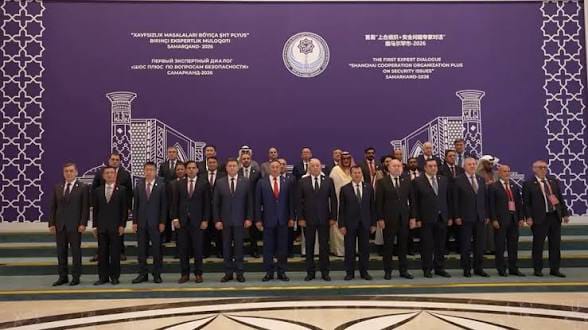
The historic city of Samarkand, Uzbekistan, hosted an important international security dialogue on November 5-6, 2026, where the first-ever “SCO Plus Expert Dialogue on Security Issues” was held under the Shanghai Cooperation Organization (SCO). Senior officials of security institutions, experts, and delegations from various countries participated in this important meeting, including representatives from 24 countries and five international organizations. The main theme of the meeting was “Security in the Era of Digital Transformation: Countering Terrorism and Extremism in the Context of New Technological Developments.”
This theme reflects the reality that while the rapid advancement of technology in the current era has provided new facilities for human life, economy, communications, and global connectivity, it has also created new and complex challenges for national, regional, and international security. In such circumstances, along with traditional methods of countering terrorism and extremism, promoting modern technology, effective information exchange, and international cooperation has become an urgent need of the time.
This important dialogue was chaired by Colonel General B. Kurbanov, Head of the State Security Service of the Republic of Uzbekistan. According to the National News Agency of Uzbekistan (UzA), 33 delegations participated in the meeting, including representatives of SCO member states, observer states, dialogue partners, international organizations, and other invited participants. On the occasion of the opening ceremony, a special message from the President of the Republic of Uzbekistan, Shavkat Mirziyoyev, was also presented to the participants, which was read out by V. Makhmudov, Secretary of the Security Council under the President. President Mirziyoyev’s message highlighted the importance of continuous contact, joint strategy, and practical cooperation among countries to protect peace and stability, combat terrorism and extremism, and deal with threats arising from modern technology in the changing global situation.
The importance of this dialogue is not limited only to the number of its participants or international representation, but there is also an important diplomatic and strategic initiative behind it that deserves attention. The proposal to establish this special dialogue platform was presented by President Shavkat Mirziyoyev, which was first announced during the SCO Summit held in Astana, the capital of Kazakhstan, in 2024. Later, in 2025, on the occasion of the SCO Council of Heads of State meeting in Tianjin, China, it was proposed that the first meeting of this dialogue be held in the historic city of Samarkand, Uzbekistan. Thus, this meeting held in November 2026 is an important step in giving practical shape to this initiative presented by President Mirziyoyev. It not only expresses Uzbekistan’s active role in regional diplomacy but also makes it clear that the country wants to solve the security issues of the modern era through joint dialogue and multilateral cooperation.
Digital Transformation and the Changing Threats of Terrorism and Extremism
Today, the world is passing through an era where artificial intelligence, digital communication systems, social media, encrypted messaging platforms, unmanned aerial vehicles, and other modern technologies have changed the nature of state and societal systems. These technologies have created extraordinary possibilities for progress in the fields of education, trade, industry, health, research, communications, and government services. However, their misuse can also open new avenues for terrorist organizations and extremist groups. This is why there is a need to understand traditional concepts of security afresh in the context of threats arising in the digital world and to develop an effective strategy to counter them. In the past, threats of terrorism and extremism were countered mostly through ground operations, border surveillance, intelligence information, organizational networks, and traditional means of communication, but in the current era, the nature of these threats has become much more complex. Through digital platforms, the possibilities of spreading extremist ideologies, influencing youth, recruiting individuals, secret contacts, financial support, and creating coordination in various activities have increased. Due to the borderless nature of the Internet, content created in one country can reach different regions of the world within moments. Similarly, through digital means, such contacts can be established in which traditional geographical boundaries and distances become largely ineffective. The rapid development of artificial intelligence has added a new dimension to these challenges. Through artificial intelligence, new possibilities have emerged for analyzing large amounts of information, identifying suspicious activities, and obtaining timely information about potential threats. Security institutions can improve their analytical and early-warning systems by taking advantage of these modern systems. On the other hand, misuse of artificial intelligence can also be used for misleading content, fake videos, fabricated audio messages, impersonation of personalities, and campaigns to influence public opinion. In this way, distinguishing between reality and forgery in the digital world is becoming more difficult. In this context, this meeting in Samarkand is providing an important platform to consider how to timely identify threats arising from modern technology, how to counter the possible misuse of artificial intelligence, and how to align institutions working against terrorism and extremism with the requirements of the modern era. In this process, along with technical expertise, human experience, professional training, institutional capacity, and international information exchange are also of fundamental importance.
The Role of the Shanghai Cooperation Organization and the Importance of Joint Security Cooperation
The Shanghai Cooperation Organization was established in 2001, and over time, this organization has become an important international platform for regional cooperation. Its scope includes political relations, regional security, economic cooperation, trade, cultural exchanges, and people-to-people contacts, among many other fields. Its basic objectives include promoting trust among member states, maintaining regional stability, and strengthening mutual cooperation to deal with common challenges. The fight against terrorism, separatism, and extremism has always remained prominent among the basic priorities of the Shanghai Cooperation Organization. These three threats are commonly described as the “Three Evils.” The organization has developed various institutional and practical mechanisms to deal with these challenges, among which the Regional Anti-Terrorist Structure (RATS) of the SCO holds special importance. This institution plays an important role in promoting contacts among the relevant authorities of member states, exchange of information, organization of cooperation, and joint actions against terrorism and extremism. The presence of the Regional Anti-Terrorist Structure makes it clear that effective countering of cross-border threats like terrorism is not possible through the individual efforts of any single country. For this, trust among states, timely information exchange, institutional coordination, and a sense of shared responsibility are essential. Modern technology has made these requirements even more important, because threats arising in the digital world are not limited to any one country or region. In this context, the importance of the SCO Plus format increases further. Through this format, in addition to the member states of the organization, observer states, dialogue partners, and international institutions also get the opportunity to participate in joint dialogue. This wider participation helps bring the experiences, security priorities, and institutional capacities of different countries closer to each other. The participation of 24 countries and five international organizations in the Samarkand meeting is proof that security challenges of the digital age are not a problem of any one region alone, but require common attention at the global level. In this regard, cooperation with the United Nations and other international institutions is also of special importance. Strong links between regional organizations and global institutions are necessary to implement internationally agreed responsibilities, relevant resolutions, and common principles against terrorism. The wider dialogue role of the Shanghai Cooperation Organization provides an opportunity to connect regional experiences with global efforts.
Uzbekistan’s Diplomatic Strategy and Practical Steps for Regional Peace
The holding of this first SCO Plus Security Expert Dialogue in Samarkand is an important manifestation of Uzbekistan’s active foreign policy and its continuous efforts to promote regional cooperation. Over the past years, Uzbekistan has kept good neighborliness, mutual trust, political dialogue, and common development in Central Asia as the basic pillars of its regional policy. Under the leadership of President Shavkat Mirziyoyev, the country has supported such initiatives at various international and regional forums aimed at resolving conflicts through dialogue, strengthening regional connectivity, and developing a collective strategy for common security issues. Uzbekistan’s position is based on the concept that security, economic development, political stability, and social prosperity are deeply connected to each other. Sustainable peace in any region is possible only when, along with political stability, economic opportunities, social development, education, positive involvement of youth, and trust in state institutions are also promoted. For the elimination of terrorism and extremism, security measures alone are not enough; it is also necessary to understand the basic factors that can push societies towards instability and extremist tendencies. The proposal for the SCO Plus Security Expert Dialogue by President Mirziyoyev reflects this broader thinking. Through this initiative, Uzbekistan has played an important role in making security issues arising from modern technology and digital transformation a part of the organization’s common agenda. Thanks to this new platform, experts of security institutions of different countries are getting the opportunity for direct exchange of views, sharing of experiences, and determination of common priorities. This meeting is also important for Uzbekistan in the sense that through it, the country is hosting an international dialogue related to the future security system, modern technology, and protection of global peace. Representatives of different countries participating in it can consider, in the light of their own experiences and priorities, how to make joint actions against terrorism and extremism more effective in a rapidly changing world. The selection of Samarkand also gives this meeting a special historical and diplomatic significance. This city has been an important center of civilizations, cultures, knowledge, trade, and international relations for centuries. Due to its location on the ancient Silk Road, Samarkand has been a prominent place of contact between different regions and nations. Even today, this city is advancing its historical identity with a modern global role by hosting global conferences, diplomatic meetings, and international dialogues. The inauguration of a new international platform for security cooperation in this city is also a symbol of a beautiful connection between past civilizational links and the current global needs.
From Dialogue to Practical Cooperation: Future Priorities and Shared Responsibilities
The real success of this meeting in Samarkand will be judged by the extent to which the discussions held here are transformed into practical actions and lasting cooperation. Security challenges cannot be fully resolved merely through meetings, speeches, and statements; clear priorities, effective institutional links, and continuous practical progress are necessary for this. In this context, improving the exchange of information related to terrorism and extremism is an important priority. Timely provision of information between the relevant institutions of different countries can help in understanding cross-border threats and countering them effectively. Similarly, to understand the changing trends of extremist activities and propaganda on online platforms, it is also necessary to promote professional expertise and modern analytical capabilities. Identifying the misuse of artificial intelligence and countering the threats arising from it will also be an important part of future security cooperation. Fake information, digital forgery, and misleading content can create mistrust and instability in societies. To counter such threats, along with modern technical capabilities, it is also important to promote public awareness, access to authentic information, and responsible digital behavior. Similarly, attention should also be paid to security aspects related to the possible misuse of unmanned aerial vehicles and other modern technologies. These technologies have created new possibilities for development and convenience in various fields, but in view of concerns about their misuse, the need for appropriate regulation, institutional preparedness, and international cooperation has increased. However, along with all these measures, a basic principle cannot be ignored, and that is respect for human rights, fundamental freedoms, rule of law, and international obligations. Measures against terrorism and extremism can prove lasting and effective only when they are carried out in accordance with national laws and international legal principles. In the use of modern technology, ensuring transparency, accountability, appropriate oversight, and protection of human rights is as important as improving the technical capabilities of security institutions. Maintaining a proper balance between security and freedoms is a basic need of a responsible and stable society. It is also important that in the digital age, no country has the full capacity to deal alone with terrorism, extremism, and other cross-border threats. Trust among different countries, constant contact, professional cooperation, and shared responsibility can provide an effective answer to these challenges. This dialogue in Samarkand is an important effort to promote this collective thinking.
Conclusion: An Important Step Towards Common Peace and Security in a Changing World
Undoubtedly, the first SCO Plus Security Expert Dialogue held in Samarkand on November 5-6, 2026, holds the status of an important milestone in terms of Uzbekistan’s diplomatic activities and regional security cooperation. The participation of 24 countries and five international organizations, the presence of 33 delegations, and the exchange of views on important topics such as terrorism and extremism in the era of digital transformation highlight the international importance of this meeting. This dialogue is a clear message that in the modern world, the concept of security is constantly changing, and to protect it, new requirements must also be understood. Artificial intelligence, digital communications, modern technical systems, and changing extremist trends have raised such questions before security institutions, whose answers must be sought not only at the national level but through international cooperation. By giving practical shape to this initiative presented by President Shavkat Mirziyoyev, Uzbekistan has played a role in laying the foundation of a dialogue platform within the SCO that can prove important in the future for security cooperation, exchange of experiences, and formation of a common strategy among different countries. Hosting this meeting not only highlights Uzbekistan’s active regional role but also highlights Samarkand as an important center of international diplomacy and serious dialogue on global issues. Today, when the world is rapidly entering the digital age, for the protection of peace and security, merely acquiring modern technology is not enough, but it is also necessary to ensure responsible use of this technology, a common global strategy, institutional coordination, and protection of human values. This dialogue held in Samarkand reflects this broader need that the future of global peace is linked to mutual trust, shared responsibility, and effective international cooperation.
Thus, this city of the historic Silk Road is once again uniting different countries and international institutions for a common purpose. In the past, Samarkand was a source of connections between civilizations and nations, and today it is becoming an important center of global dialogue to deal with the complex security challenges of the digital age. The real success of this dialogue will be possible only when the consultations held here play their effective role in practical cooperation, joint actions, and the formation of a more secure, stable, and peaceful world.