
rki.news (Source: Xinhua)
BEIJING, June 18 — Chinese scientists have identified a new feathered dinosaur species dating back approximately 120 million years, providing important evidence for understanding the evolutionary development of dinosaur flight.
The well-preserved fossil was unearthed in northeast China’s Liaoning Province and retains clear impressions of feathers surrounding its skeleton, offering rare insight into prehistoric life.
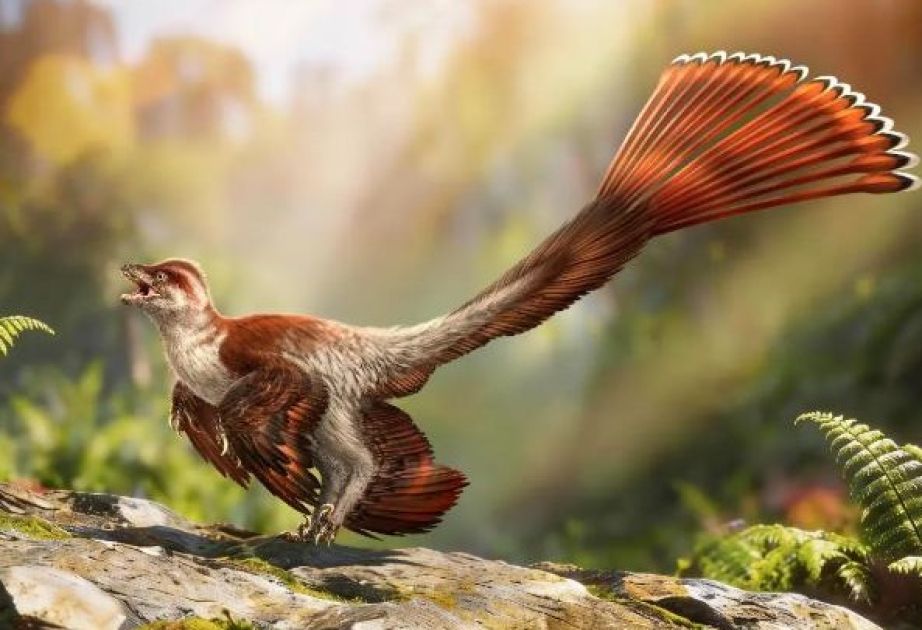
Published in the journal Vertebrata PalAsiatica, the study shows that the dinosaur is the only known pennaraptoran — a group closely related to modern birds — to have simultaneously developed large foot feathers and long, fan-shaped tail feathers. It had around 16 tail feathers, resembling a peacock’s plumage.
Researchers classified the species within the dromaeosaurid family of theropod dinosaurs, making it a close relative of Velociraptor and Microraptor, both important in evolutionary studies.
Scientists noted that the combination of wing, foot and tail feathers has not been observed in any previously discovered dinosaur species. They described this morphology as a “golden key” to understanding dinosaur flight evolution and the origins of modern birds.
Led by Xu Xing of the Chinese Academy of Sciences, the team named the species Changzhousaurus sinensis in recognition of Changzhou in Jiangsu Province for its contribution to dinosaur science popularization and cultural tourism.

At 'Your World in Words,' we share stories from all over the world to make friends, spread good news, and help everyone understand each other better.
© 2026
Rahbar International
Leave a Reply