
rki.news
Pakistan grows one date in every eighteen on earth yet earns only a fraction of its potential value from it. The issue is not more palms, but what we do with the ones we already have.
A small box came home from Hajj this year, a pilgrim’s blessing, the kind that gets passed around a drawing room and then forgotten. Inside were chocolates: dates dipped in cocoa, rolled in pistachio, pressed into bars, and folded into pralines. Pretty packaging, premium price, a touch of luxury. Yet underneath lies an uncomfortable truth for anyone in this trade. The fruit at the centre of those confections is one we grow in abundance and better than most countries on earth. We simply grow fruit. Others package it, brand it, and capture the margin.
That single box reflects the national problem in miniature.
A producer that behaves like a price-taker
Pakistan is among the world’s largest date growers. Depending on the year, it produces between 530,000 and 600,000 metric tons, around five to six per cent of global output, placing it consistently among the top five producers alongside Egypt, Saudi Arabia, Iran, Algeria, and Iraq. By volume, we are heavyweights.
By value, we are nearly invisible. Trade Development Authority and ITC figures put Pakistan’s date exports at roughly 50 million dollars annually, barely two per cent of global date trade value, and only the tenth-largest exporter. The contradiction is clear: we hold over five per cent of production but capture barely two per cent of earnings. This gap is not misfortune; it is the result of exporting raw material instead of finished products.
The clearest measure is price. Pakistani dates average around 430 dollars per metric ton. Tunisia earns around 2,150 dollars, while the United States and the Netherlands exceed 5,000 dollars per metric ton through value-added products. The same fruit, but an entirely different outcome driven by processing, grading, branding, and packaging.
The chohara trap
Most exports are not even table fruit. They are chohara—hard, unripe dates boiled and sun-dried into a low-value commodity sold in bulk at 350 to 400 dollars per metric ton.
For decades, the main destination was India, which absorbed three-quarters of Pakistan’s dried-date exports for religious and seasonal consumption. Premium varieties such as Dhakki from Dera Ismail Khan and Zahidi from Punjab were pushed into low-value processing.
When India imposed a 200 per cent customs duty in February 2019 and Pakistan suspended trade later that year, the fragility of this model became clear. Surplus stock accumulated, exporters rerouted through Dubai, and margins collapsed. A system built on dependence on a single market revealed its structural weakness.
How others out-earn us
Israel produces less than one per cent of global dates yet earns around 300 million dollars annually, roughly six times Pakistan’s revenue from far greater output. Mexico has built a strong export base in Medjool dates for North America from a modest production base.
Their success lies not in volume but in strategy: high-value varieties, strict grading, branding by origin, and export into premium health and food markets. A common industry benchmark shows that a kilogram of elite varieties such as Ajwa can fetch the equivalent of thirty kilograms of ordinary Aseel. Value addition is not optional; it defines the entire sector.
What a date can become
Dates are among the most versatile agricultural inputs, and global demand is rising. The shift toward natural sweeteners and clean-label products has expanded opportunities for date-based industries. The global date syrup and paste market exceeded 400 million dollars in 2024 and continues to grow.
Pakistan’s dates can be transformed into syrup, molasses, paste, powder, sugar substitutes, honey, jams, spreads, stuffed and chocolate-coated products, bakery inputs, and dairy ingredients. Even by-products such as seeds and fibres carry industrial value for oil, feed, and packaging.
Yet most of these products are either imported or re-exported after value addition elsewhere. Pakistani farmers currently receive only about a quarter of the final retail value of their produce.
Will the grower come along?
From the orchard, selling raw chohara is rational. It requires no investment, storage, or certification and generates quick returns. Value addition requires waiting, risk, and capital.
The solution is not blame but structure: cooperative aggregation, contract farming linked to processors, affordable credit, crop insurance, and training in grading and food safety. The State Bank’s refinancing facilities still exclude dates, leaving a critical gap in support.
South Punjab: From growing to value creation
South Punjab offers a strategic opportunity. The region’s cultivation roots date back to 1910–1912, when date palms from Basra were introduced to Multan and Muzaffargarh. The climate—hot summers, low humidity, and saline soils—is ideal for date cultivation, especially in a water-stressed future.
Punjab currently contributes less than one per cent of production, but that is an opportunity: proximity to logistics, processing hubs, and markets makes it ideal for value addition. Meanwhile, Balochistan loses over 40 per cent of its crop due to weak infrastructure and lack of cold chains.
To become a value-added hub, four priorities are essential: improved varieties (Medjool, Ajwa, Barhi, Deglet Noor), processing infrastructure through public-private partnerships, modern post-harvest systems including solar dryers and cold storage with global certifications, and strong branding with geographical indication protection.
The choice
Pakistan does not need more palms. It needs to stop exporting raw advantage and start exporting finished value.
The box of chocolates from Hajj should not be a symbol of import dependence. The same fruit grows within hours of Multan. There is no economic law requiring others to make it into luxury products. The only missing factor is decision.
South Punjab can begin that transformation.
Author:
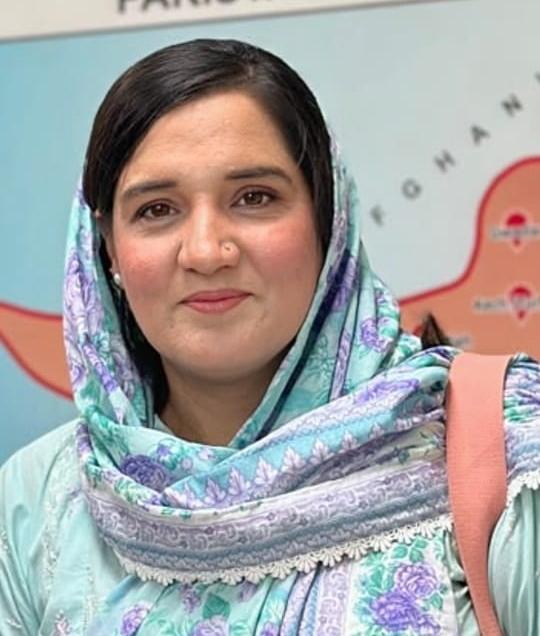
Dr. Nighat Raza
Assistant Professor
Department of Food Science and Technology
Muhammad Nawaz Sharif University of Agriculture, Multan

At 'Your World in Words,' we share stories from all over the world to make friends, spread good news, and help everyone understand each other better.
© 2026
Rahbar International
Leave a Reply