
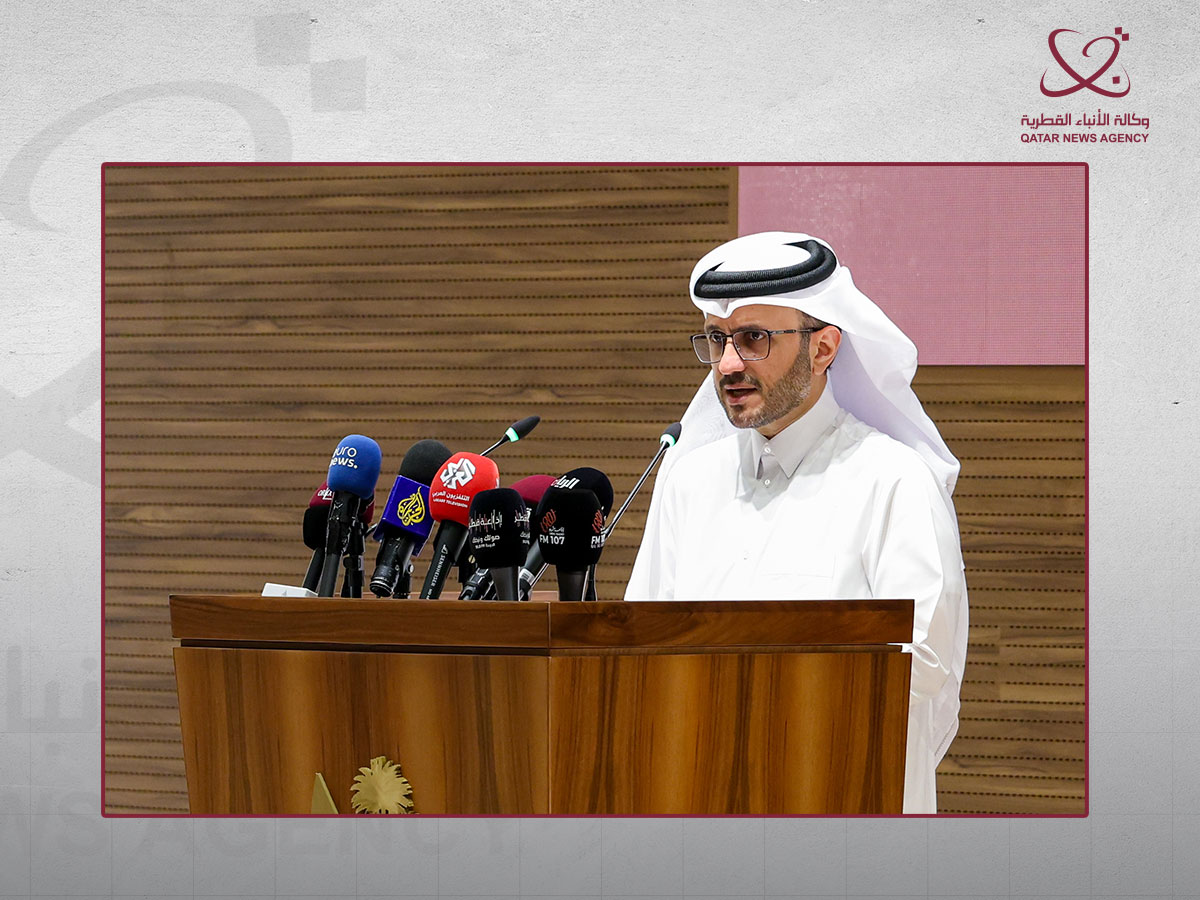
Advisor to Prime Minister and Official Spokesperson for Ministry of Foreign Affairs: Qatar Continued Its Efforts to Encourage Return to Negotiations between US, Iran
Doha, August 25 (QNA): Advisor to the Prime Minister and Official Spokesperson for the Ministry of Foreign Affairs Dr. Majed bin Mohammed Al Ansari affirmed that the State of Qatar has continued its efforts and regional contacts with various parties to encourage a return to negotiations between the United States of America and the Islamic Republic of Iran.
Speaking during the weekly press briefing of the Ministry of Foreign Affairs, Al Ansari said Qatar had warned since the beginning of the crisis about the wide repercussions of any escalation, not only on the region but also on the global economy. He reiterated Qatar’s continued efforts to support diplomatic solutions and reduce tensions.
Regarding American statements concerning economic sanctions on Iran, Al Ansari said Qatar and other regional countries had warned from the beginning about the economic consequences of war and escalation. He said Qatar’s priorities include restoring normal navigation in the Strait of Hormuz, ensuring global energy and food security, and maintaining the safety of supply chains.
He stressed that these goals could only be achieved through a comprehensive diplomatic solution.
Al Ansari clarified that the sanctions under discussion do not directly affect Qatar, noting that Doha adheres to the framework of international sanctions. He added that the sanctions in question were imposed by a specific party and were not United Nations sanctions.
Qatar’s position, he said, is based on supporting negotiations and diplomatic solutions rather than siding with one party at the expense of another.
In response to statements by some Iranian officials regarding threats against countries in the region, Al Ansari affirmed Qatar’s categorical rejection of such statements. He said attempts to drag regional countries into existing conflicts would only lead to further escalation.
He stressed that Qatar, with all its institutions and armed forces, is fully prepared to defend its security and sovereignty against any aggression, regardless of its source or justification, reiterating Doha’s rejection of any threat to regional security and stability.
On joint Gulf coordination, Al Ansari highlighted the continuing communications and meetings among Gulf Cooperation Council countries since the beginning of the crisis. He affirmed the high level of coordination among Gulf states to address potential threats and monitor escalating developments, noting that all GCC countries support a peaceful resolution.
Regarding the Strait of Hormuz, Al Ansari stressed the need to restore freedom of navigation and maritime passage in accordance with international laws. He said the crisis requires a political and diplomatic solution that guarantees regional stability and preserves the common interests of all parties.
Responding to a question about a Financial Times report concerning reductions in government agency budgets and Qatari foreign aid, Al Ansari said the figures mentioned in the report were inaccurate and that much of the information had been taken out of context.
He added that economic indicators and growth figures to be announced during the coming period would reflect the strength of the Qatari economy and its ability to deal with current developments.
Al Ansari clarified that references to budget reductions of up to 30 percent relate to precautionary measures taken at the beginning of the regional crisis. He said the percentage applies only to operational expenses and does not include salaries or capital projects.
He added that the priority was to ensure that the lives of citizens and residents were not affected, particularly regarding the availability of products, supply chains, salaries and other aspects of daily life. He stressed that Qatar continues to enjoy normal economic activity despite regional challenges.
The measures taken, he explained, are precautionary and are not structural or permanent changes to the Qatari economy or its strategic direction.
Regarding the Israeli stance on moving to the second phase of the Gaza ceasefire agreement, Al Ansari said Qatar has repeatedly stressed the need to exert pressure on Israel to accept the proposed plan and proceed with its implementation.
He noted that developments on the ground in Gaza and the West Bank do not reflect positive cooperation with ongoing efforts. The mediators, particularly Qatar and the United States, continue to work to ensure the implementation of agreed commitments and advance the stages of the plan.
On the peace process in the Democratic Republic of Congo, Al Ansari welcomed the progress made by the parties involved in mediation efforts. He reiterated Qatar’s commitment to supporting efforts aimed at achieving comprehensive and sustainable peace in the DRC and reaffirmed Doha’s support for international and regional initiatives advancing the peace process.

At 'Your World in Words,' we share stories from all over the world to make friends, spread good news, and help everyone understand each other better.
© 2026
Rahbar International
Leave a Reply