
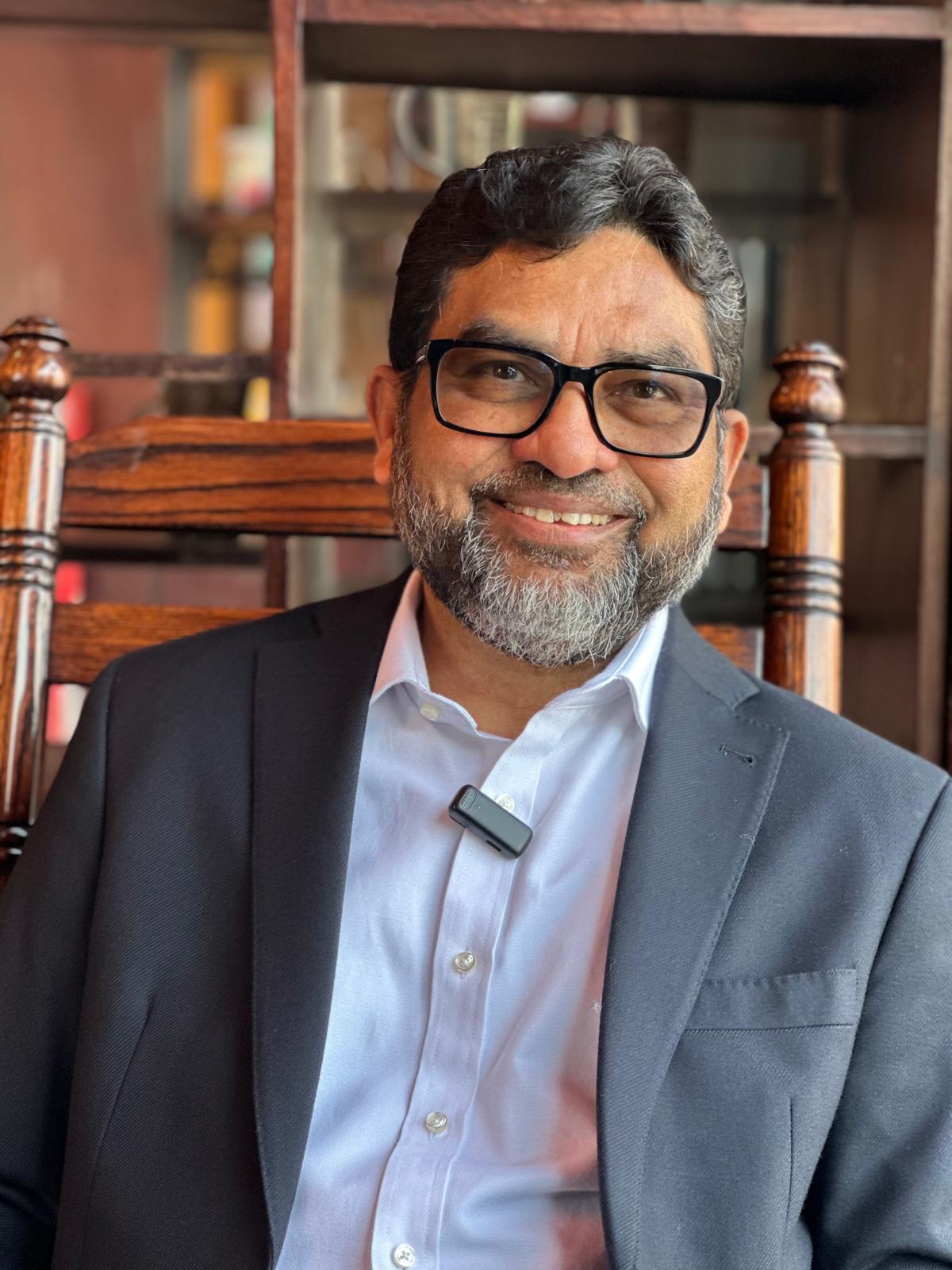
Interview with Ameerudeen Moulana, Chief Coordinator of the 21st QatarTalks
By Haroon Rashid Qureshi
QatarTalks 2026: Celebrating 21 Years of Communication and Leadership
Opening
Mr. Ameerudeen, I have interviewed many personalities, but today I feel a little nervous because I am conducting this interview in the presence of my mentor, Mr. M. I. Farid. If I make any mistakes, please excuse me.
Ameerudeen Moulana:
Thank you very much, Mr. Haroon Rashid. It is a privilege to speak with a senior journalist about QatarTalks as it steps into a new digital era. Serving as Chief Coordinator of the 21st QatarTalks is a great honour. This is my fourth-year volunteering with QatarTalks, and I am truly grateful for the opportunity to contribute to such an important platform.
My technical leadership journey began in 1987, when I became the first IT Manager of the Sri Lankan Navy, serving in the regular force. I served for six years, introduced computer systems, and then joined the United Nations Development Programme (UNDP) as an IT Consultant for a national rehabilitation & reconstruction project.
On UNDP’s recommendation, I was later absorbed into the Sri Lankan Administration Service through special Cabinet approval. I then moved on to the Asian Development Bank, where I worked on a project to re-engineer the External Resources Department within the Treasury.
I’ve always been interested in anthropology and history, which led me to look for root causes. Through my experiences, I came to believe that some of the major problems in South Asia stem from weaknesses in bureaucracy. I chose to expose and speak openly about what I felt needed to change. Eventually, I left Sri Lanka in 1996 as a whistleblower. Qatar has been my home ever since. I have now spent 30 years here, and I am grateful for the journey.
When it comes to QatarTalks, I believe its success comes first from Allah’s blessing, but also from the wisdom, determination, and leadership of its founder, M. I. Farid. I have great respect for his ability to combine strong leadership with clear communication, while always remaining open to new ideas.
I particularly admire his willingness to adapt. Although he has led QatarTalks for many years, he remained open when we suggested restructuring the organisation and introducing new ways of working.
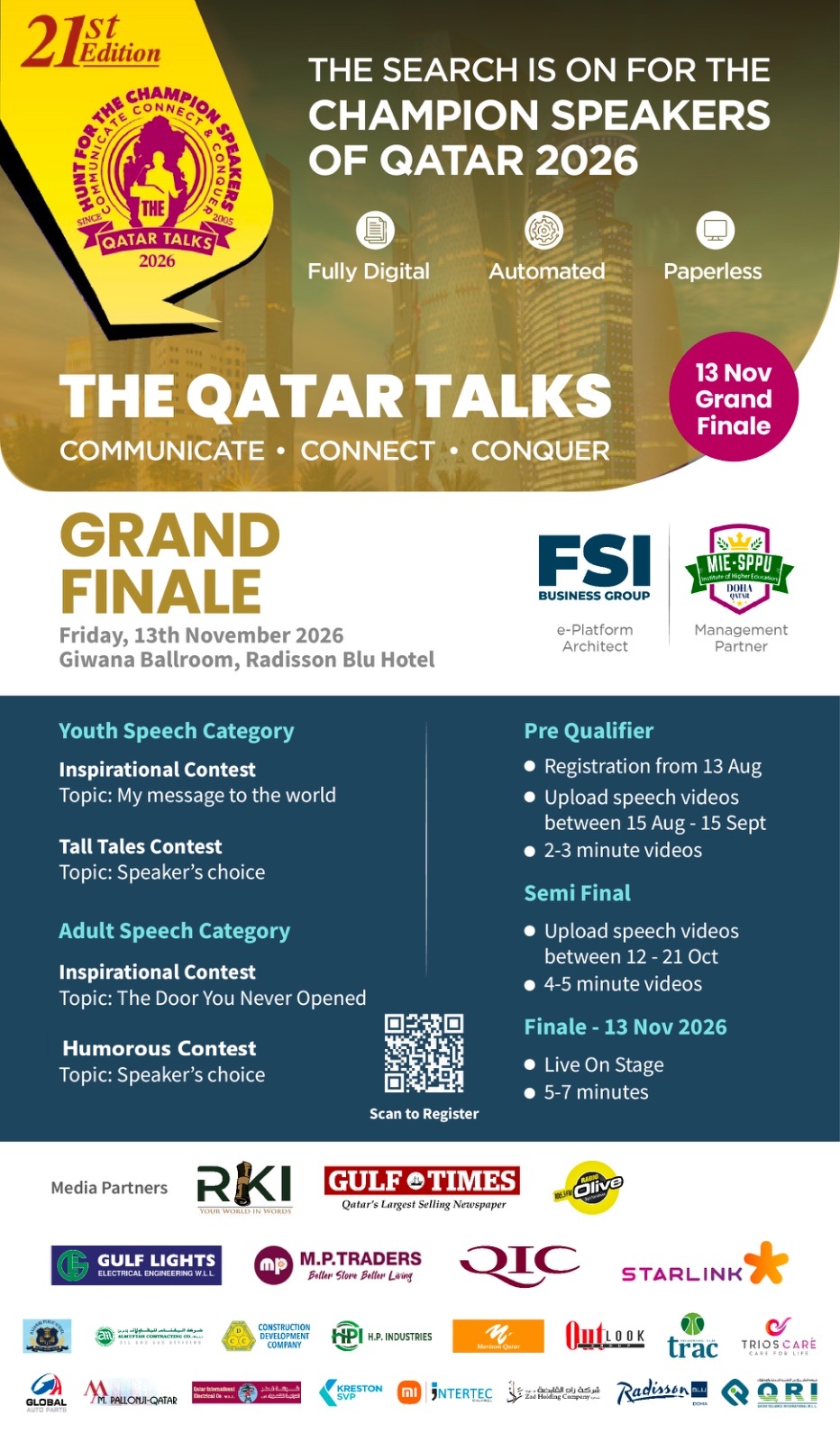
The 21st edition is not simply another year of QatarTalks. It represents an important shift in how the competition is organised and delivered.
In terms of team structure, we have an executive committee, along with dedicated teams for finance and sponsorship, technology, judges, event & logistics management, and contest management. This year, we moved towards a fully automated and digitalised system.
Last year, we faced challenges. When I was asked to be the Chief Coordinator, as the digital transformation professional, I saw an opportunity to overcome these challenges by using technology as a catalyst. With around forty years of IT experience, I believed a well-designed digital platform could make the process simpler, more accessible, and more efficient.
I suggested the idea to the founder; he supported it, and the executive committee approved. That is how we began moving QatarTalks towards a digital system.
Another important point is that QatarTalks does not search for talent in a limited way; it is open to everyone. That is one of the biggest differences that sets QatarTalks apart. Anyone who meets the age requirements can come forward, participate, and compete in their age category.
In previous years, especially in the youth category, schools largely organised participation, with limits on how many students each school could send. With the new e-platform, the competition is now much more open. We expect many more young people to take part, and we believe participation will continue to grow in the coming years.
QatarTalks should not be compared directly with Toastmasters. The two have no organisational connection. The only common element is communication, which belongs to everyone and to humanity as a whole. The two platforms have different structures and regulations.
QatarTalks is open to residents, while Toastmasters operates through membership. At QatarTalks, the main requirement is age. We have youth and adult categories, and participants do not need to become paid members of any organisation to take part.
The competition itself has also changed significantly this year. It is open to participants in both the youth and adult categories, and the entire initial process is being conducted digitally.
Contestants in all four categories will upload their speeches as videos, and judges will assess them online. From this stage, twenty contestants from each speech category will advance to the semi-finals. Contestants will also submit semi-final speeches as videos, and six contestants from each category will then advance to the final.
The Finale is planned for November 13, where contestants will deliver their speeches live on stage. The biggest difference this year is that the final will be streamed globally. This is something we can be proud of, as it takes a public-speaking competition created in Qatar to an international audience.
For me, technology has to serve every stakeholder. If it doesn’t benefit participants, judges, organisers, volunteers, sponsors, and the audience alike, then it holds little value. My approach to technology is built on three principles: Futuristic, Simple, and Innovative.
The digital system makes participation much easier. Contestants no longer need to rely solely on schools or physical registration. They can register through the website, select their age category and contest categories, and upload their videos directly.
They can also refine their speeches. If they feel their speech can be improved, they can upload a new version during the permitted period. This is a valuable opportunity because the real purpose is not simply to identify winners; it is to help people improve their communication skills.
The judging process is also becoming more efficient. Judges can watch videos from home and evaluate them online, as they would in person. The system records judges’ scores; the executive committee’s only role is to push the judges’ decisions to the next stage of automation by clicking a button.
IT and AI are also being introduced to help organise the process in grouping contestants for judges. Instead of grouping contestants randomly, the system can create a more balanced distribution based on the same judging criteria, without leaving any contestant out.
However, we are not allowing technology to replace human judgement. The actual judging remains human. Technology supports the judges and organisers, but does not take over their responsibility.
The video format also gives participants a gradual path. The initial speech runs two to three minutes, the semi-final speech four to five minutes, and the final speech five to seven minutes. This allows contestants to build their skills step by step.
Our main target audience includes young people, particularly school and university students. We want to see greater involvement from this group. This year marks a beginning in that direction, and we hope to make university students an even stronger focus in the future.
Then I look at QatarTalks’ biggest successes over the past twenty editions, and I see several important factors at play. First is the founder’s determination. Then there are the volunteers, who give their time without payment, year after year. The judges, who come from different nationalities and professional backgrounds, also contribute significantly.
The contestants, their parents, schools, and the wider community also play an important role. Finally, sponsors’ support is essential because an initiative like this cannot continue without financial backing.
The skills participants gain go far beyond public speaking. Until the 20th edition, the main focus was speech preparation and communication. This year, digitalisation has added another important skill to the mix.
Most importantly, participants learn they are not necessarily competing against others; they are challenging themselves. You do not need to be a champion before entering the competition. You can come as a beginner, share your ideas, and use the platform as an opportunity to grow.
That is what makes QatarTalks special. It gives people the opportunity to prove themselves.
The vision for the future is already connected with the founder’s own vision. I remember him saying, several years ago, that since we are based in Qatar, he wanted QatarTalks to include Arabic alongside English eventually. Today, I can see that vision taking shape.
We are also opening the platform more widely to students and residents. After twenty years, QatarTalks has reached an important crossroads. Technology and artificial intelligence are changing how we work, and we must adapt.
Our objective is to use technology to help people living in Qatar take their communication skills to the world. We will stream the final globally this year, and we hope to make the pre-qualifiers and semi-finals accessible to a wider audience in the future.
This year, however, we are taking it one step at a time. The pre-qualifiers and semi-finals will not be open for general viewing. Contestants can access their own videos and share them if they wish. Legal, privacy, and technical considerations also require careful handling.
In the future, Insha’Allah, we hope to make more of the competition available to the public, because learning doesn’t happen only through speaking and participating; watching others also provides an important opportunity to learn.
Ultimately, I believe we are all contributing to the founder’s vision. We are adapting QatarTalks to a changing world while keeping its original purpose alive: giving people the opportunity to communicate, learn, challenge themselves, and become better speakers.
After twenty years, we have achieved a great deal through human effort. Now, technology is helping us take the next step.

At 'Your World in Words,' we share stories from all over the world to make friends, spread good news, and help everyone understand each other better.
© 2026
Rahbar International
Leave a Reply