
rki.news | Sources: Xinhua
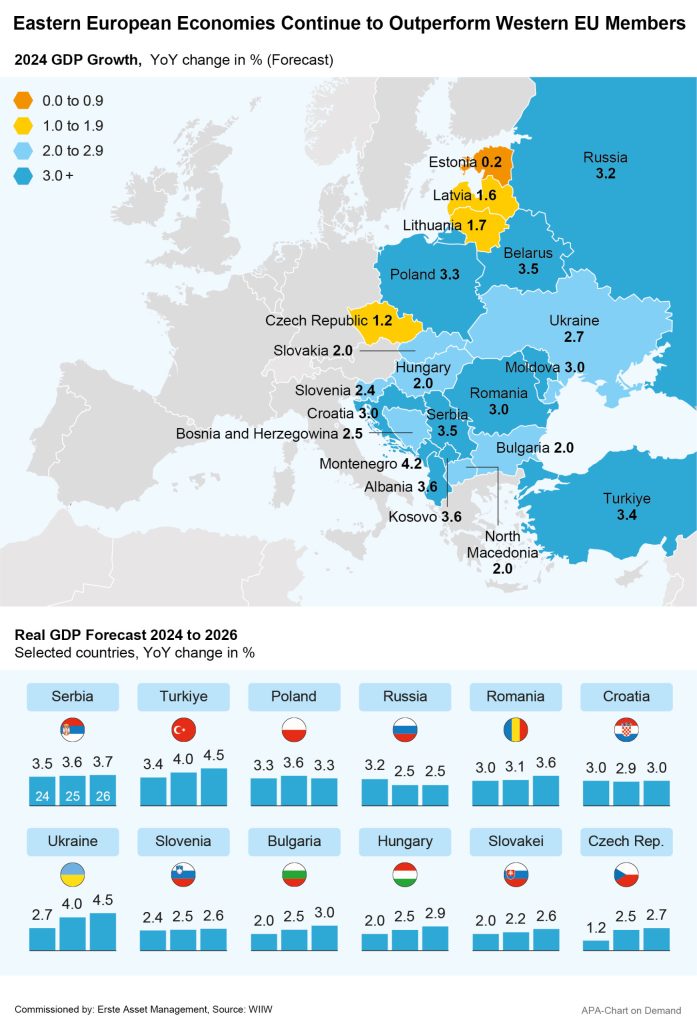
At the European Financial Congress (EKF) in Sopot, Poland, discussions focused on Central and Eastern Europe (CEE) as a growing source of economic momentum for Europe, driven by infrastructure investment, EU funds and rising defense spending.
Amid slower growth and competitiveness concerns, attention is turning to whether CEE can become a sustained growth engine for the continent.
Investor interest has increased, with capital flowing to markets offering stronger growth prospects. According to Euronews, mergers and acquisitions in CEE reached a record 42.5 billion euros in 2025, the highest level recorded.
IMF forecasts project Poland to grow by 3.1 percent in 2026, above Western Europe’s expected 1.2 percent. An Ernst & Young report shows foreign direct investment falling in major Western markets, while several CEE economies, including Poland and Spain, recorded growth.
Defense spending is also reshaping the region. A KPMG report says Europe’s shift toward continuous defense production is moving investment toward CEE countries such as Poland, the Czech Republic and Romania due to lower costs and industrial capacity.
The EU’s 150-billion-euro Security Action for Europe (SAFE) program is further supporting joint defense production and procurement.
Experts at EKF said CEE is becoming a key hub for defense and manufacturing growth rather than just an alternative location.
However, analysts warn of challenges including demographic decline, labor shortages and geopolitical risks. Many believe the region is undergoing a structural shift that could reshape Europe’s economic landscape.

At 'Your World in Words,' we share stories from all over the world to make friends, spread good news, and help everyone understand each other better.
© 2026
Rahbar International
Leave a Reply